Sprints, Meetings & Boards
Design work in a product team moves to the team's rhythm, and a designer who doesn't know that rhythm hears about decisions after they're made. Imagine sprint planning on a Monday, where your name sits against a ticket you've never read, sized by engineers who never asked you.
Learn on the move: press play and turn your commute, walk or drive into time that grows your design career.

So the two weeks start with a commitment you had no part in. The way out is knowing which part of the sprint decides what, and being in the room while a ticket can still change.
How the Rhythm Fits Together
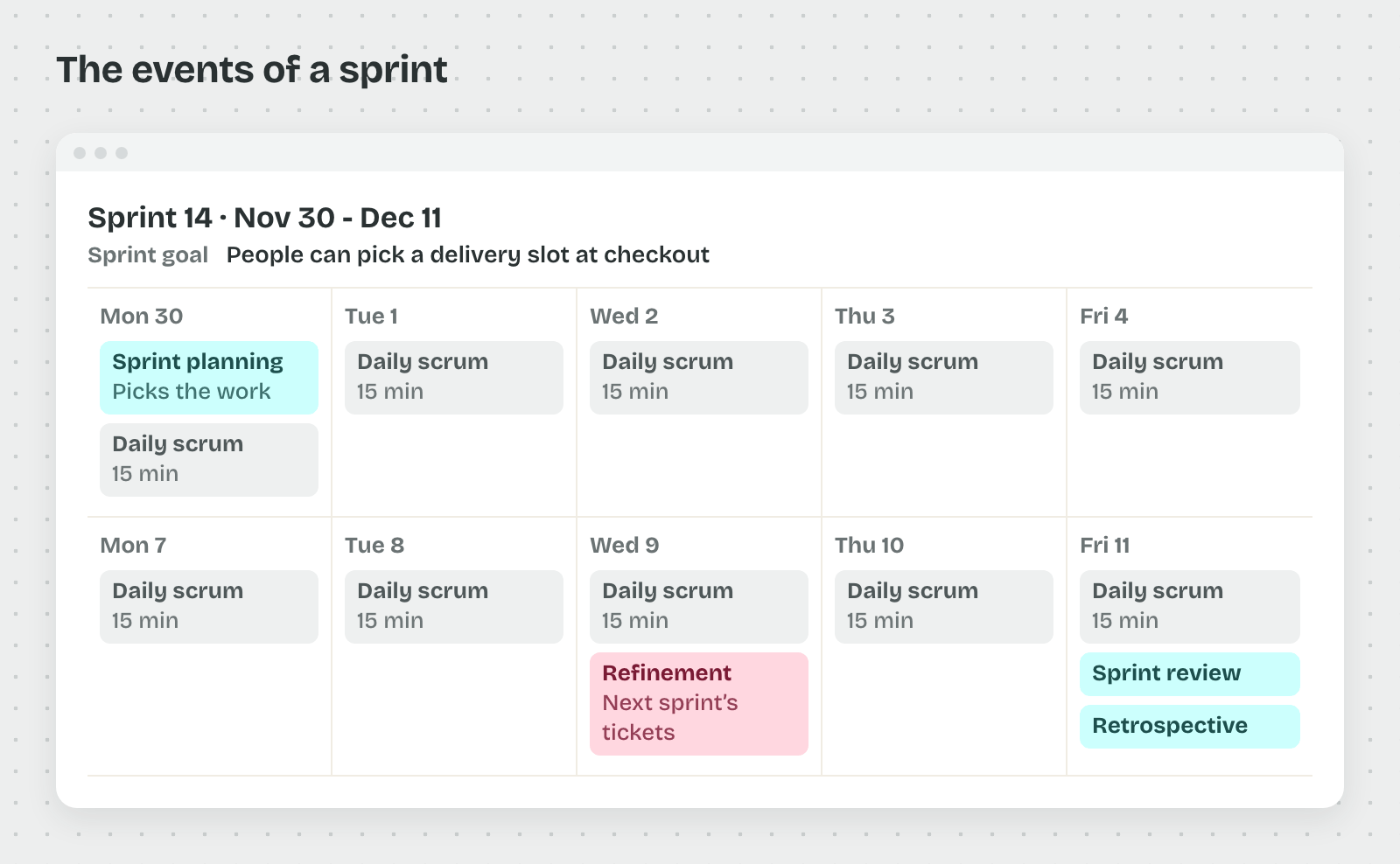
A Scrum team works in sprints of one month or less. Planning opens the sprint, a 15-minute daily scrum runs every day, and a review and a retrospective close it. Refinement happens in between, while the next tickets are still soft.
Around those events sit two more pieces. A board shows where each piece of work is and who holds it. A second track lets design and research run a sprint ahead of the build, so the build starts from something already tested.
Anatomy of a Sprint
Design work inside a product team rarely gets its own schedule, because it lives inside the team's sprint. Imagine a two-week sprint where the designer first sees a ticket on Monday and the engineer needs the screens by Wednesday.
So the parts of the sprint decide how much room design gets. Once you know where each part sits, you know which meeting to be in and when.
The Sprint as a Timebox
A sprint is a fixed period in which the team builds an agreed piece of work. The Scrum Guide, last revised by Ken Schwaber and Jeff Sutherland in November 2020, caps it at one month. Many product teams pick one or two weeks, because a short loop shows sooner whether the work was right.
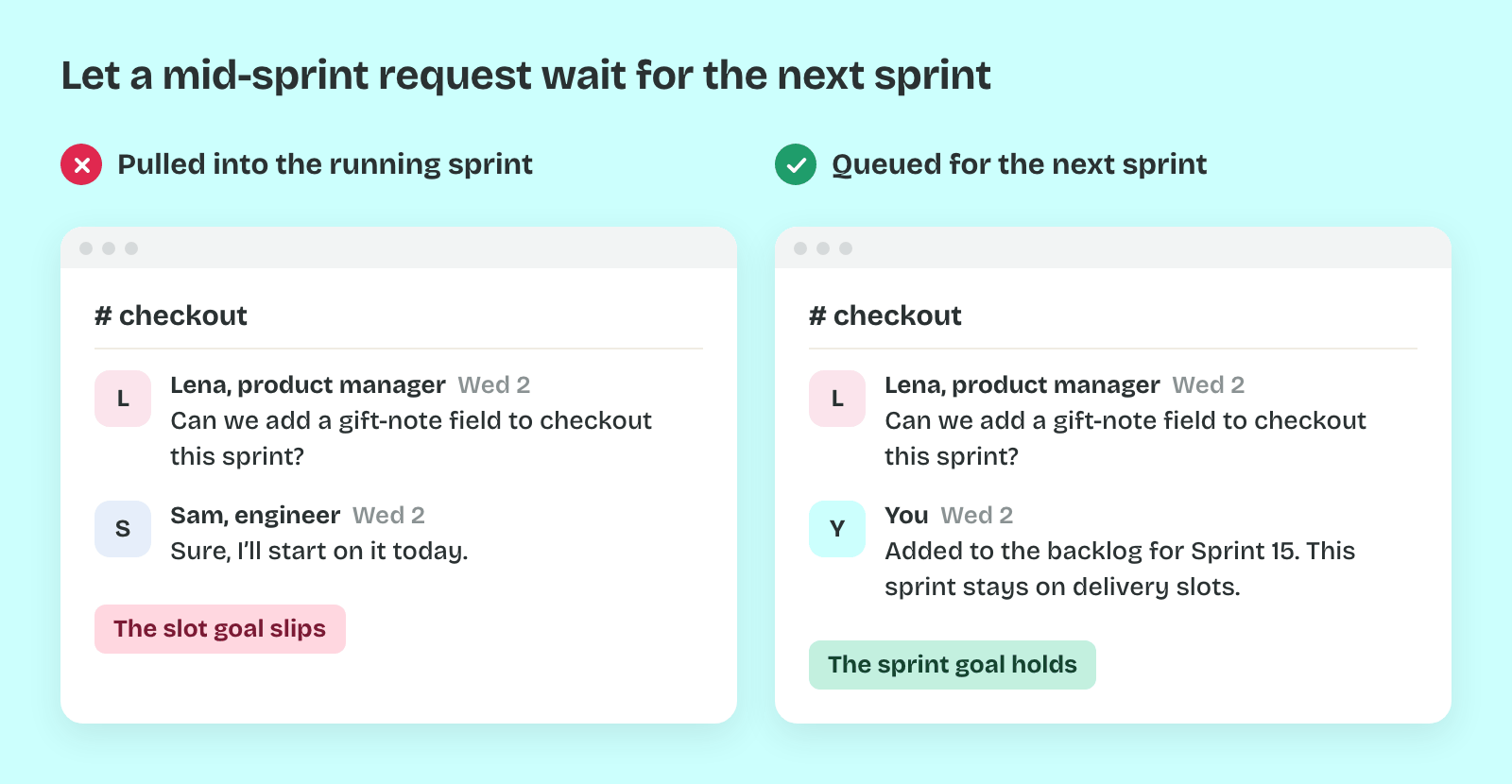
That fixed edge is the protection the format offers. The Scrum Guide says no changes are made during a sprint that would endanger its goal. So a request that arrives on day three usually waits for the next sprint.
Here is a mid-sprint request handled both ways:
That idea of a team moving as one unit is where the name comes from. In 1986, Hirotaka Takeuchi and Ikujiro Nonaka used the rugby scrum as their picture of it. Their article was "The New New Product Development Game", in Harvard Business Review.
The Parts of a Sprint
A Scrum sprint is built from the same named parts every time, and each part has one job:
- Product backlog: the ordered list of everything the team might build, owned by the product owner.
- Sprint goal: the one objective that says why this sprint is worth doing.
- Sprint backlog: the goal, the items picked for this sprint and the plan to deliver them.
- Sprint planning (up to 8 hours): where the team picks the work.
- Daily scrum (15 minutes): where the people doing the work check progress toward the goal.
- Sprint review (up to 4 hours): where stakeholders see the result and react to it.
- Sprint retrospective (up to 3 hours): where the team changes how it works.
- Increment: the working product at the end, checked against the definition of done.
Those timeboxes are for a one-month sprint, and the Scrum Guide says shorter sprints usually take less. Refinement is absent from the list of events. The guide calls it an ongoing activity, so many teams book it as a recurring meeting in the middle of the sprint.
Here is a two-week sprint with each event in its place:
Kanban, Where There Are No Sprints
Some teams run no sprints at all and use kanban instead. The word is Japanese for a signboard, and it comes from the cards Toyota used to signal that a station needed more parts. David J. Anderson's book Kanban (2010) turned the idea into a board with a cap on the work in each column.
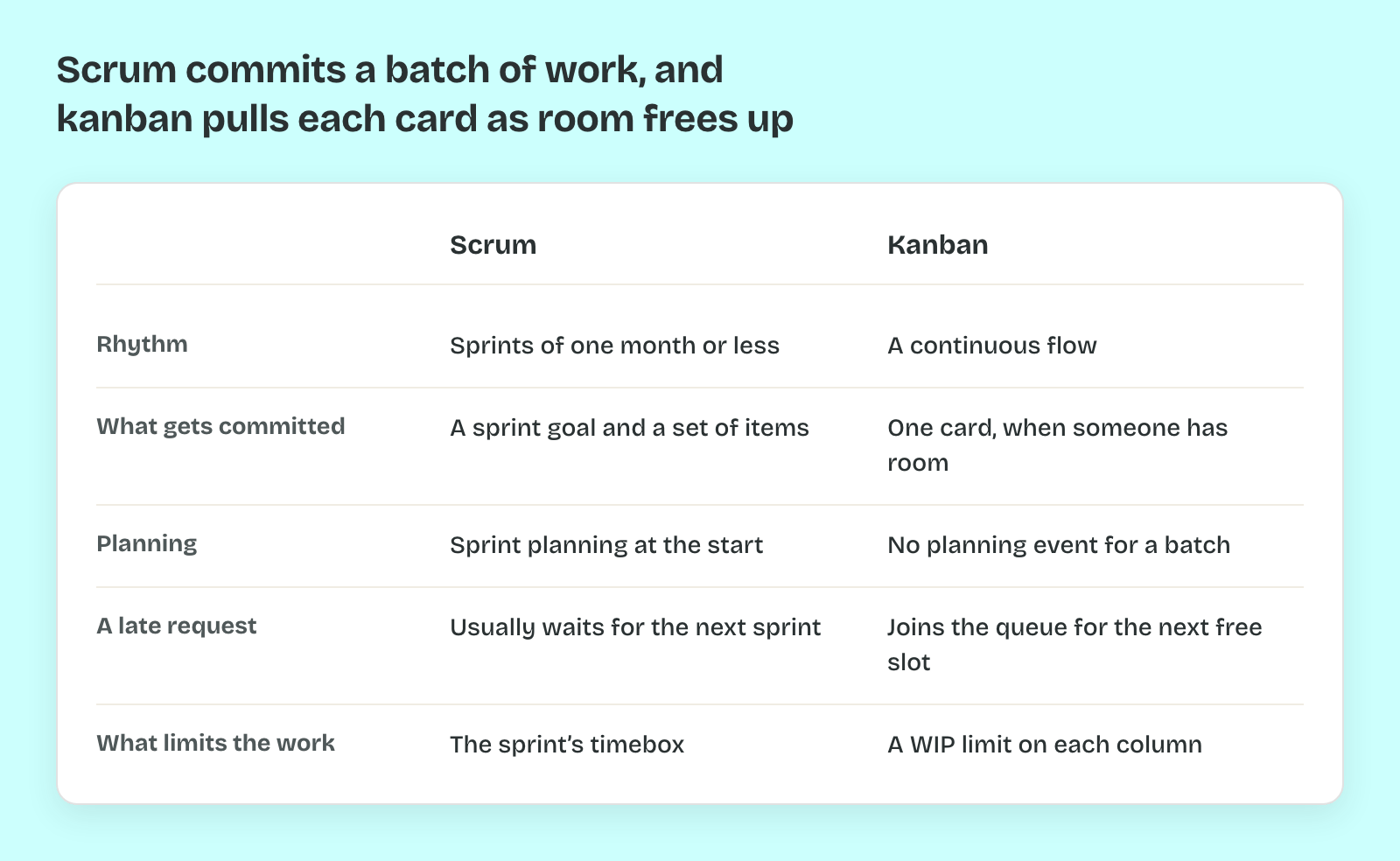
That difference changes where design work gets committed. A kanban team has no planning meeting for a batch of work, so each card is pulled when somebody has room. Support and platform teams often work this way because their requests arrive without warning. Each card then has to be ready on its own.
Here is how the two rhythms compare:
Why Design Gets Squeezed
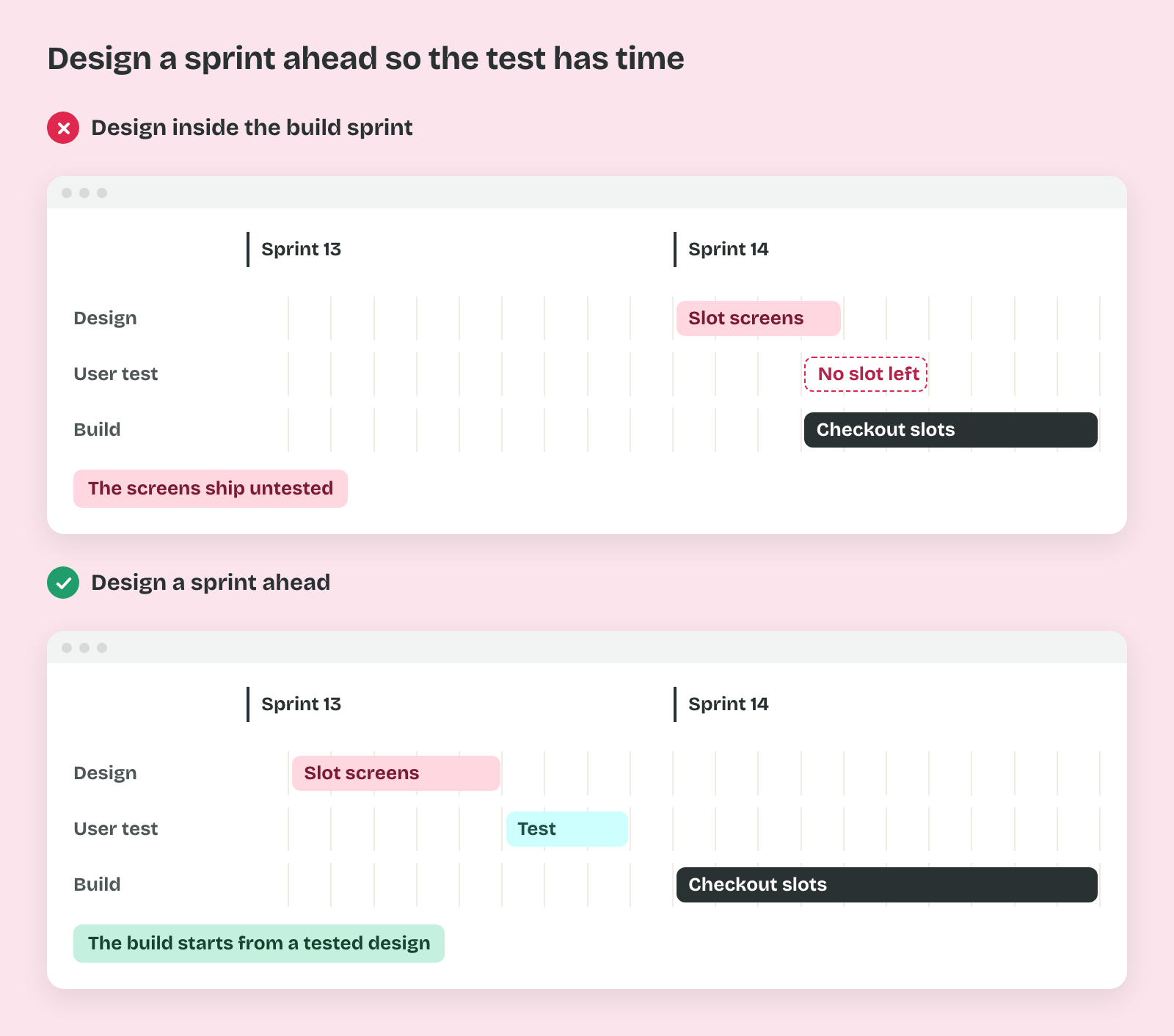
Design gets squeezed when it shares a sprint with the build it feeds. A checkout ticket committed on Monday starts the designer that day, while the engineer waits for screens. The user test that might have changed the answer has no slot left.
So the research gets skipped, and the screen ships without anybody checking it. Teams that move design one sprint ahead of the build avoid most of that squeeze. Marty Cagan described that setup as dual-track agile in 2012.
That word "sprint" also causes a mix-up. Jake Knapp's book Sprint (2016) describes the Design Sprint, a five-day workshop from Google Ventures for testing one big question with a prototype. An agile sprint repeats every week or two for as long as the team exists.
Here is the same checkout ticket designed inside the build sprint and a sprint ahead:
Pro tip: Ask for the team's sprint calendar in your first week and mark refinement on it. That recurring meeting shapes more of your design work than planning does.