Facilitating Workshops
A workshop without a facilitator often turns into a meeting run by its loudest person. Imagine a kickoff with nine people where the most senior person talks for forty minutes. The team leaves with a photo of a wall and no decision.
Learn on the move: press play and turn your commute, walk or drive into time that grows your design career.

So somebody has to own the session itself: what it must produce, who is in it, how the time is spent and how the group lands. A participant can’t do that job while also arguing for a view. Designers are often handed this job for kickoffs, problem framing and prioritization sessions.
What a Facilitator Owns
A workshop has named parts: an outcome, the participants and a decider, roles, an agenda in blocks, and a shape that widens and then narrows. The facilitator designs those parts before the session, runs them during it and closes them at the end.
That keeps the job separate from its neighbors in the course. Thinking Together in Structured Thinking covers how a group reasons its way to a decision. Sprints, Meetings and Boards covers the daily, the review and the retro, and Design Critique covers critique sessions.
Anatomy of a Workshop
A workshop is often booked like a meeting, with a title, a time and a long guest list. That leaves out the parts that decide whether the session produces anything. Imagine a 90-minute kickoff for recurring invoices in a billing app, with six people around one board.
So every part of that kickoff can be named and checked before the invite goes out. The plan needs an outcome, a decider, the right participants, named roles, an agenda in blocks, materials and a shape for the discussion. Here is the plan for that kickoff with every part filled in:
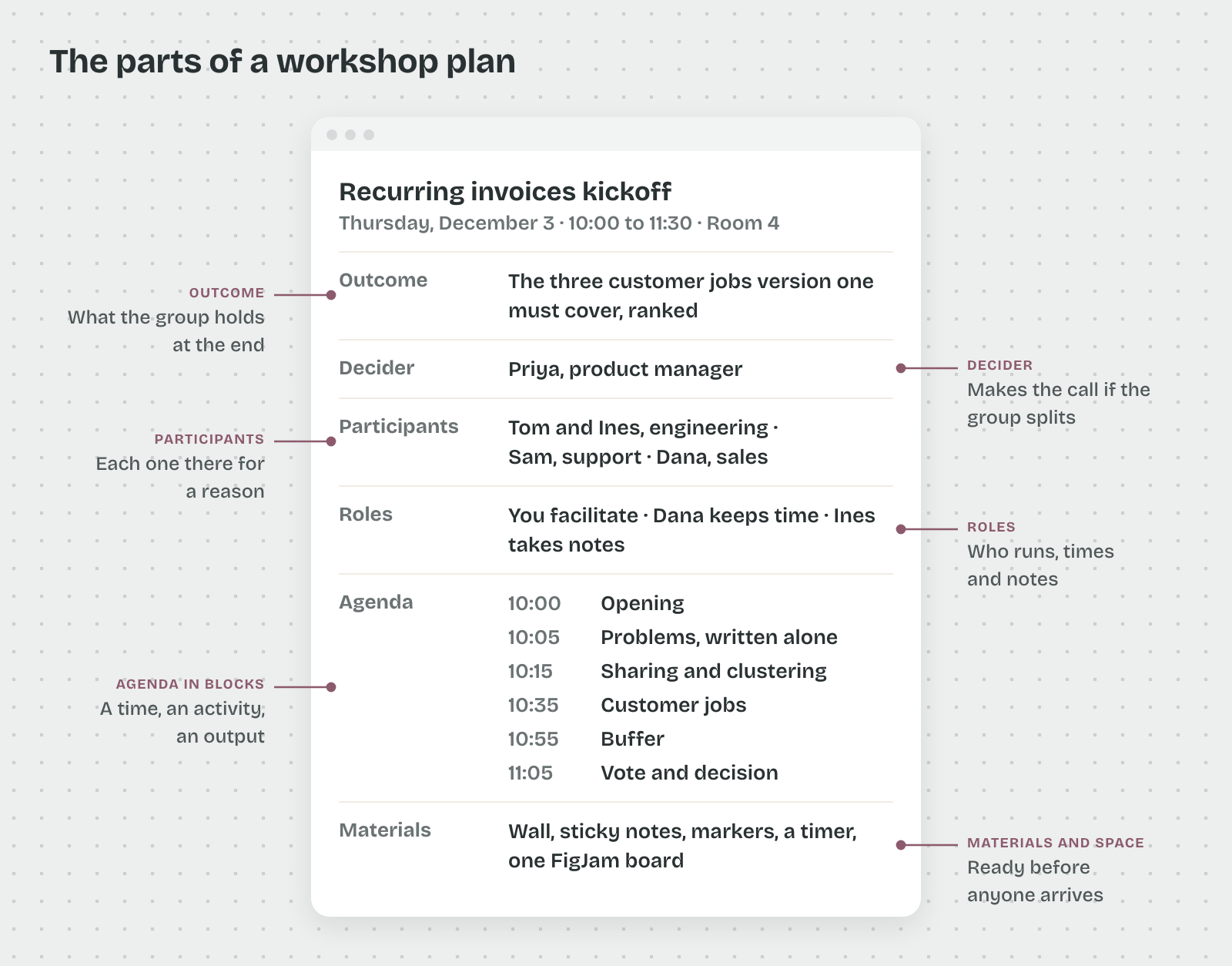
The Outcome and the Decider
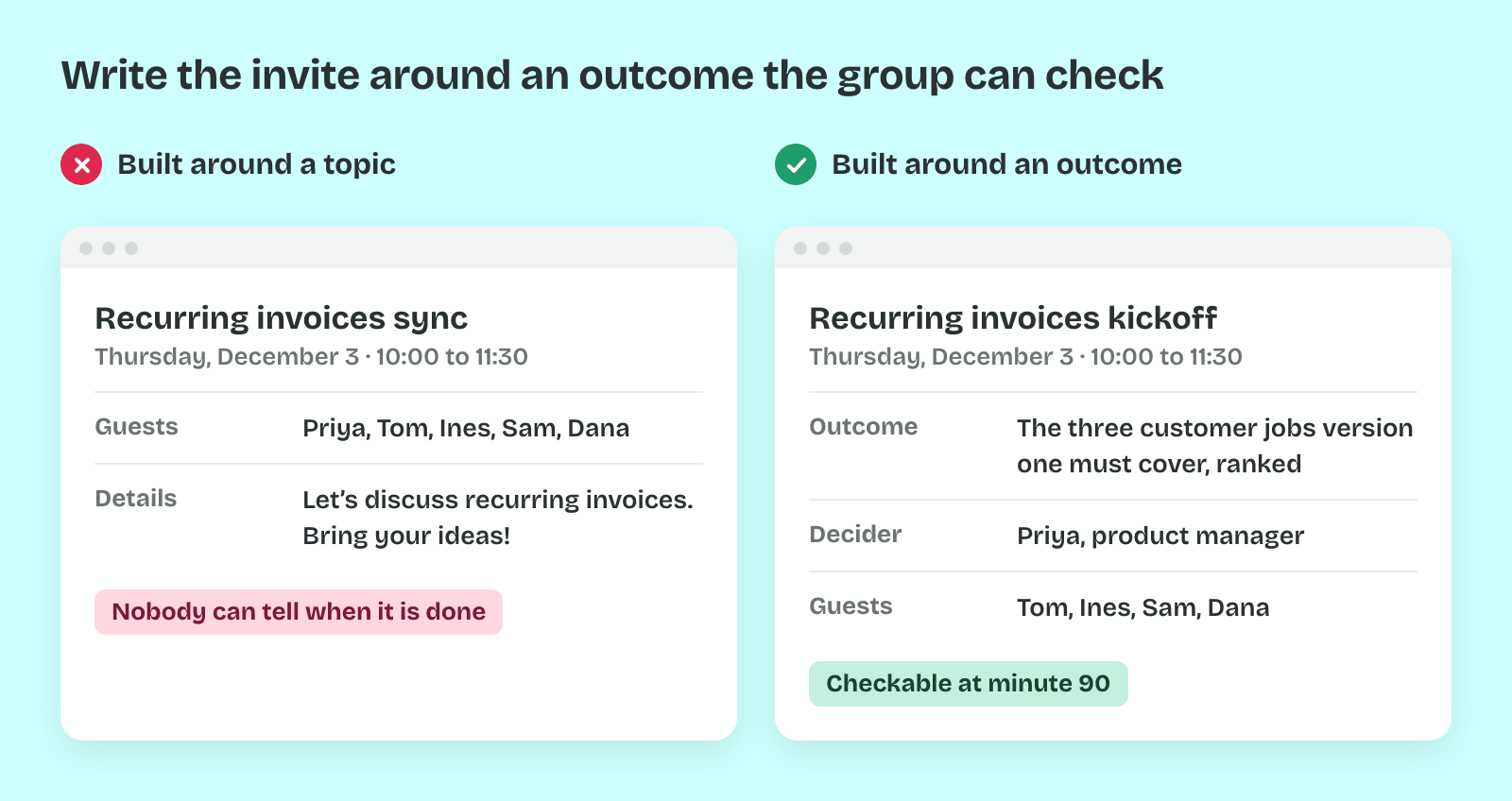
The outcome is the thing the group will hold at the end, written as an artifact. “Discuss recurring invoices” is a topic, so nobody can tell when it is done. “Leave with the three customer jobs version one must cover, ranked” can be checked at minute 90.
That’s why the outcome comes with a decider, the one person who makes the call if the group splits. For the invoices kickoff, the decider is Priya, the product manager.
That said, a workshop plan only has to name the decider and keep them in the room for the close. Thinking Together in Structured Thinking covers how a decider closes a discussion. Here is the same invite written around a topic and around an outcome:
Participants and Roles
Participants are the people whose knowledge the outcome needs. Each one should be there for a reason you can say in a sentence. Sam from support knows the top complaints, and Dana from sales knows what prospects ask for in demos. Jake Knapp and colleagues cap a design sprint team at seven people in Sprint (2016).
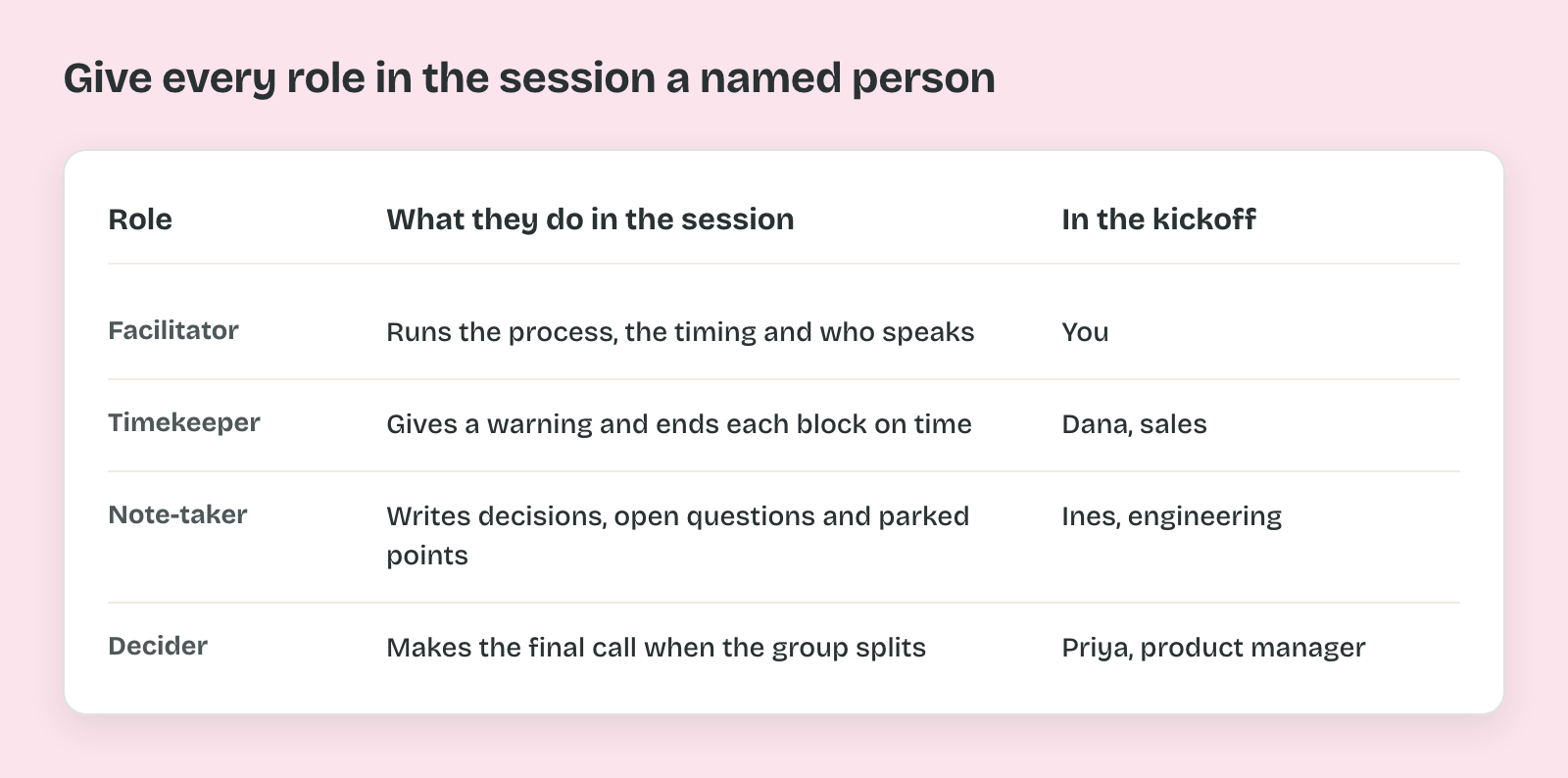
Inside that group, four roles keep the session running:
- Facilitator: runs the process, the timing and who speaks, and stays out of the content.
- Timekeeper: watches the clock and calls the end of each block.
- Note-taker: captures decisions, open questions and parked points as they happen.
- Decider: makes the final call when the group splits.
Any of those roles can double up in a small session, and the facilitator’s is the hardest to combine. Nobody can steer a discussion and argue one side of it at the same time. So a designer with a strong view should say so at the start and hand that block to someone else. Here is how the roles were split for the invoices kickoff:
Agenda, Materials and Space
The agenda is a sequence of blocks, and each block has a time, an activity and an output. “10:15 to 10:35, clustering on the wall, five groups of customer problems” is a block. “Problems” alone is a topic, and it will run as long as the loudest person keeps talking.
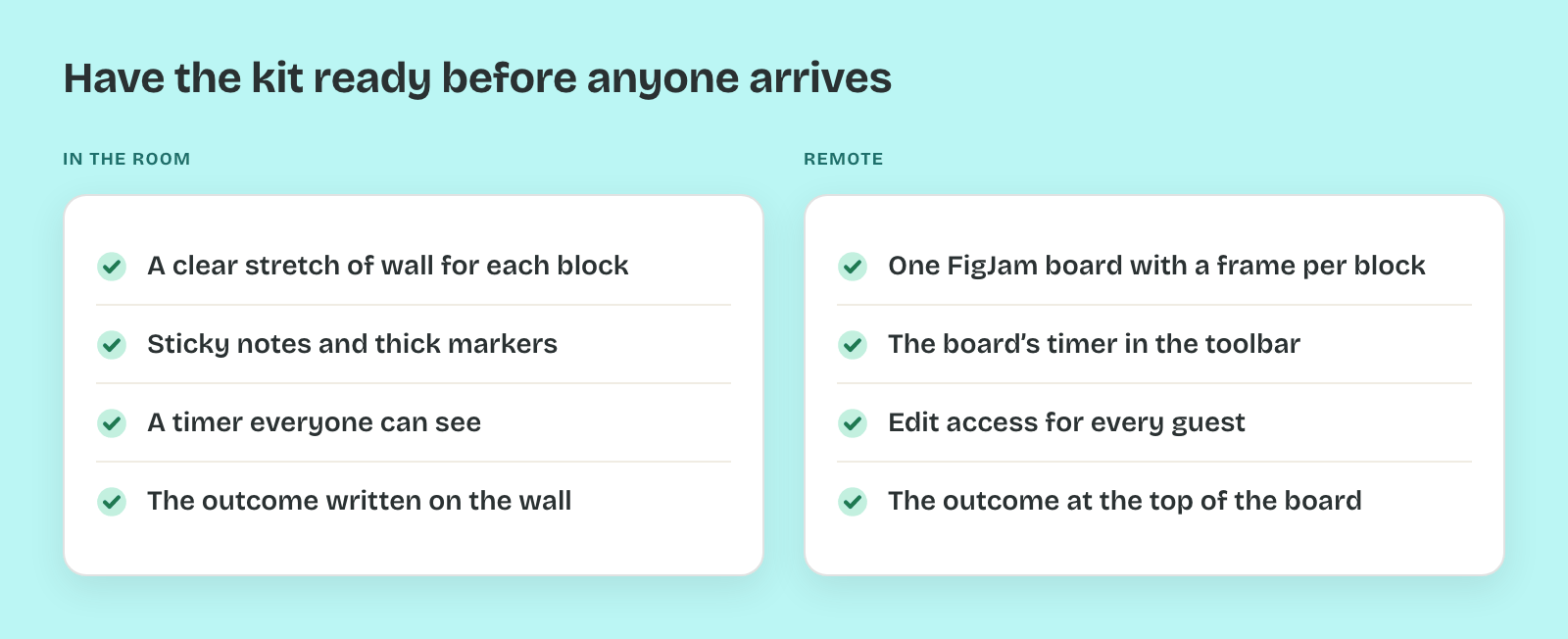
So materials and space follow from the blocks. A room session needs wall space, sticky notes, thick markers and a timer everyone can see. A remote session needs one shared board in a tool such as FigJam, with a frame for each block. Without them, the first ten minutes go to finding pens and sharing links. Here is the kit for the kickoff in the room and remote:
Diverge, Groan, Converge
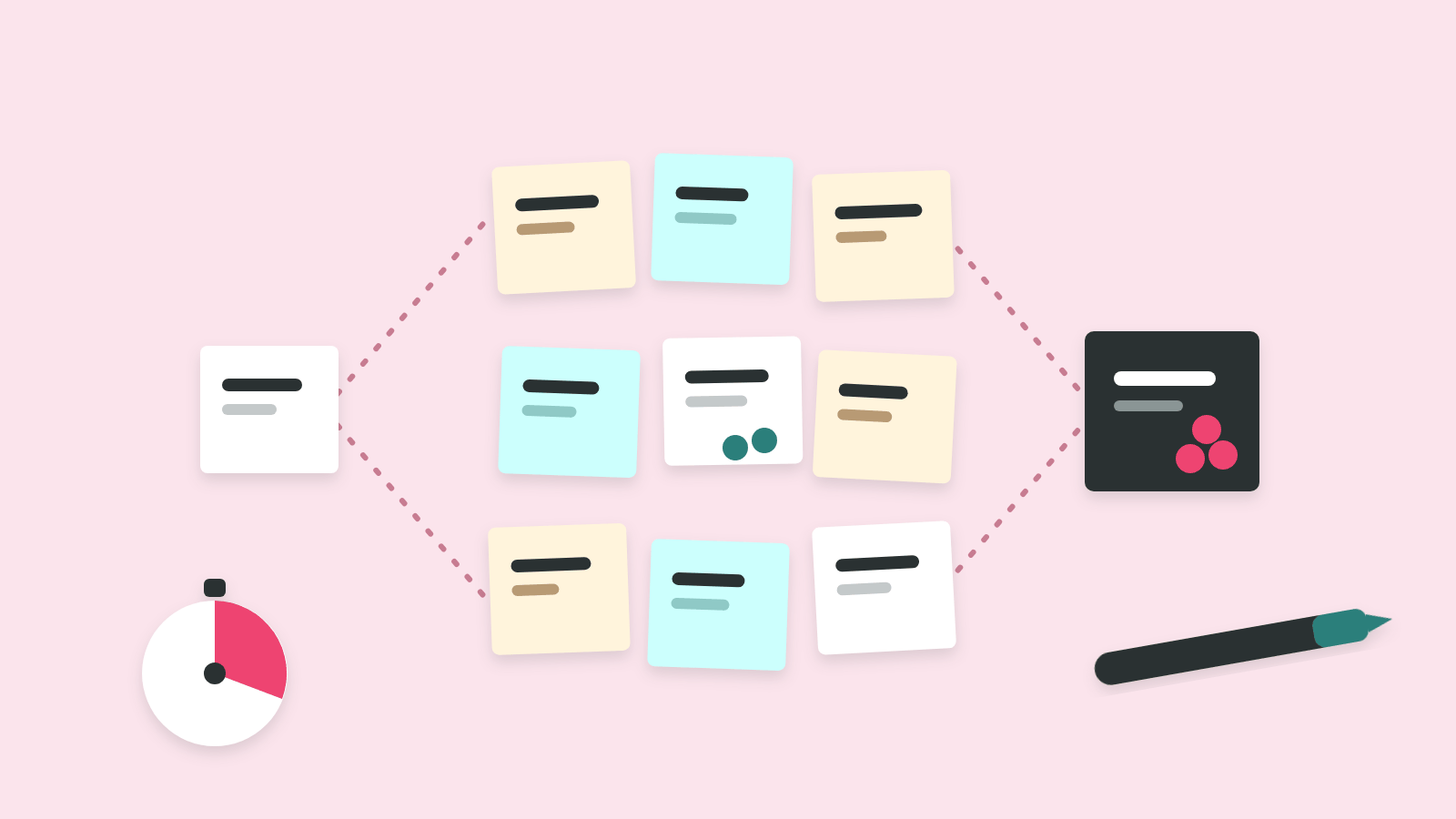
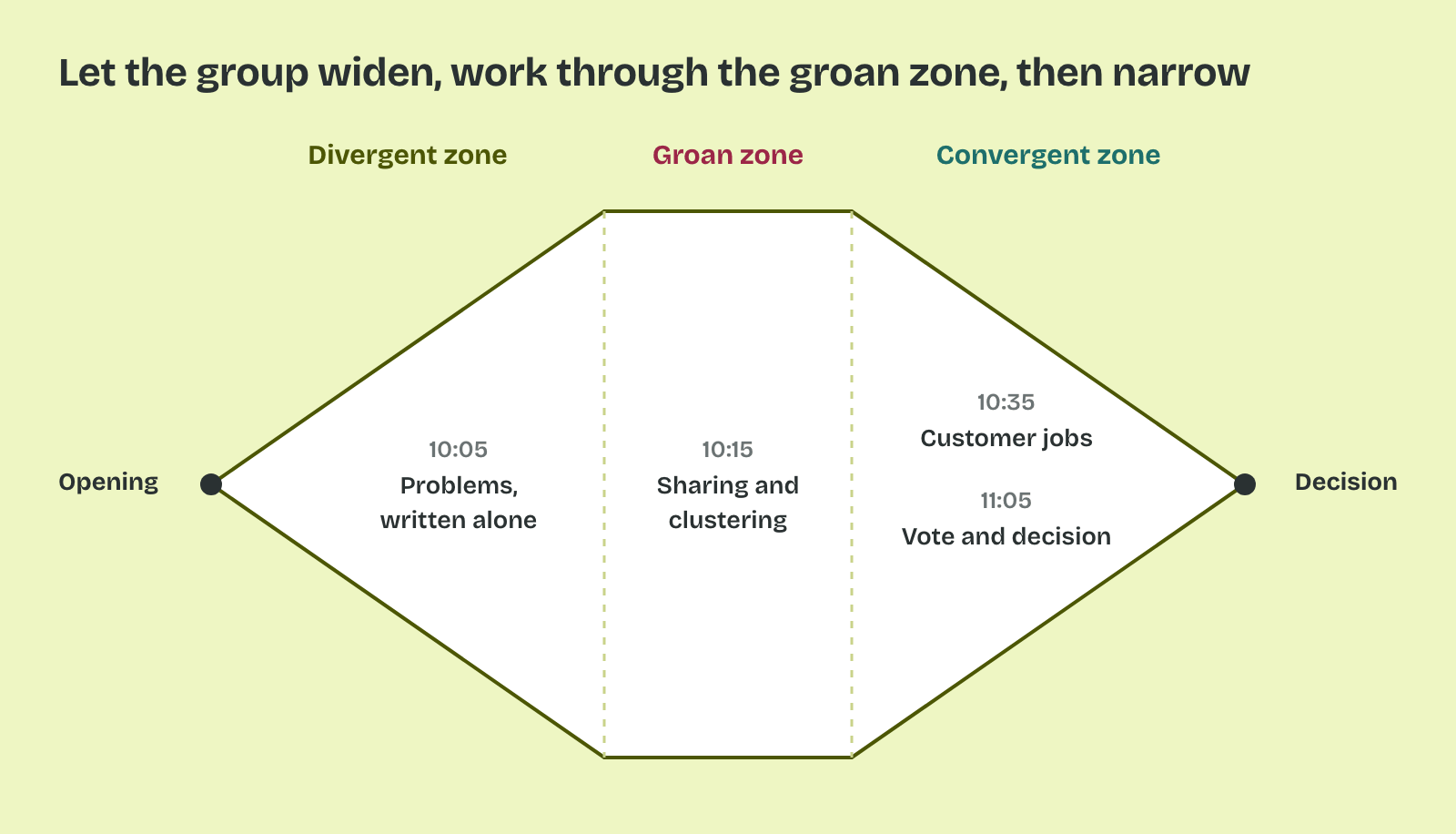
The discussion itself has a shape over time. Sam Kaner and colleagues drew it as a diamond in the Facilitator’s Guide to Participatory Decision-Making (1996). The group first widens the options in the divergent zone, then narrows them in the convergent zone. Between the two sits the groan zone, where people argue from different frames and the session feels stuck.
That’s why a plan gives each zone its own blocks. In the kickoff, writing problems alone is divergent, and sharing and clustering is where the groan zone tends to arrive. Drafting customer jobs and voting on them are convergent. Kaner treats the groan zone as a normal stage, so the plan leaves time for it.
That’s why jumping to a vote to escape the groan zone can lock in whatever idea was clearest before the session started. Here is the diamond with the kickoff’s blocks placed in each zone:
Pro tip: Write the outcome sentence before you pick a date or a room. If you can’t write it, a 30-minute call with the decider may settle the question faster than a workshop.