Planning a Qualitative Study
Analytics can show how many people leave a pricing page, but it can't show why they leave. So teams guess the reason, and each guess becomes a redesign that may miss the real cause.
Learn on the move: press play and turn your commute, walk or drive into time that grows your design career.

That's why qualitative research talks to people and watches them work. It answers why and how, with a few people studied in depth instead of many people counted.
Research on a Product People Already Use
The research in this theme starts from a product that already has users, and that gives it a head start. The product's own data shows who signed up, which features they use and who left. So a study can pick its participants by what they did in the product.
That data also checks what people tell you. A participant may describe a weekly habit that the usage log shows twice a month. Research for a brand-new product has neither advantage, because it looks for people who live a problem before any product exists.
In This Theme
The Qualitative Research theme follows a study from the plan to the result:
- Planning a Qualitative Study: the question, the method and the people, before the first session,
- User Interviews: one person and one conversation, then the readout,
- Focus Groups and Co-Design: a group that talks, or a group that makes something,
- Diary Studies: behavior logged over days or weeks,
- Contextual Inquiry: watching work where it happens,
- Jobs-to-be-Done: why people switch to a product, told as a story,
- Personas: who the users are, built from the evidence,
- Customer Journey Mapping: what they go through, step by step.
Each method module ends with how to make sense of that study and show it to the team.
Anatomy of a Qualitative Study
Imagine a team that booked eight interviews before anyone wrote down what it wanted to learn. Each interviewer asked different questions, two participants were colleagues, and nobody recorded consent.
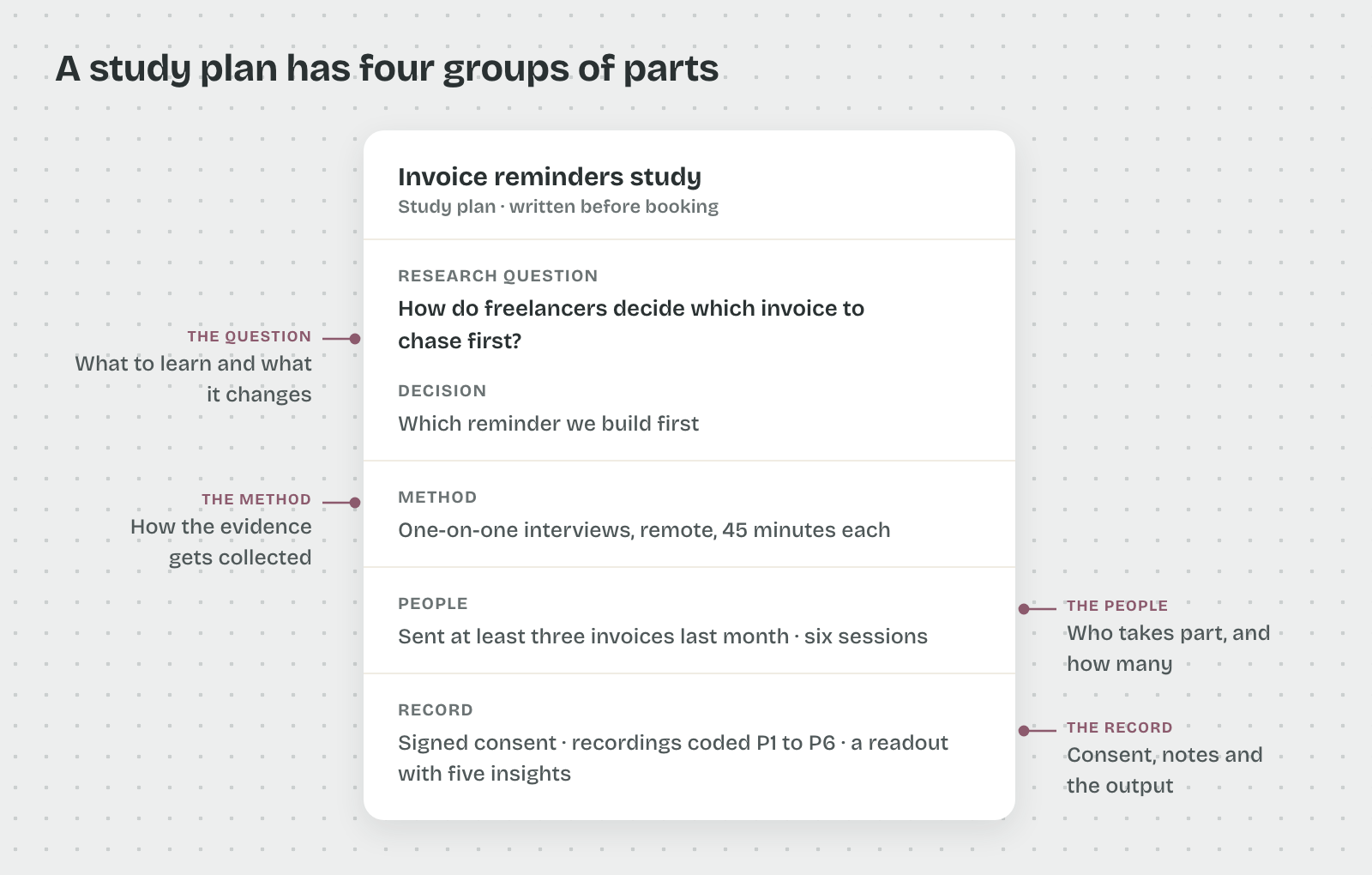
Each of those mistakes sits in a different part of a study. A qualitative study has four groups of named parts: the question, the method, the people and the record.
The Question
The first group decides what the study can find, and it gets written before anyone is booked.
- Research question: the one thing the team needs to learn, such as "How do freelancers decide which invoice to chase first?"
- Decision: the choice the answer will change, such as which reminder to build first. A question with no decision behind it tends to produce notes nobody uses.
- Assumptions: what the team already believes, written as statements to check, such as "Freelancers chase the largest invoice first."
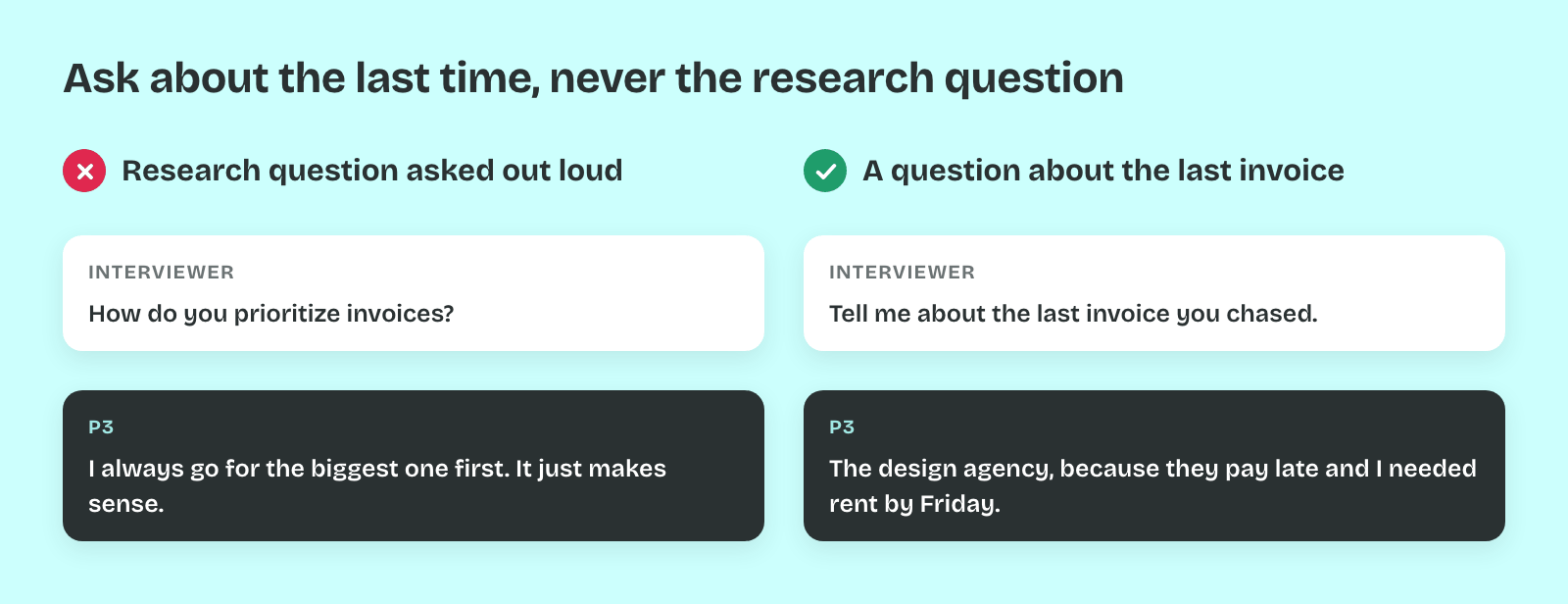
That's why the research question is rarely asked out loud. Erika Hall separates the two in her essay "Research Questions Are Not Interview Questions": the research question is what you need to know, and interview questions are what you ask to learn it. "How do you prioritize invoices?" invites a tidy theory. A question about the last invoice someone chased gets the real story.
The Method
So the second group turns the question into sessions.
- Method: the way evidence is collected, such as an interview, a focus group, a diary study or a contextual inquiry.
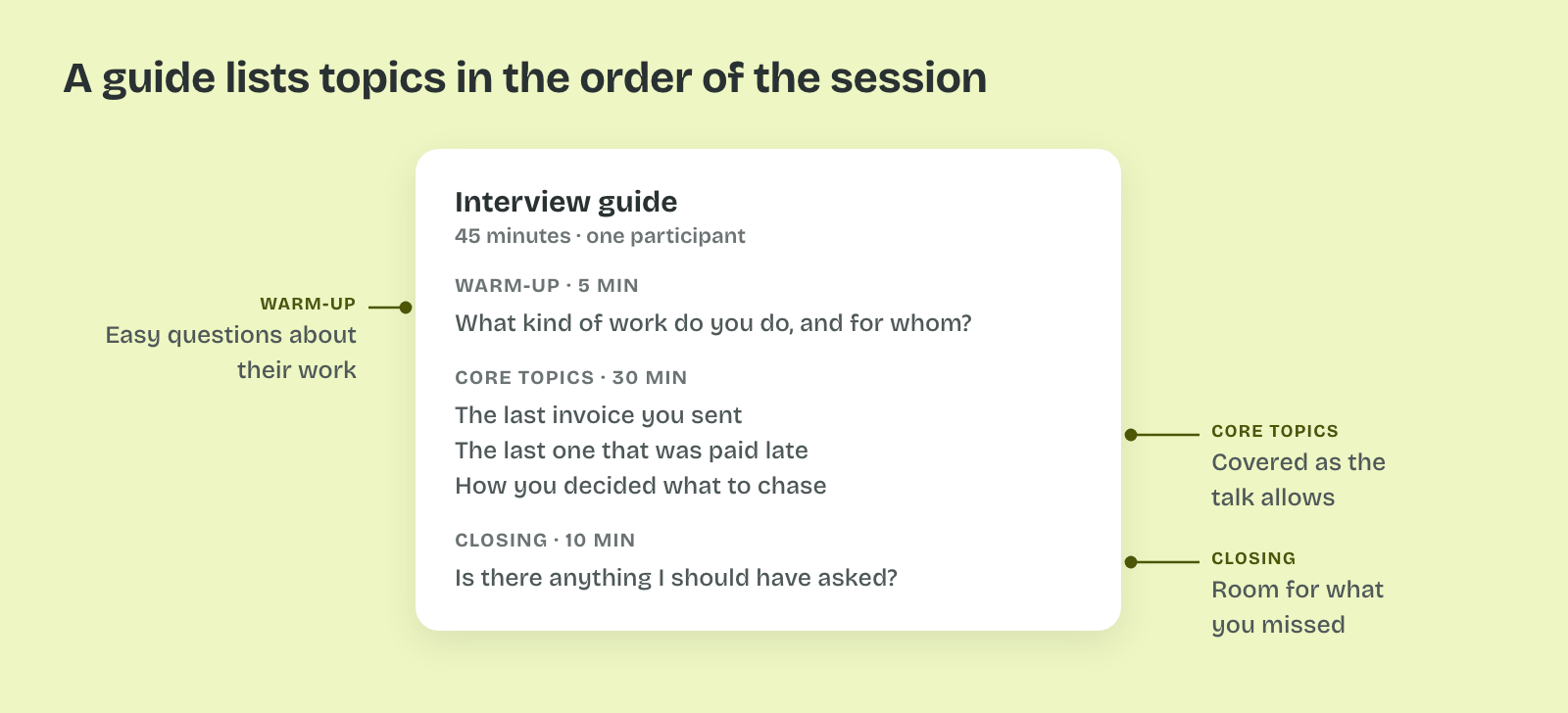
- Guide: the moderator's plan for a session, with a warm-up, the core topics and the closing questions. In a diary study, the guide is the set of prompts.
- Session length: how long each session runs, set before booking so participants know what they agree to.
Thus the guide holds topics, and the moderator follows the participant between them. Steve Portigal treats the guide that way in Interviewing Users, as a map to return to rather than a script to read.
The People
That's because the evidence is only as good as the people who give it.
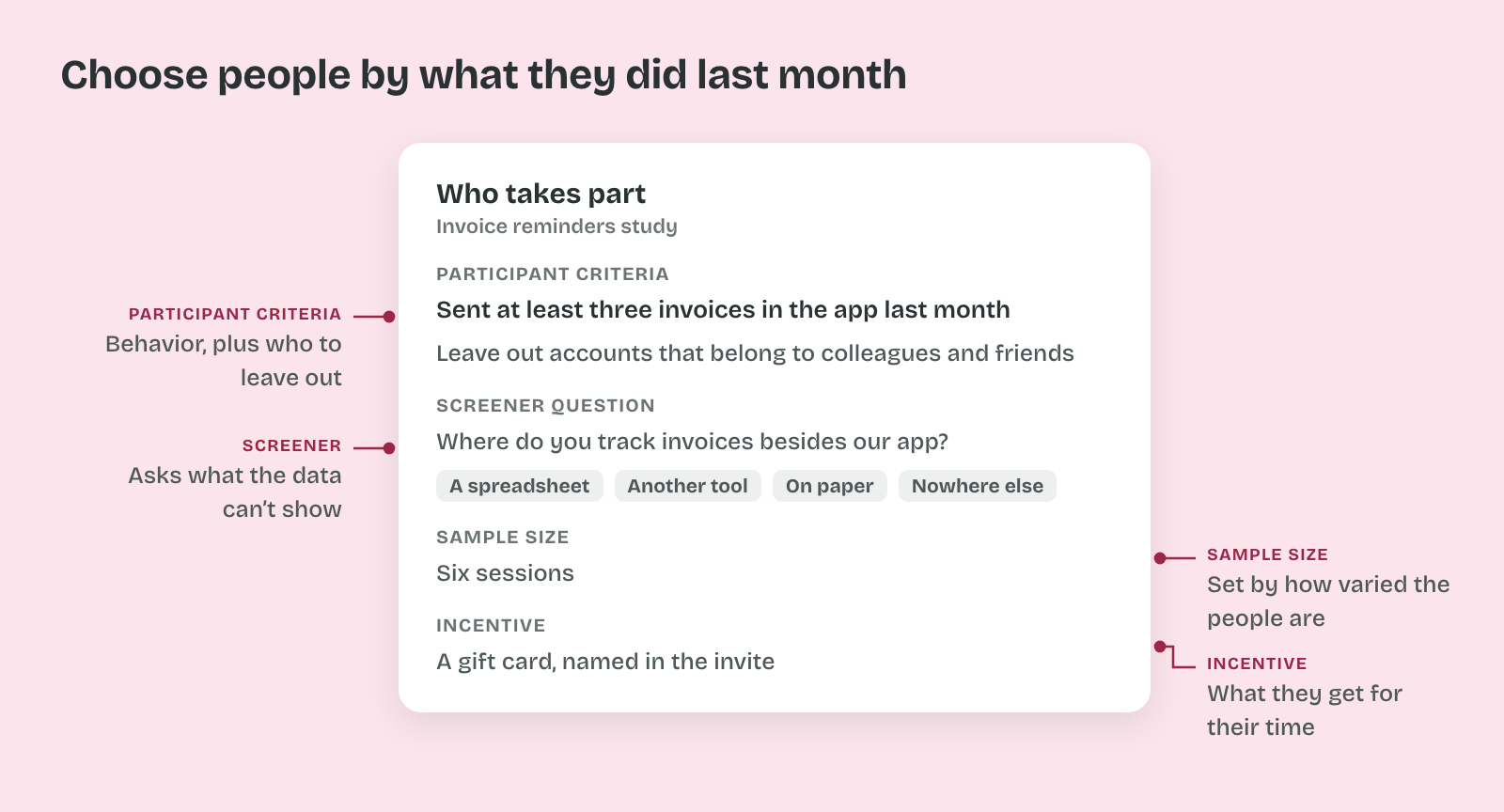
- Participant criteria: the behavior that makes someone right for the study, such as "sent at least three invoices in the app last month."
- Screener: a short questionnaire that asks what the product data can't show, without revealing the answer you hope for.
- Sample size: the number of sessions you plan, set by how varied the people are.
- Incentive: what each participant gets for their time, named in the invite.
The Record
So the last group decides what the team can still use a month later.
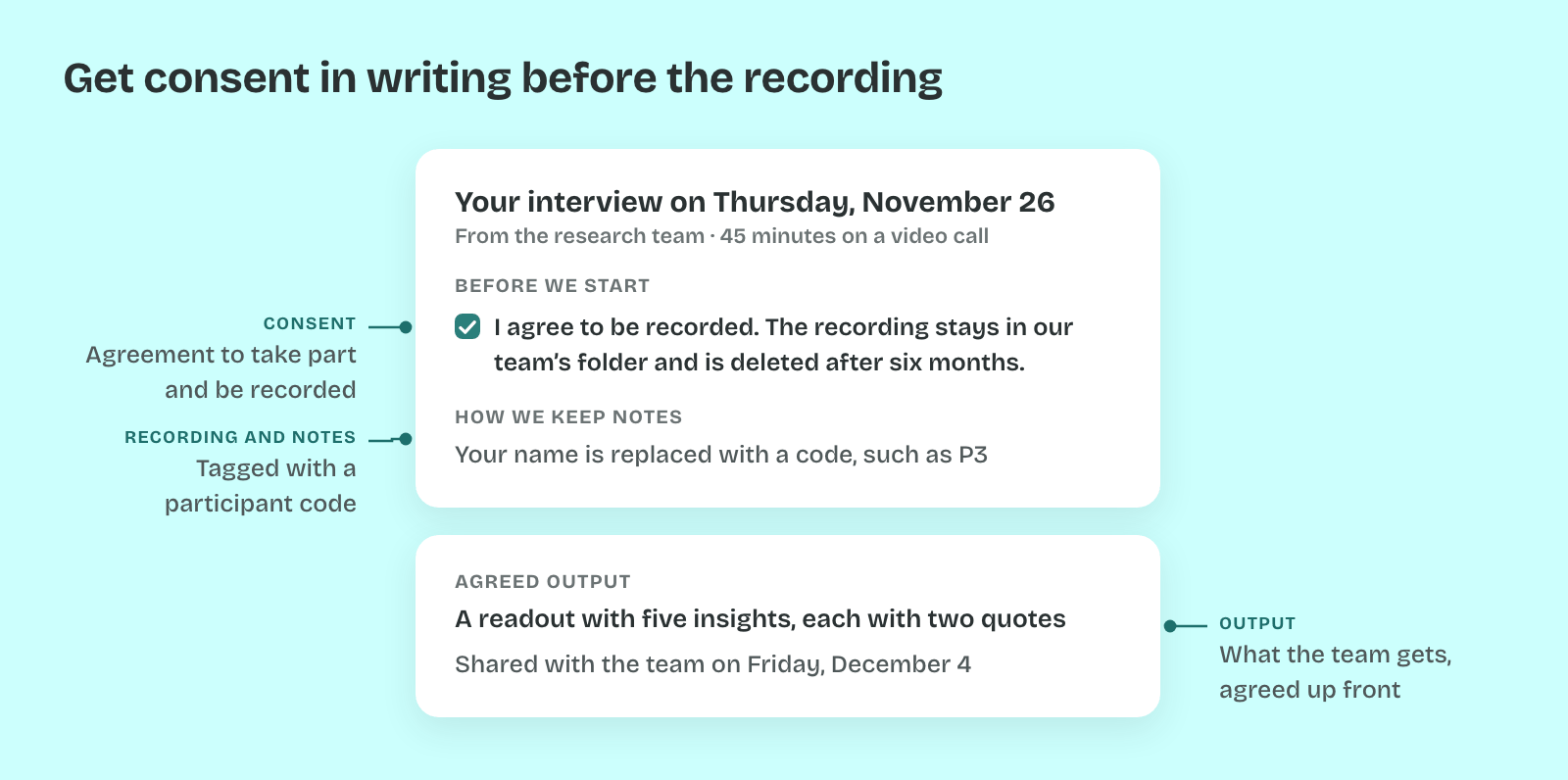
- Consent: the participant's written agreement to take part and be recorded, with how the recording is stored and who sees it. In the EU, GDPR treats a recording that identifies a person as personal data.
- Recording and notes: the audio or video and the notes from each session, tagged with a participant code such as P3.
- Output: what the team expects at the end, agreed up front, such as a readout with five insights and their quotes.
In practice that output line keeps the scope honest. A team that expects a ranked list of problems needs different sessions from a team that expects a persona.
Pro tip: Put the research question and the decision at the top of the guide. Every interviewer reads them before each session, and off-topic questions become easy to spot.