Personas
A persona built on age and job title tells the team nothing about what to design. Imagine a poster of "Sarah, 34, busy mom" on the office wall, while the team argues about the meal planner without ever looking at it.
Learn on the move: press play and turn your commute, walk or drive into time that grows your design career.

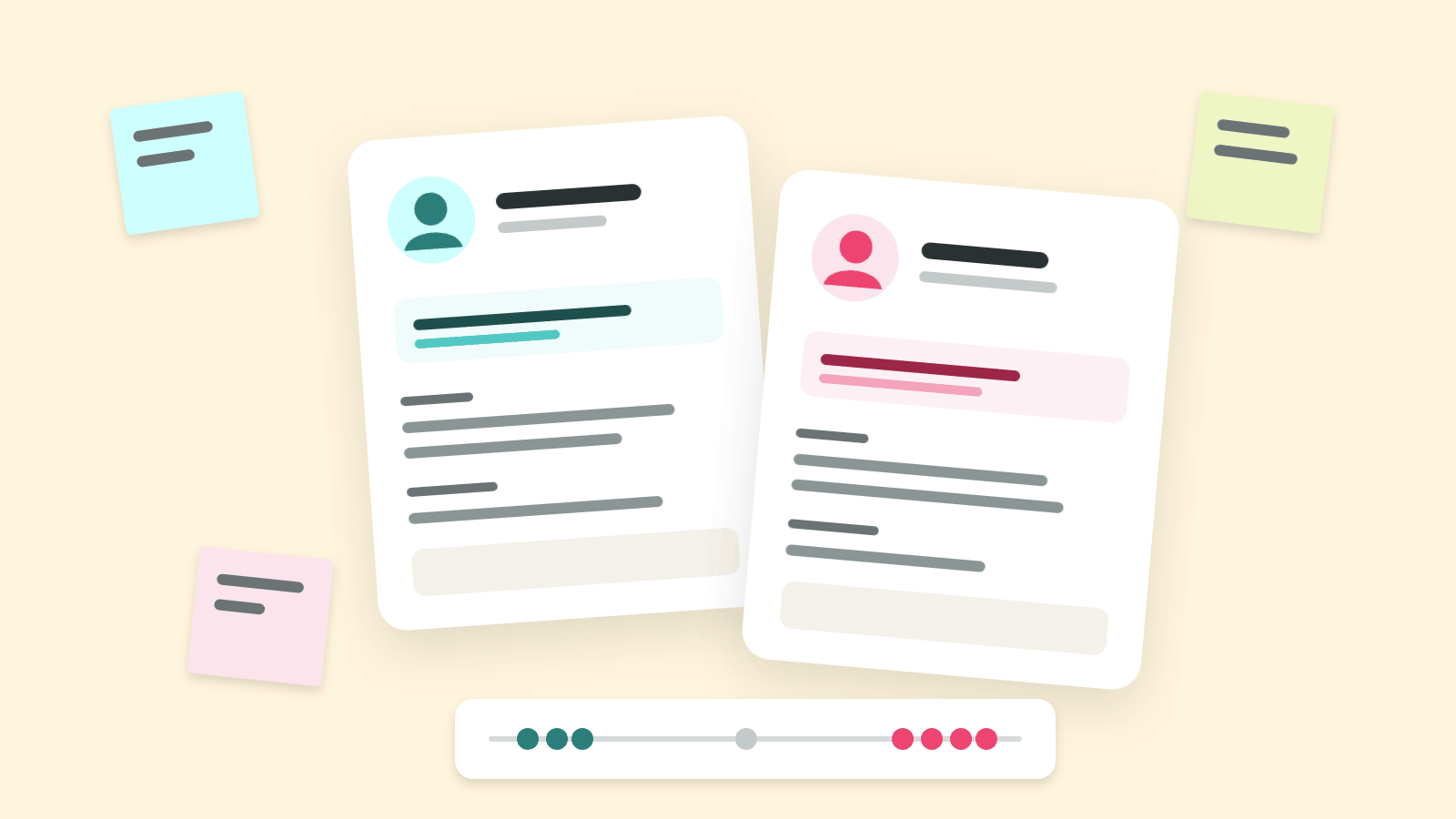
That's why a useful persona describes behavior and goals, drawn from research. It gives the team one shared picture of a group of users, with a name the team can use in a meeting.
What a Persona Adds
A persona is a short profile of a fictional person who stands for a group of real users. It names their goals, their habits and what gets in their way. Every line comes from interviews, surveys or product data.
So a persona helps when a team keeps designing for "the user" and means a different person each time. A product used by one narrow group, all with the same goal, may need no persona at all.
Anatomy of a Persona
A persona full of demographics looks complete and answers no design question. Imagine a meal-planning app persona with an age, a city, a salary and three hobbies, and nothing about how she decides what to cook.
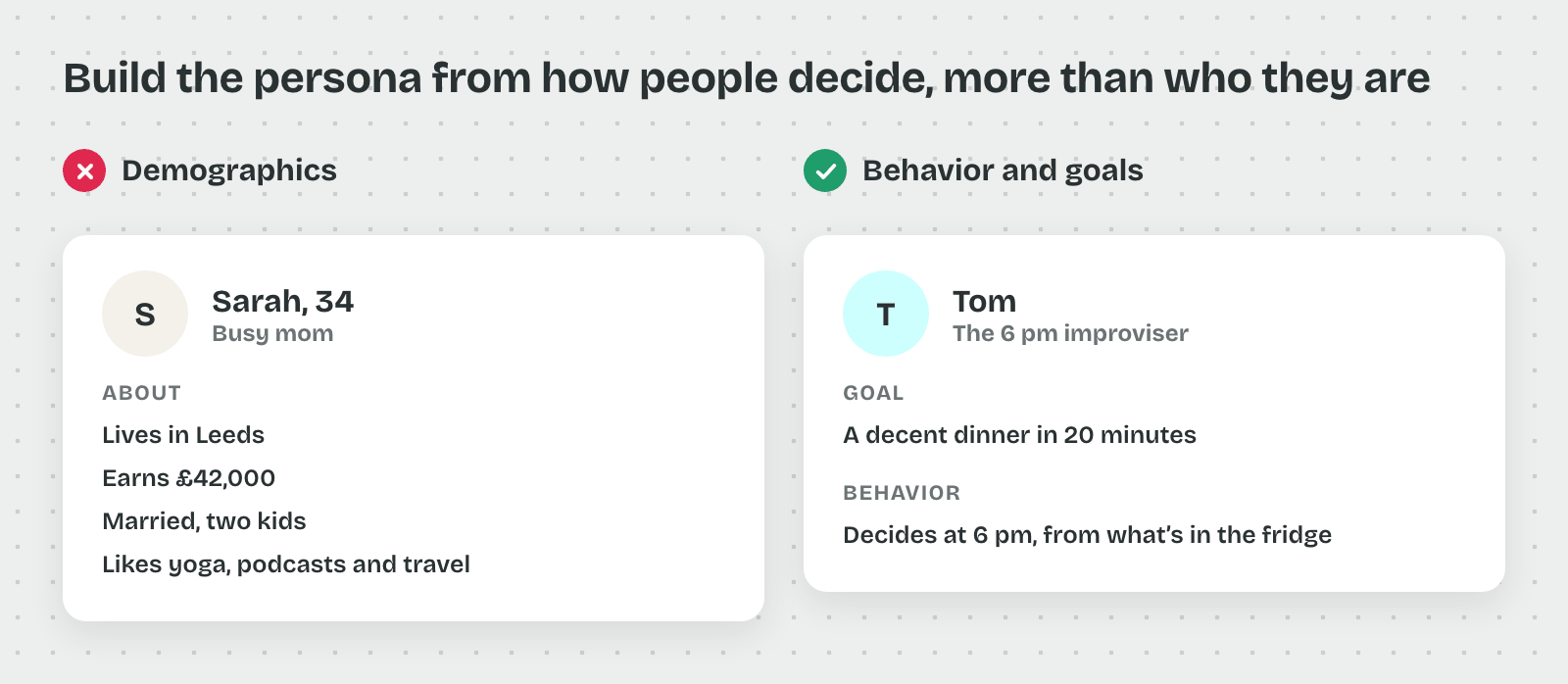
So a working persona is built from parts that each help a design decision.
Where Personas Came From
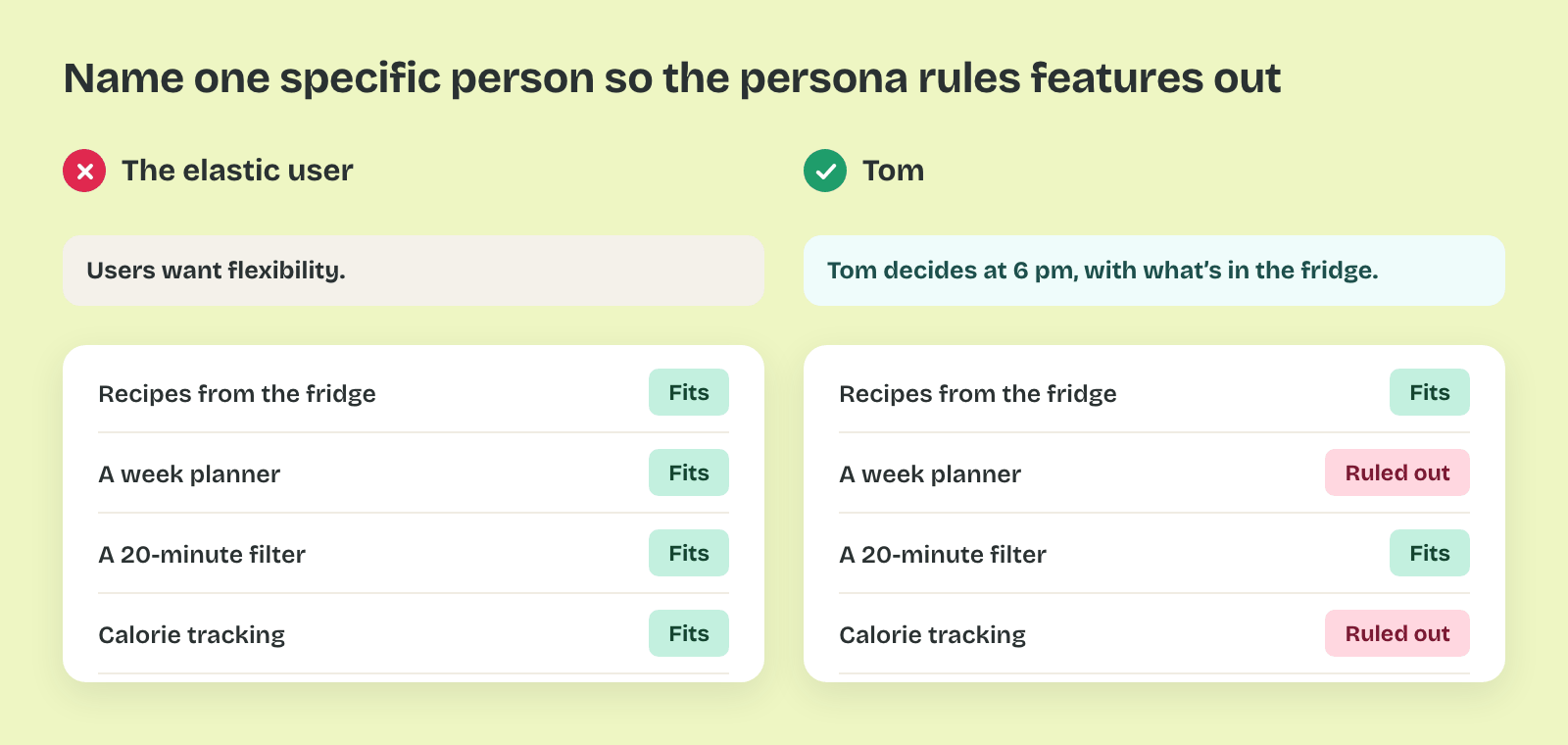
Alan Cooper brought personas into software design in his 1999 book The Inmates Are Running the Asylum. He warned against the "elastic user," a vague user who bends to fit whatever the team wants to build. A persona fixes that by naming one specific person, with specific goals.
That's why a persona is precise on purpose. "Users want flexibility" stretches to fit any feature. "Tom decides what to cook at 6 pm, with what's already in the fridge" rules some features in and others out.
The Parts of a Persona
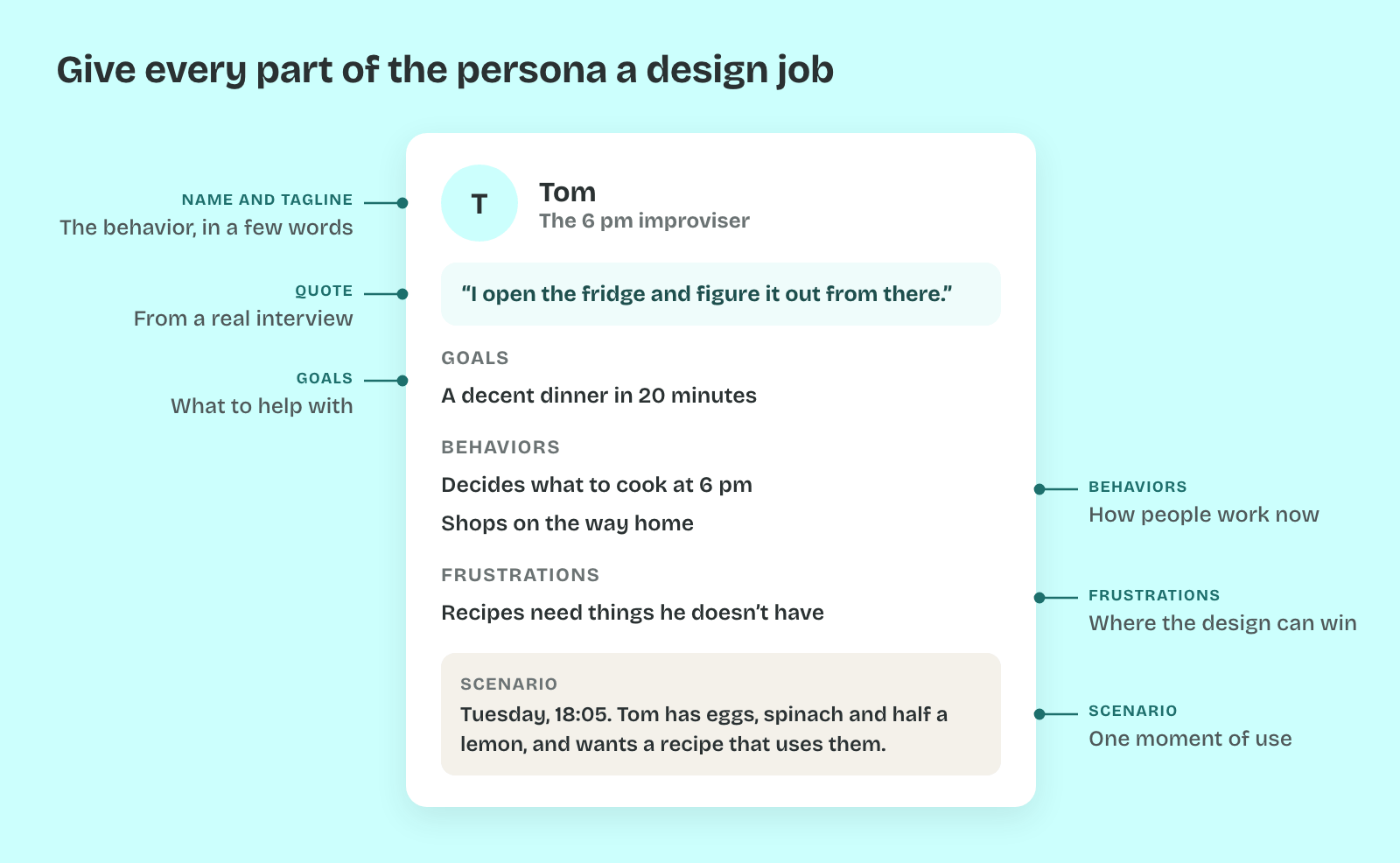
A persona usually holds a name and a short tagline, a quote, goals, behaviors, frustrations and a typical scenario. The tagline names the behavior, such as "the 6 pm improviser." The quote comes from a real interview. The scenario describes one moment when the persona uses the product.
Thus each part answers a question the team asks in design. The goals say what to help with, the behaviors say how people work now, and the frustrations say where the design can win.
Goals Come First
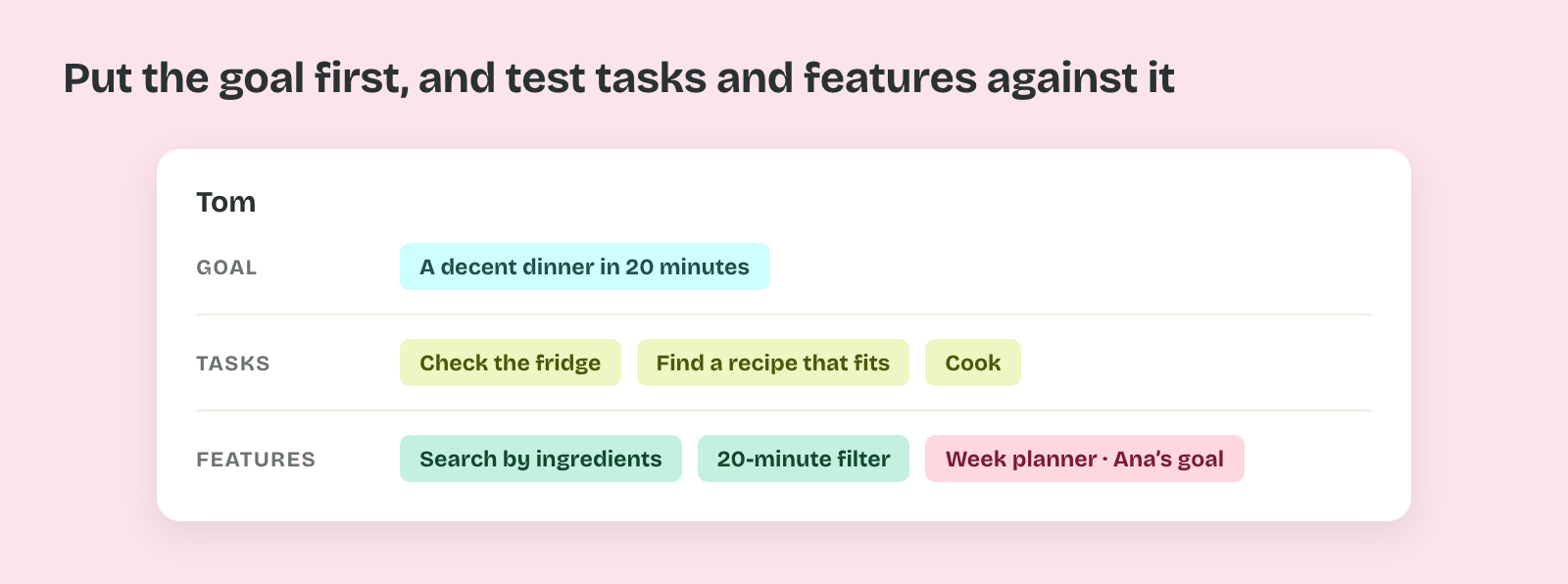
Cooper put goals at the center of a persona, ahead of tasks and features. Tom's goal is to get a decent dinner on the table in 20 minutes. Checking the fridge and searching recipes are tasks that serve it.
So a persona with clear goals settles arguments. A feature for planning a week of meals serves someone else's goal, and the persona shows it.
Leave Out What Changes Nothing
Age, income and hobbies earn a place only when they change a design decision. A photo and a name help people remember the persona. A list of favorite brands rarely helps anyone design a meal planner.
That's because every line competes for attention. Read each line and ask which decision it would change. Cut the lines that change none.
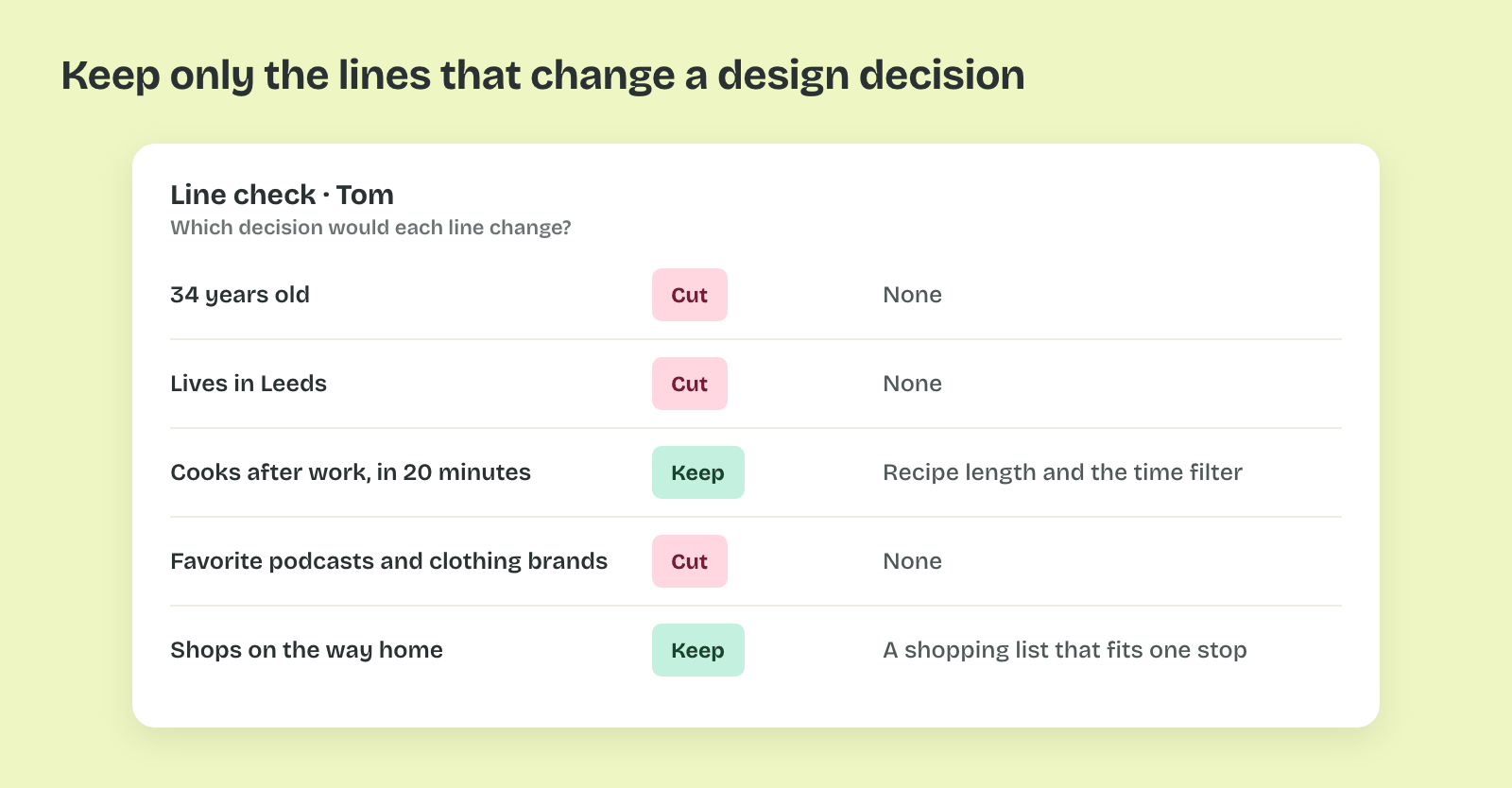
Pro tip: Swap the persona's age and city for different ones and reread it. If no design decision changes, those details were decoration and can go.