Jobs-To-Be-Done
A feature list says what a product does, and leaves out why anyone switched to it. Imagine an invoicing app whose signup survey asks "Why did you choose us?" and gets "Easy to use" from most new customers.
Learn on the move: press play and turn your commute, walk or drive into time that grows your design career.

That's why Jobs-to-be-Done studies the switch itself. You ask what was going on in someone's life when they stopped one solution and started another.
What a Job Adds
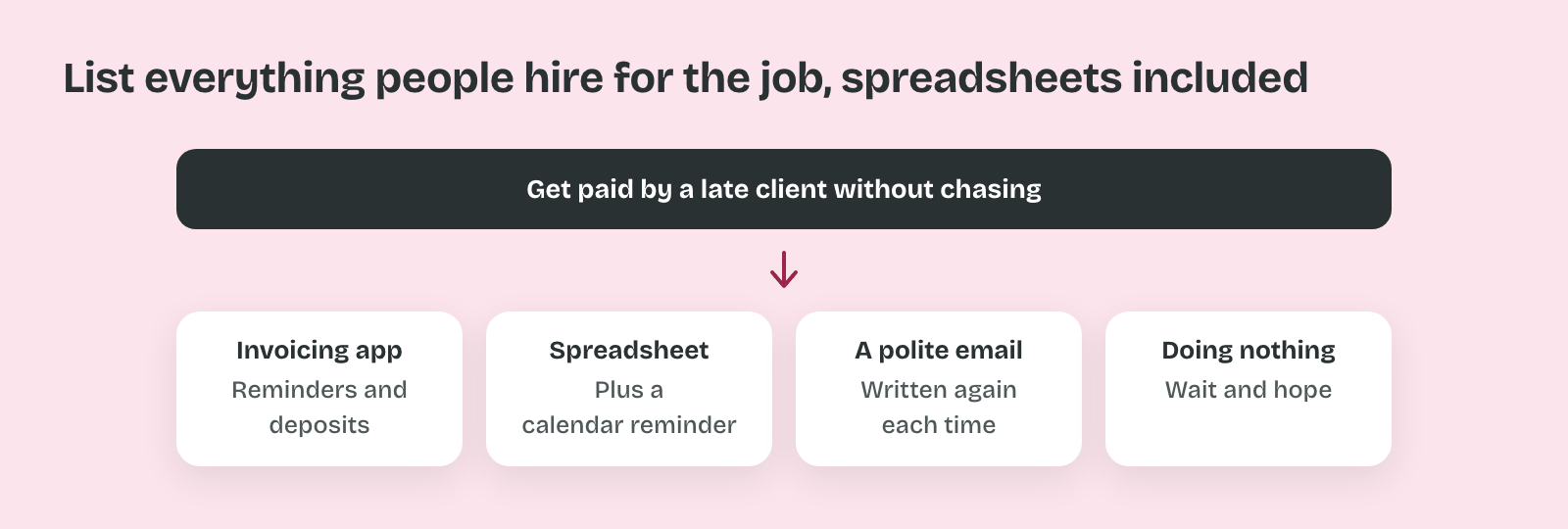
A job is the progress a person is trying to make in a particular situation. A freelancer whose client paid late for the third time wants to get paid without chasing anyone. The app, a spreadsheet and a polite email are all candidates for that job.
So the method suits questions about why people start, switch or quit a product. A question about where people get stuck on a screen is easier to answer in a usability test.
Anatomy of a Job
Teams often describe a product by its features, and the reason people buy it stays out of view. Imagine an invoicing app team that ships recurring invoices, tax fields and twelve templates, while new signups keep coming from one kind of moment: a client paying late again.
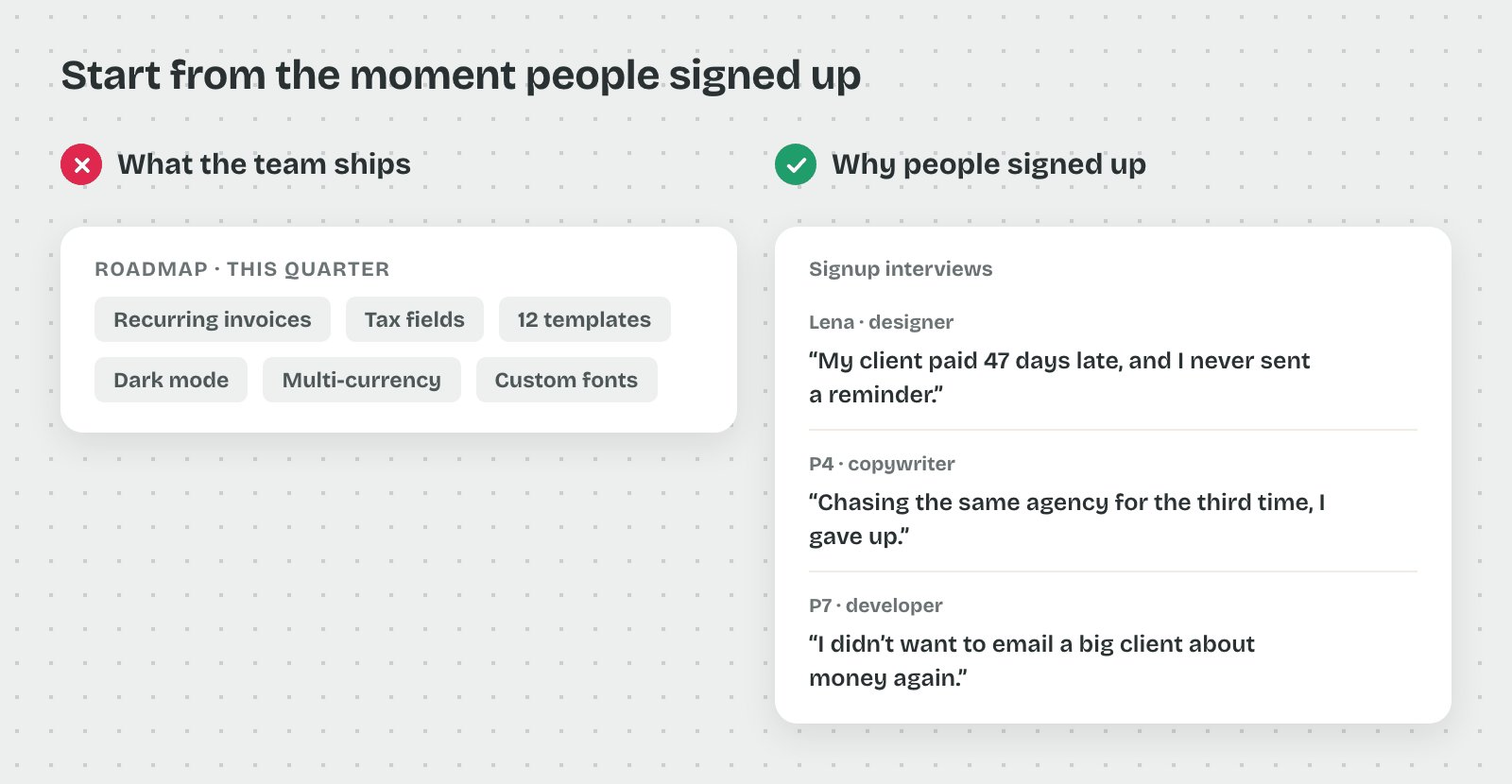
So Jobs-to-be-Done starts from that moment and names the progress the person wanted.
Progress in a Situation
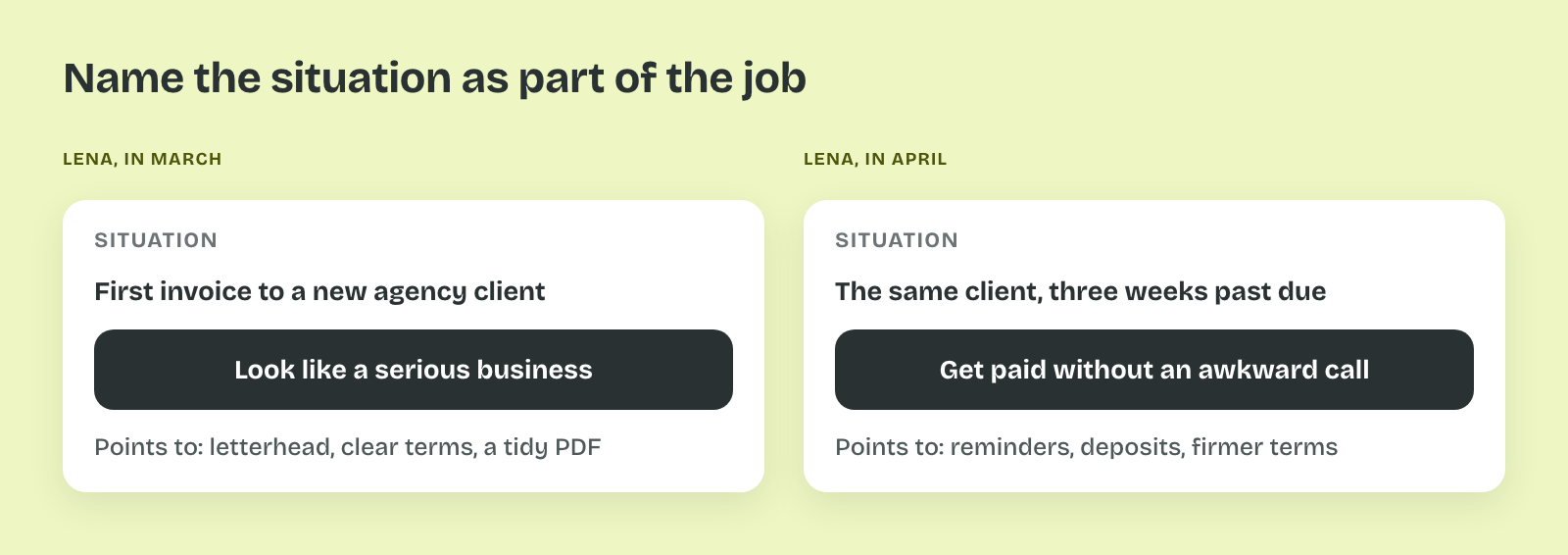
Clayton Christensen and his coauthors wrote in Harvard Business Review in 2016 that a job is the progress a person tries to make in a particular circumstance. The circumstance is part of the job. "Get paid" is too broad to design for. "Get paid by a client who already paid late twice" points at reminders, deposits and firmer terms.
That's why the same person can have different jobs at different times. A freelancer sending a first invoice to a new client wants to look professional. The same freelancer, three weeks past the due date, wants the money without an awkward call.
Three Sides of a Job
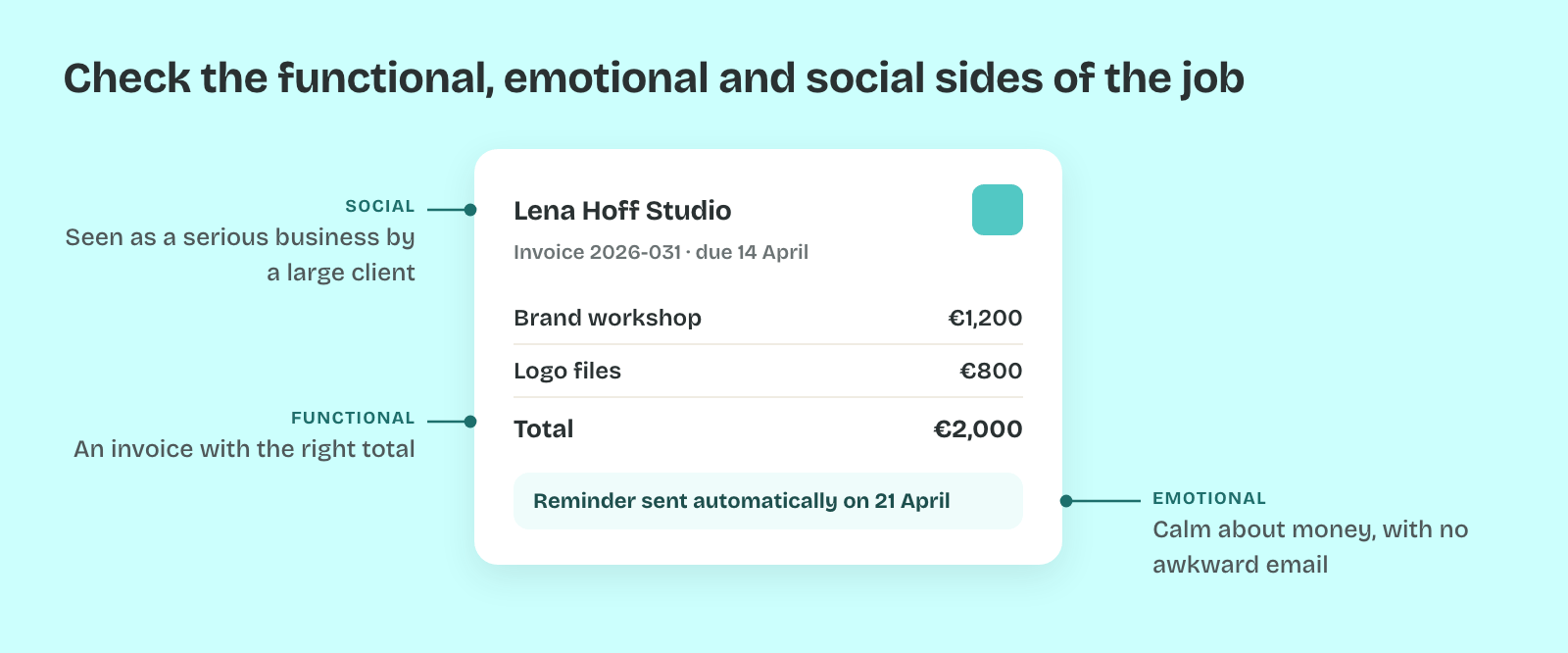
The same article gives every job a functional, an emotional and a social side. The functional side is the task, such as sending an invoice with the right total. The emotional side is how the person wants to feel, such as calm about money. The social side is how they want to be seen, such as a serious business by a large client.
Thus a product can do the task and still lose the job. An invoice that adds up correctly but looks homemade misses the social side for a freelancer with a corporate client.
What Gets Hired and Fired
People hire a product for a job and fire it when something does the job better. In Christensen's milkshake study, morning commuters hired a thick milkshake for a long, dull drive. It competed with bananas, bagels and boredom, much more than with other milkshakes.
So the competition for a job includes spreadsheets, emails and doing nothing. For the invoicing app, the main rival is often a spreadsheet and a reminder in the freelancer's calendar.
A Job, a Task and a Feature
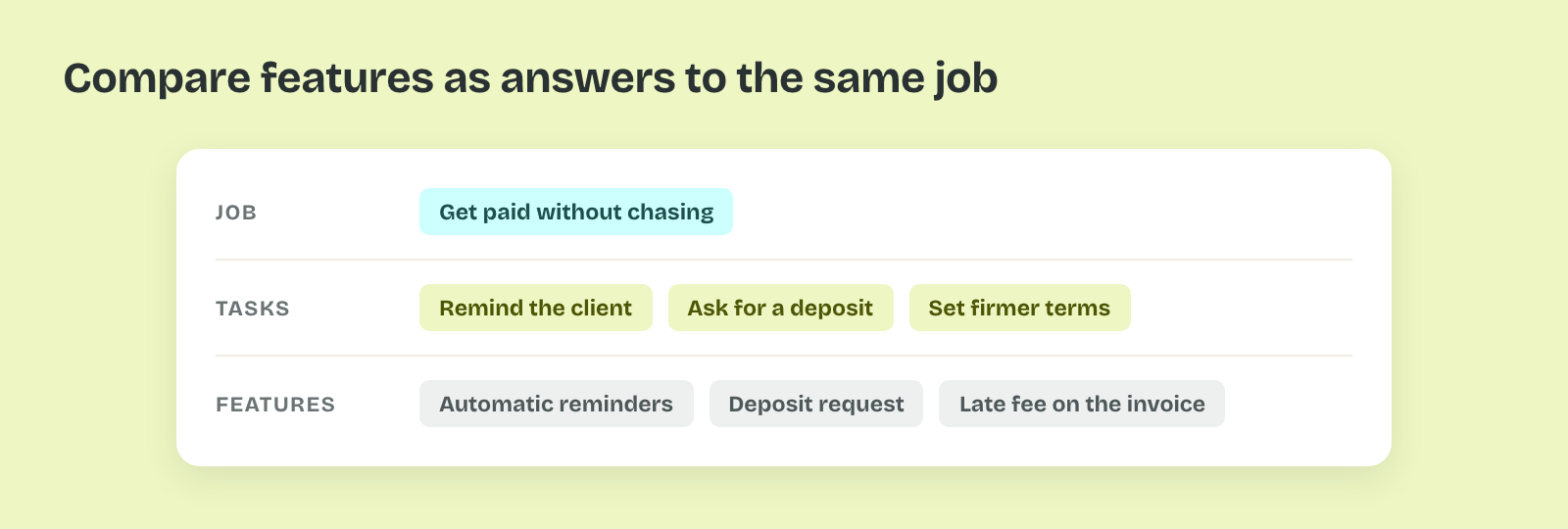
A feature is something the product offers, such as automatic reminders. A task is a step the person takes, such as sending a reminder. A job is why the steps matter, such as getting paid without chasing.
That's why a job outlives every feature built for it. Reminders, deposits and late fees are three answers to the same job, and the team can compare them only once the job is named.
Pro tip: Test a job statement by asking whether people had it before your product existed. Freelancers needed to get paid long before invoicing apps, so "get paid without chasing" is a job and "use reminders" is a feature.