Diary Studies
An interview asks people to remember last week, and memory smooths over the days that mattered. Imagine a budgeting app where most new users log every purchase in their first week, and the logs go quiet by week three.
Learn on the move: press play and turn your commute, walk or drive into time that grows your design career.

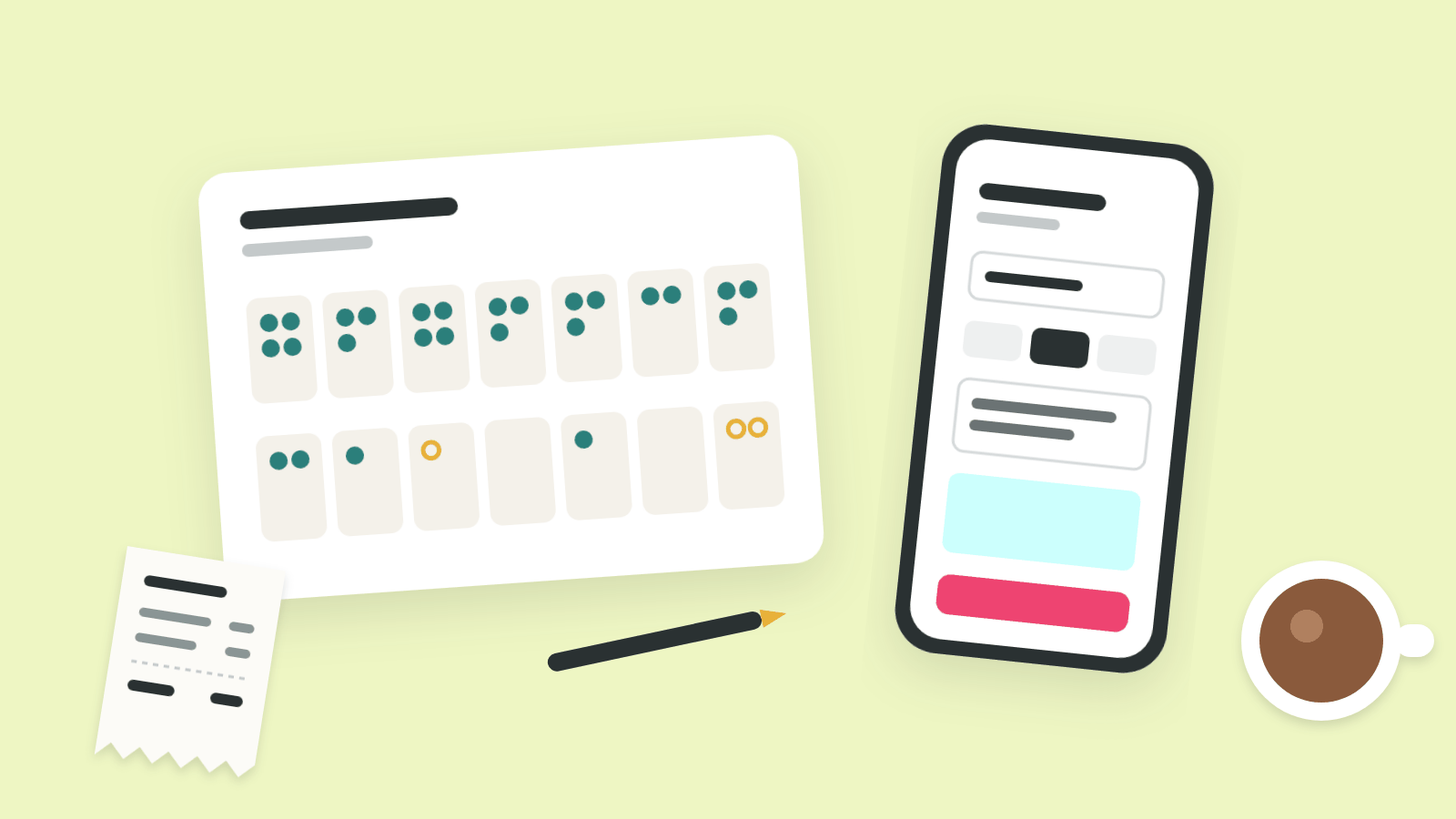
That's why a diary study asks people to record moments as they happen. Over two weeks, each participant sends short entries from their phone, and the change shows up entry by entry.
What a Diary Adds
A diary study collects many small entries from the same people over time. Each entry captures one moment, such as a purchase, an evening check or a skipped log. Read in order, the entries show when a habit forms and when it breaks.
So a diary suits behavior that repeats or changes over days, such as building a routine or dropping a feature. A task that happens once, in one sitting, is easier to watch in a usability test.
Designing the Prompts
A vague diary prompt gets the same vague answer every day for two weeks. Imagine asking participants each evening "How was budgeting today?" and reading "fine" fourteen times.
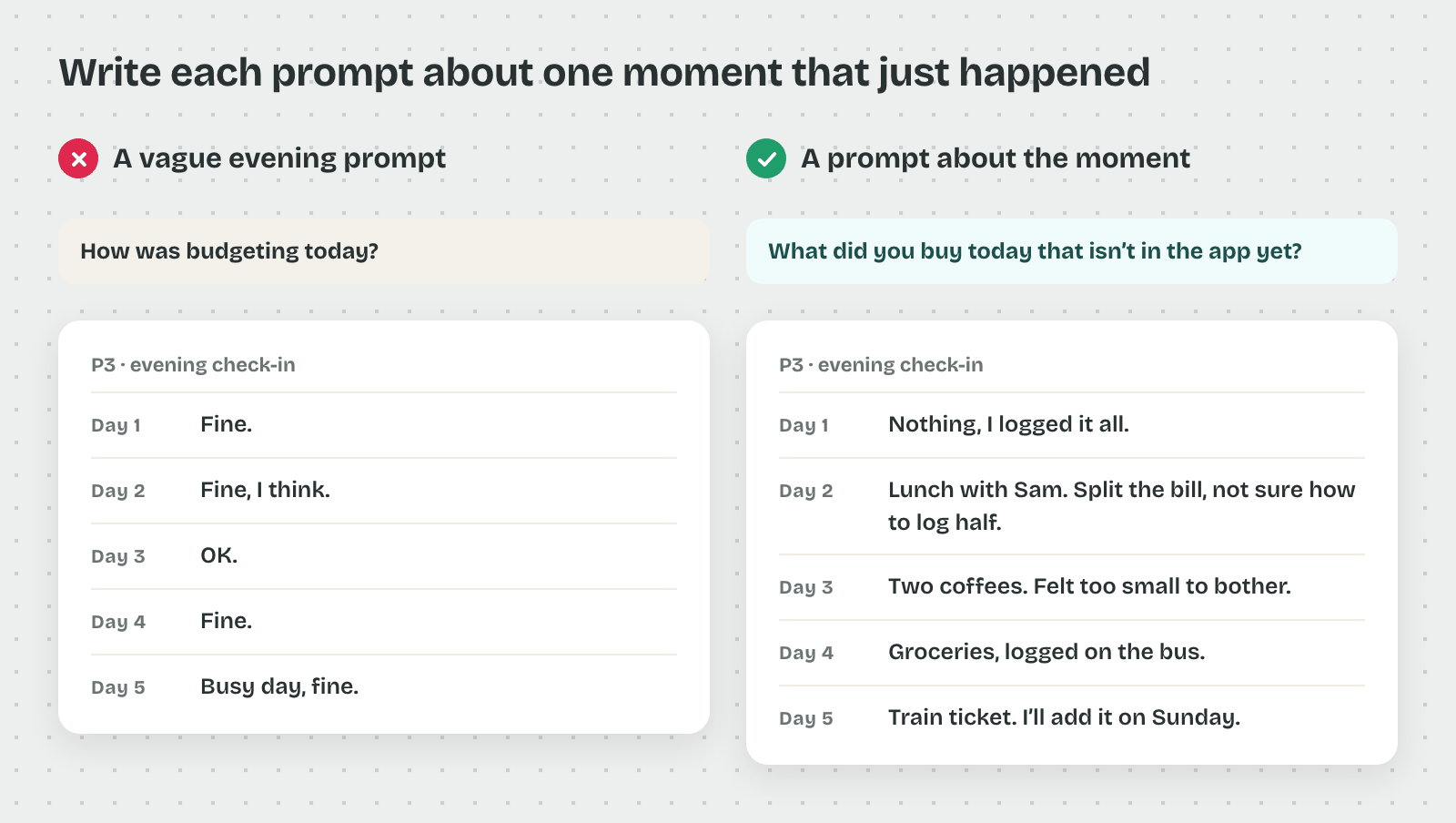
So a diary study is designed around the moments that trigger an entry and the few questions each entry asks.
Three Triggers for an Entry
Ladd Wheeler and Harry Reis sorted diary designs by what triggers an entry, in a 1991 review of self-recording methods. An event-based entry is written each time something happens, such as a purchase. An interval-based entry comes at a set time, such as every evening. A signal-based entry answers a notification the researcher sends.
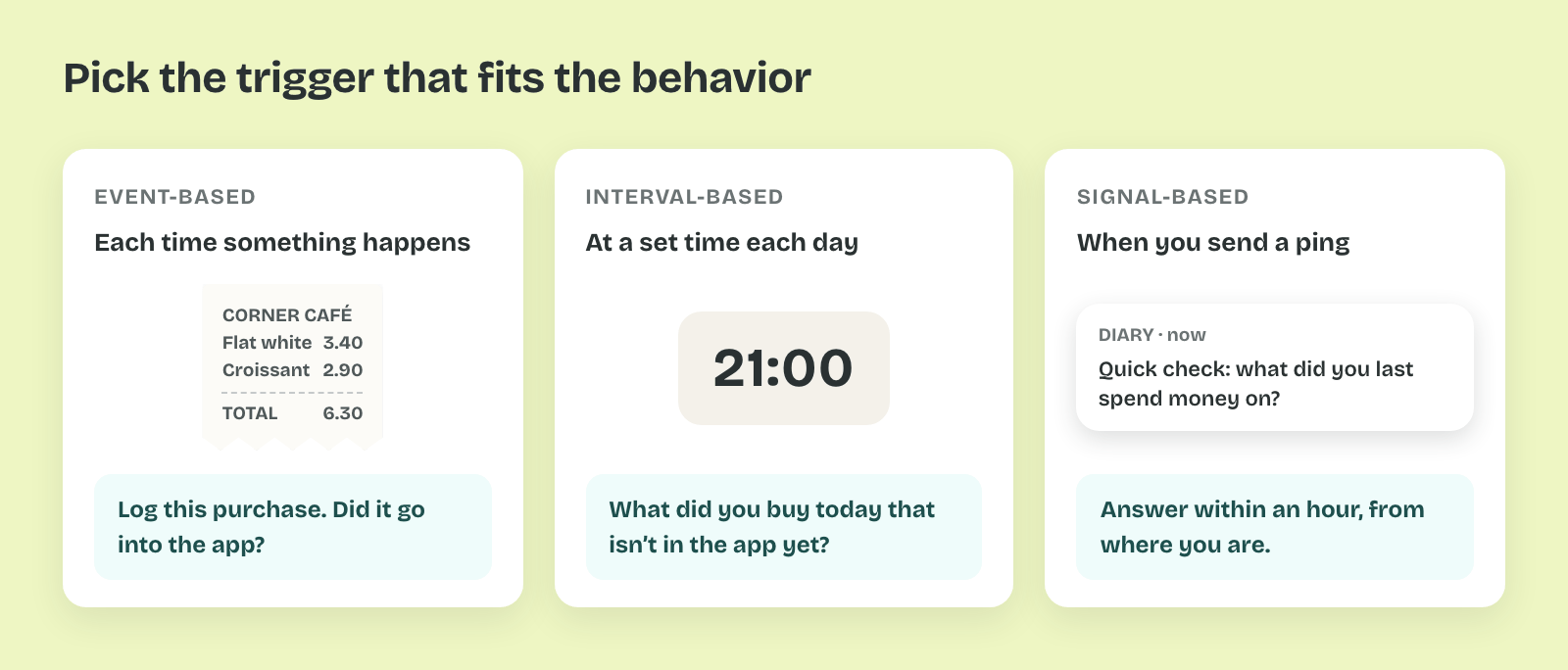
That's why the trigger follows the behavior you study. For the budgeting app, a purchase is the event, because logging purchases is the habit in question. An evening check-in catches the purchases that never got logged.
What One Entry Asks
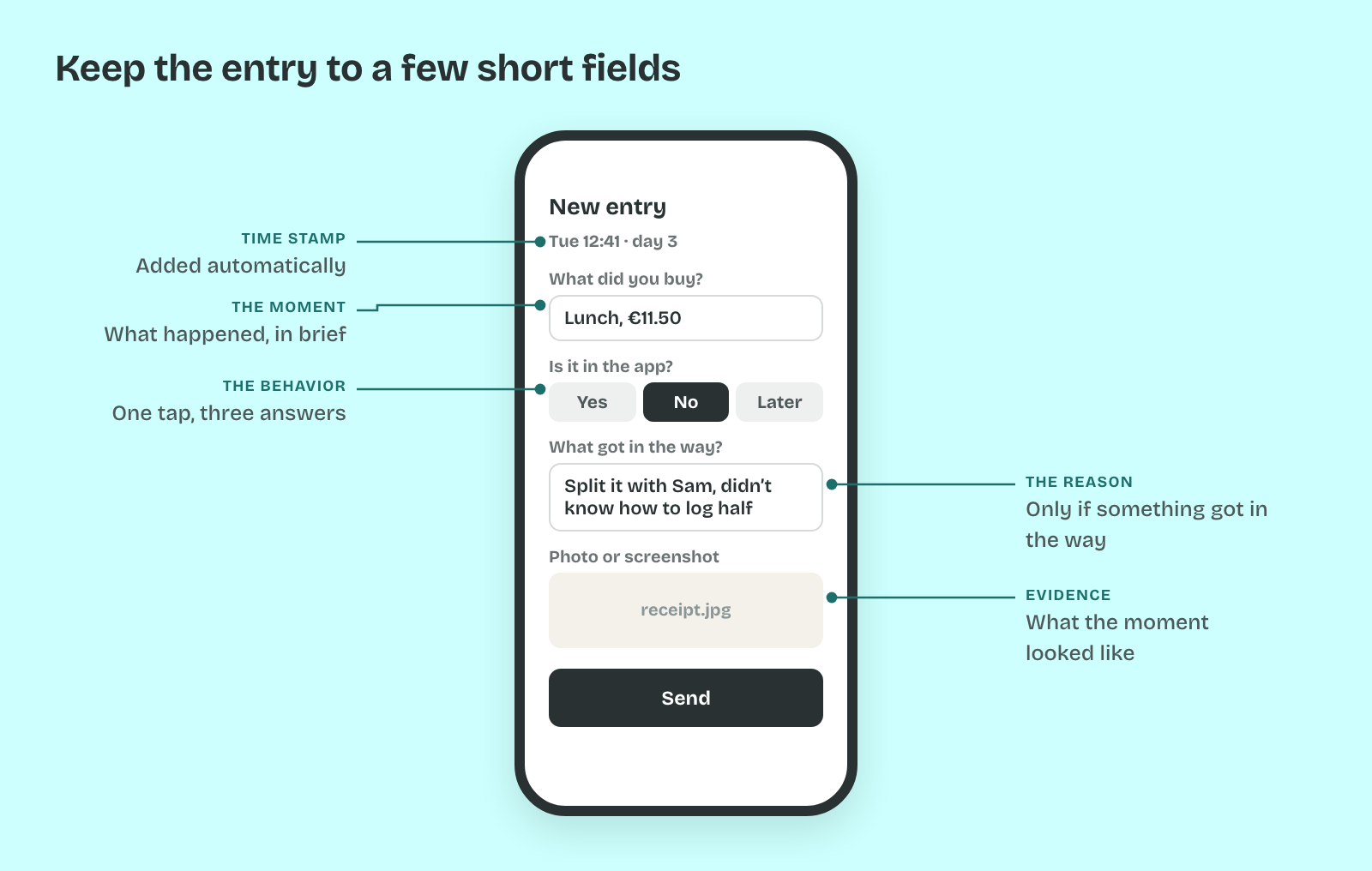
An entry form holds a few short fields, the same each time. For a purchase, it asks what was bought, whether it went into the app, and what got in the way if it didn't. A field for a photo or screenshot shows the moment itself.
Thus each extra field makes an entry more likely to be skipped. A form that takes five minutes gets filled in for a few days, then dropped. Keep each entry under a minute, and move longer questions to the evening check-in.
Ask About the Moment
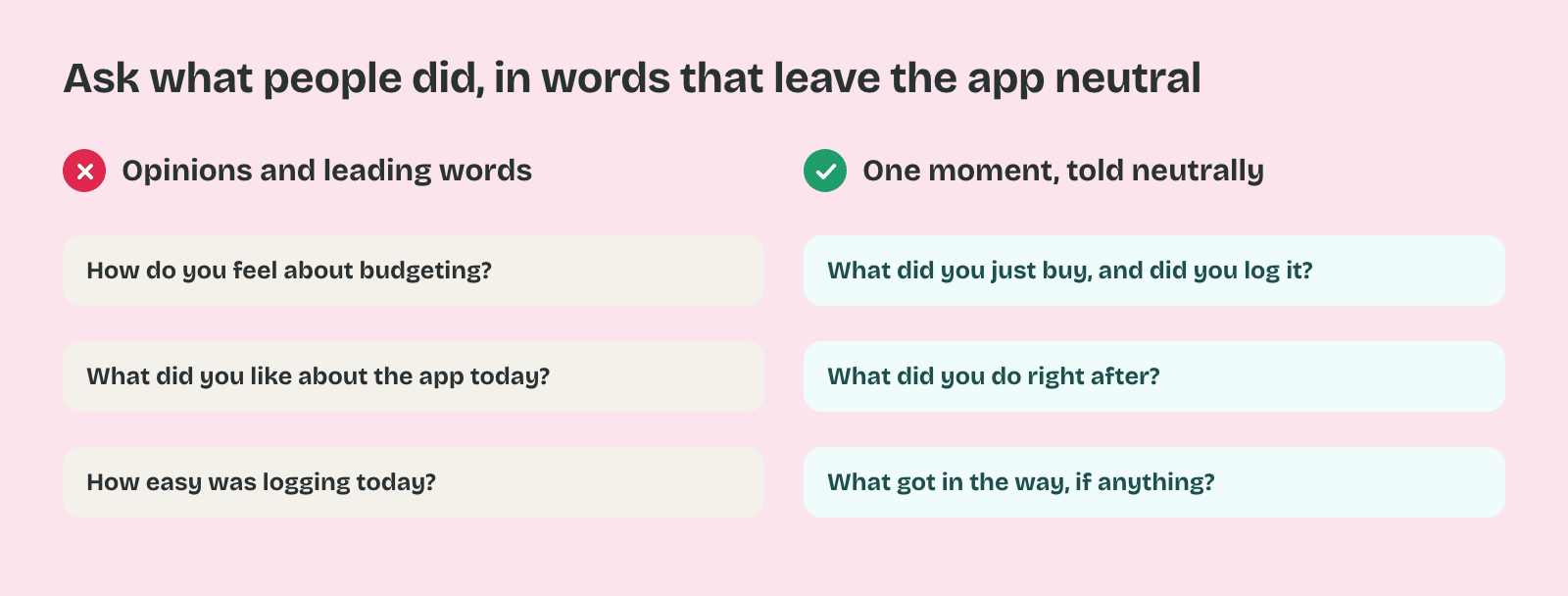
A good prompt points at one concrete moment that just happened. "What did you just buy, and did you log it?" gets a fact. "How do you feel about budgeting?" gets an opinion, and the opinion barely moves from day to day.
So the prompts stay neutral about the product. A prompt like "What did you like about the app today?" tells people the app should be liked. Ask what they did and what happened next, and the likes and dislikes come out on their own.
Pilot the Prompts
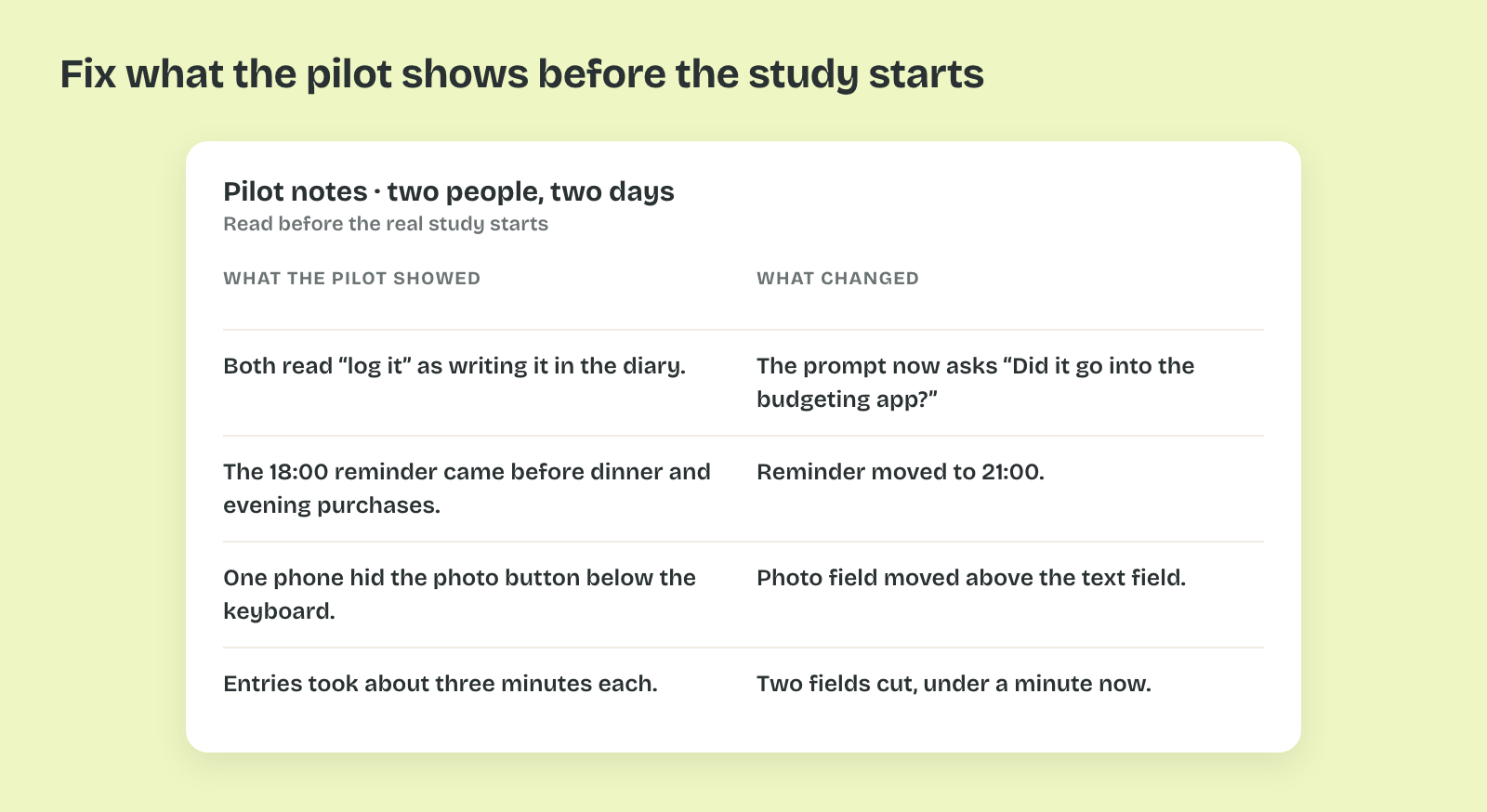
Before the study starts, run the full setup with two people for two days. Read every entry they send. A prompt that gets misread or skipped in the pilot will get the same treatment from every participant.
That's because nobody is there to explain a diary prompt once the study runs. Fix the wording, the reminder times and the form itself, then start the real study.
Pro tip: Write the evening prompt so it can be answered with a phone in one hand. "What did you buy today that isn't in the app yet?" works on a crowded bus.