Focus Groups and Co-Design
Some product questions are about how people decide and work together, and a one-to-one interview hears only one side. Imagine a scheduling app for cafés where the data shows almost no shift swaps, while every manager says staff swap shifts each week.
Learn on the move: press play and turn your commute, walk or drive into time that grows your design career.

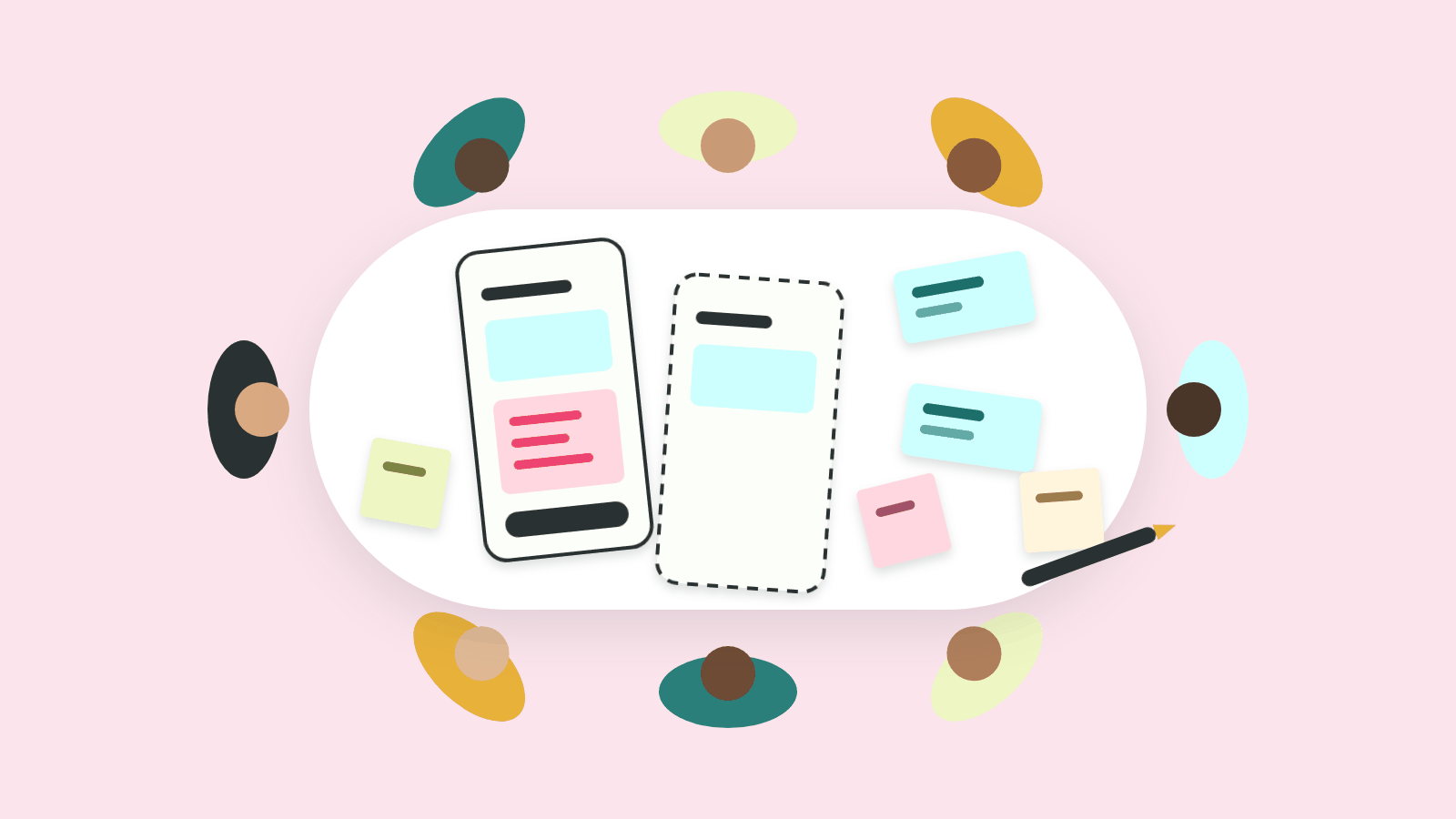
That's why a group session puts several users in one conversation. The swaps happen in a group chat between staff and a manager, so the people who negotiate them can show how it works.
What a Group Adds
A group session collects two kinds of evidence at once. Each person's own experience comes out, and so does the way people react to each other. A barista mentions swapping by text, and a manager adds that she approves a swap only after checking hours.
So a group suits shared work and public topics, while a private topic still belongs in an interview. A focus group talks about the work. A co-design session asks the same people to build part of the product, such as the swap request, out of paper parts.
Planning a Group Session
A group session planned like an interview turns into six interviews with an audience. Imagine a moderator who asks six baristas the same question in turn, while the other five wait for ninety minutes.
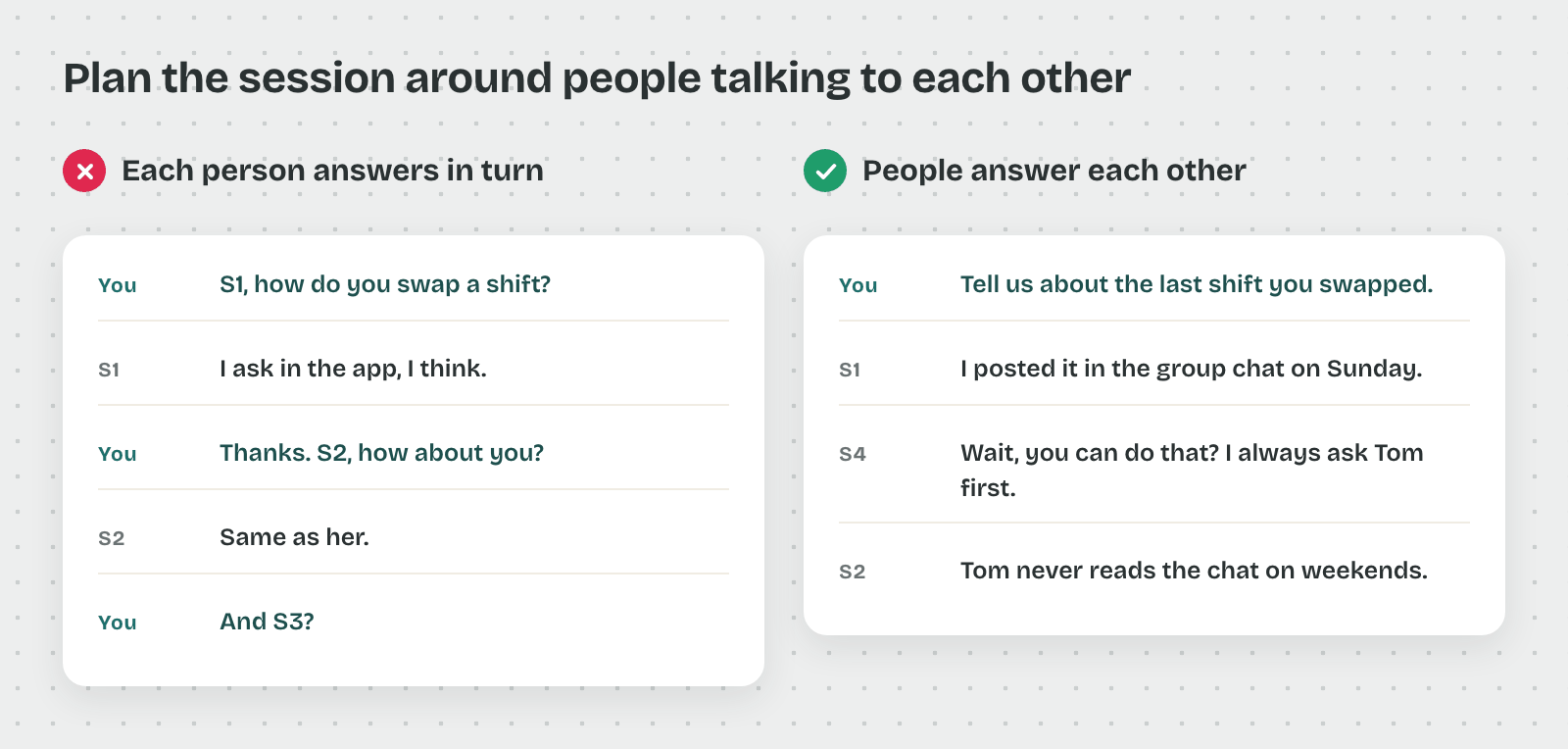
So a group session is planned around the talk between people. The plan sets the roles in the room, a route of questions, who sits together and what everyone looks at.
The Roles in the Room
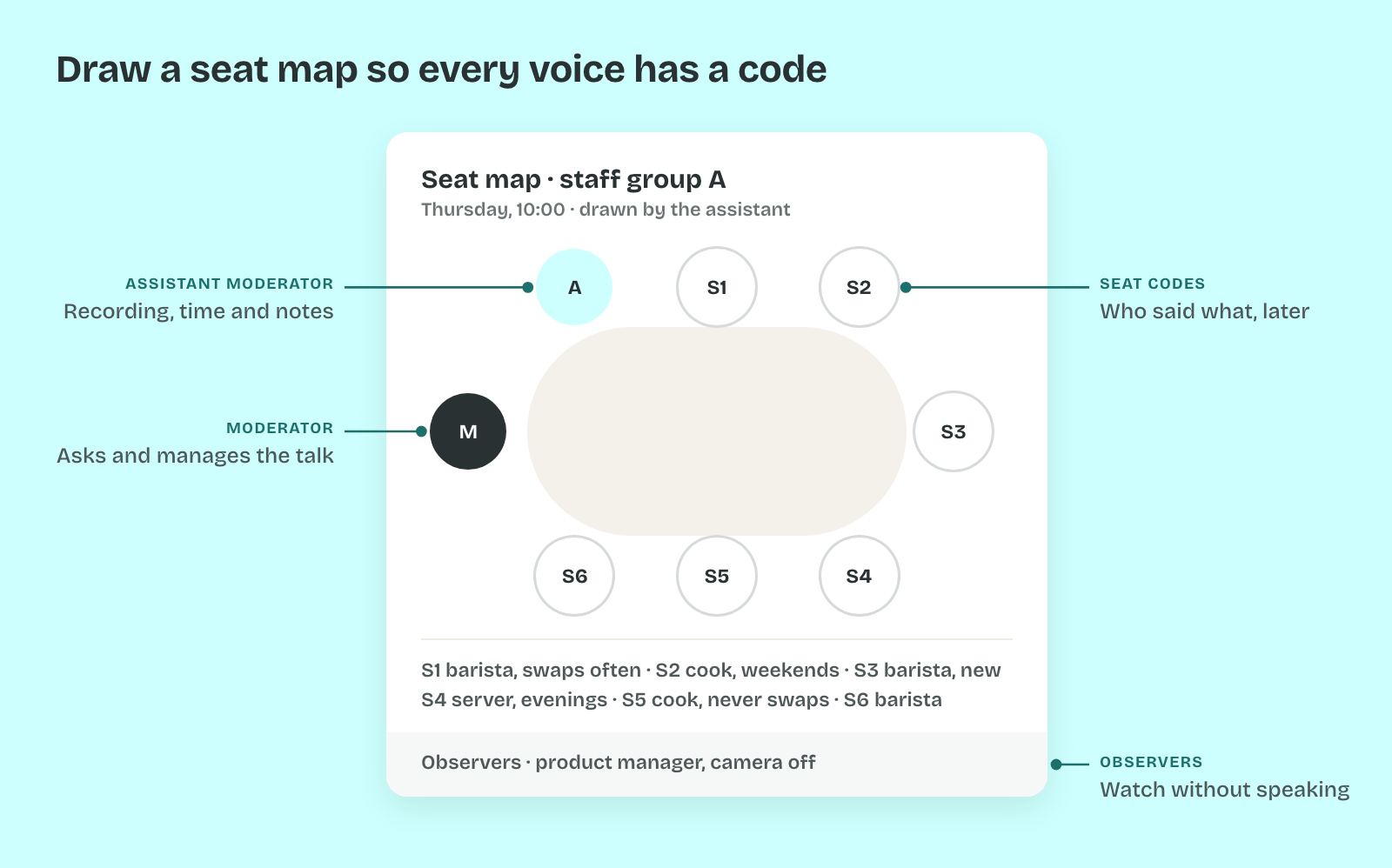
A focus group runs with two people from the team, as Richard Krueger and Mary Anne Casey set out in Focus Groups. The moderator asks the questions and manages the talk. The assistant moderator runs the recording, keeps time and takes notes.
That's why the assistant also draws a seat map with each person's code. In a recording of six voices, the map is how you later tell who said what. Observers, such as the product manager, watch from another room or with the camera off.
The Questioning Route
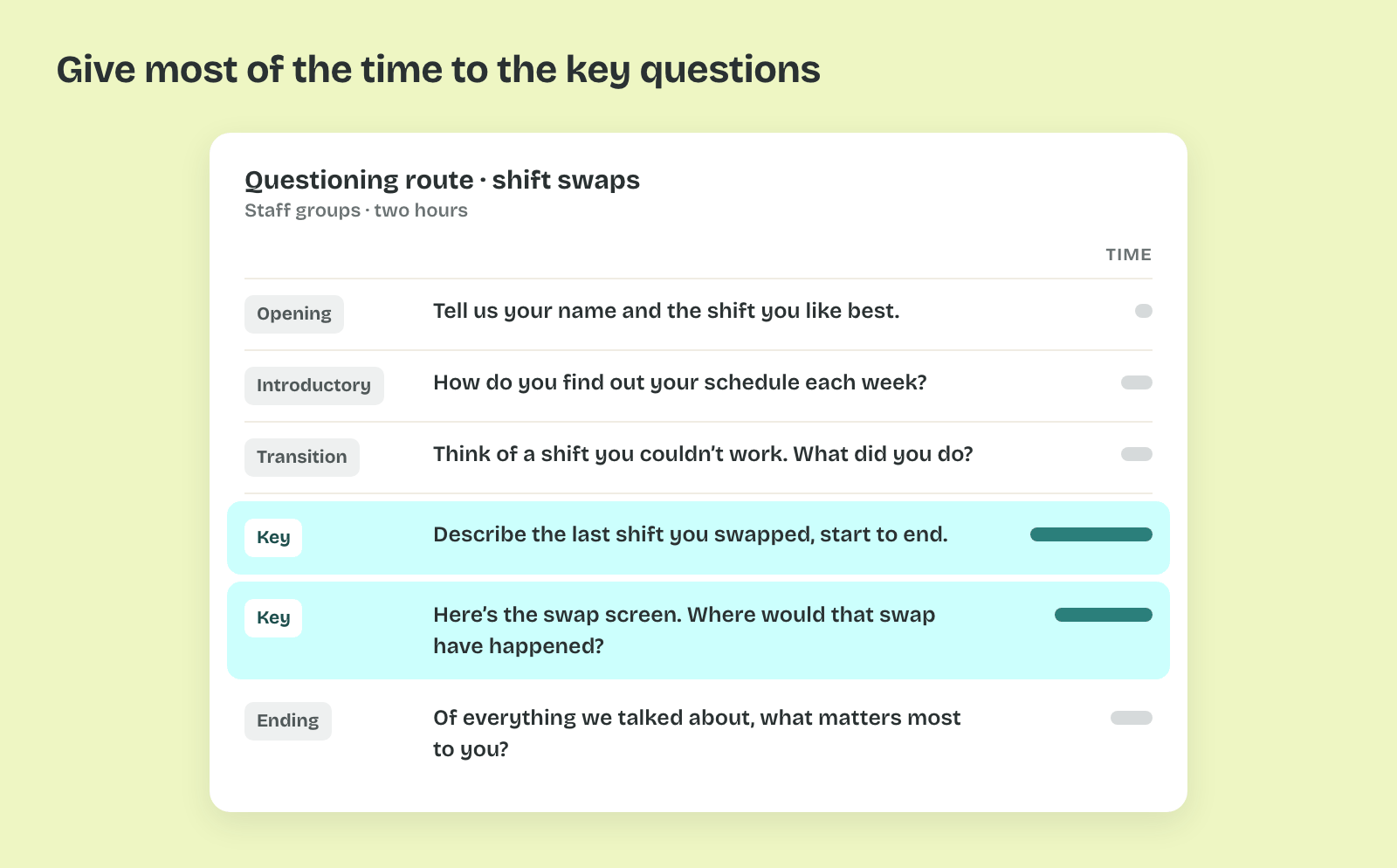
Krueger and Casey call the guide a questioning route, and it moves through five kinds of question. Opening questions get everyone talking once. Introductory and transition questions bring the topic closer. Key questions carry the study, and ending questions ask what was missed.
Thus most of the time goes to the key questions. In Developing Questions for Focus Groups, Krueger counts about a dozen questions in a two-hour group, and only a few are key. For the scheduling app, one key question asks people to describe the last shift they swapped.
Who Sits Together
Each group gathers people who are alike on what the study is about. Pull them from the user list by role and usage, such as staff who swap often and staff who never do. People share more freely with others in their position.
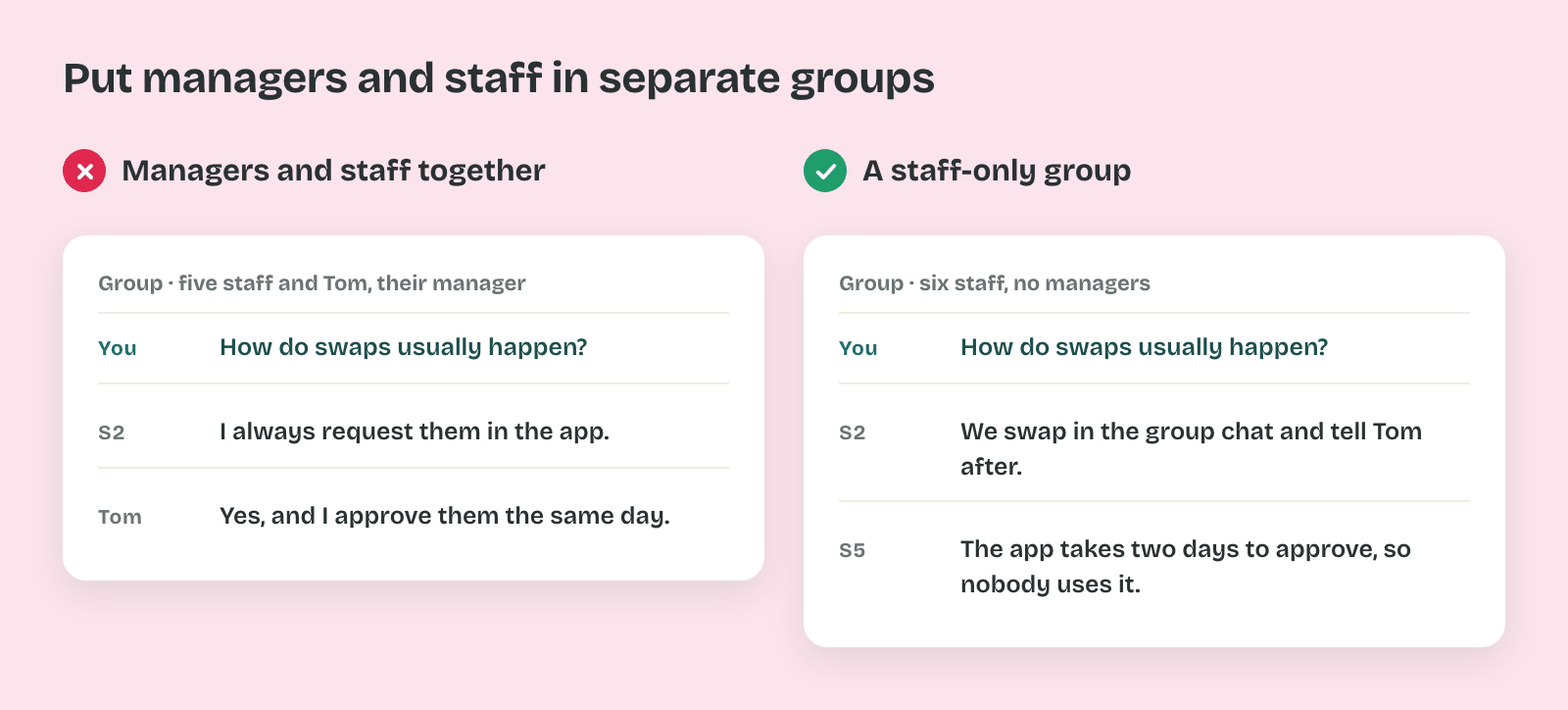
That's why managers and staff go into separate groups. A barista who swaps shifts in the group chat won't describe it in front of the manager who approves them. Run separate groups for each side, and compare them afterward.
What the Group Looks At
A group reacts more usefully to something concrete than to an abstract question. Show the stimulus to everyone at once, such as the current swap screen or a printed mockup of a planned change. Hand out copies so nobody leans over a neighbor's phone.
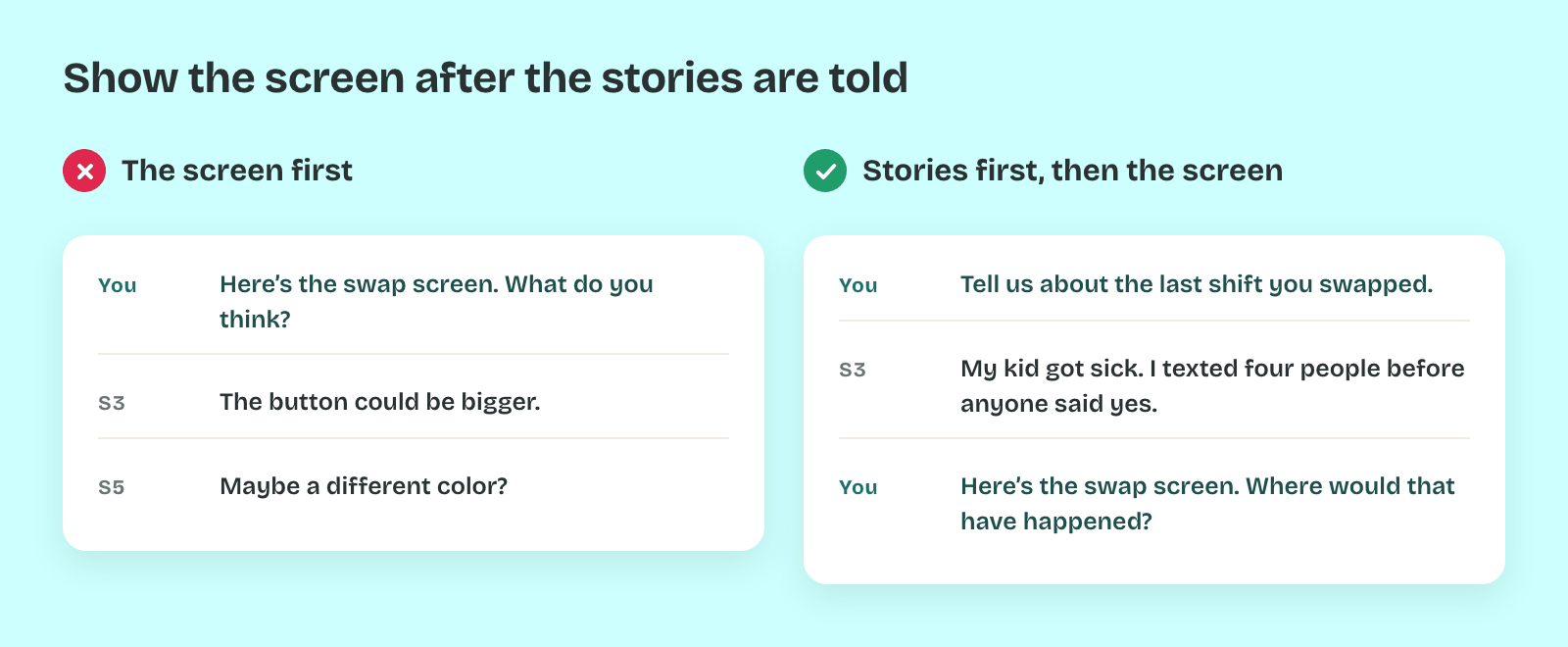
So the stimulus comes after the story questions. People who see the screen first tend to start reviewing it, and the stories about real swaps stay untold. Keep the screen for the second half of the route.
Pro tip: Run the questioning route with two colleagues in twenty minutes before the session. A question that gets a one-word answer from them will get the same from six users.