Contextual Inquiry
People describe their work the way it should go, and the workarounds drop out of the story. Imagine a receptionist at a vet clinic who says she books every appointment in the clinic software. At her desk, a paper notebook holds next week's surgeries, and three sticky notes line the edge of her monitor.
Learn on the move: press play and turn your commute, walk or drive into time that grows your design career.


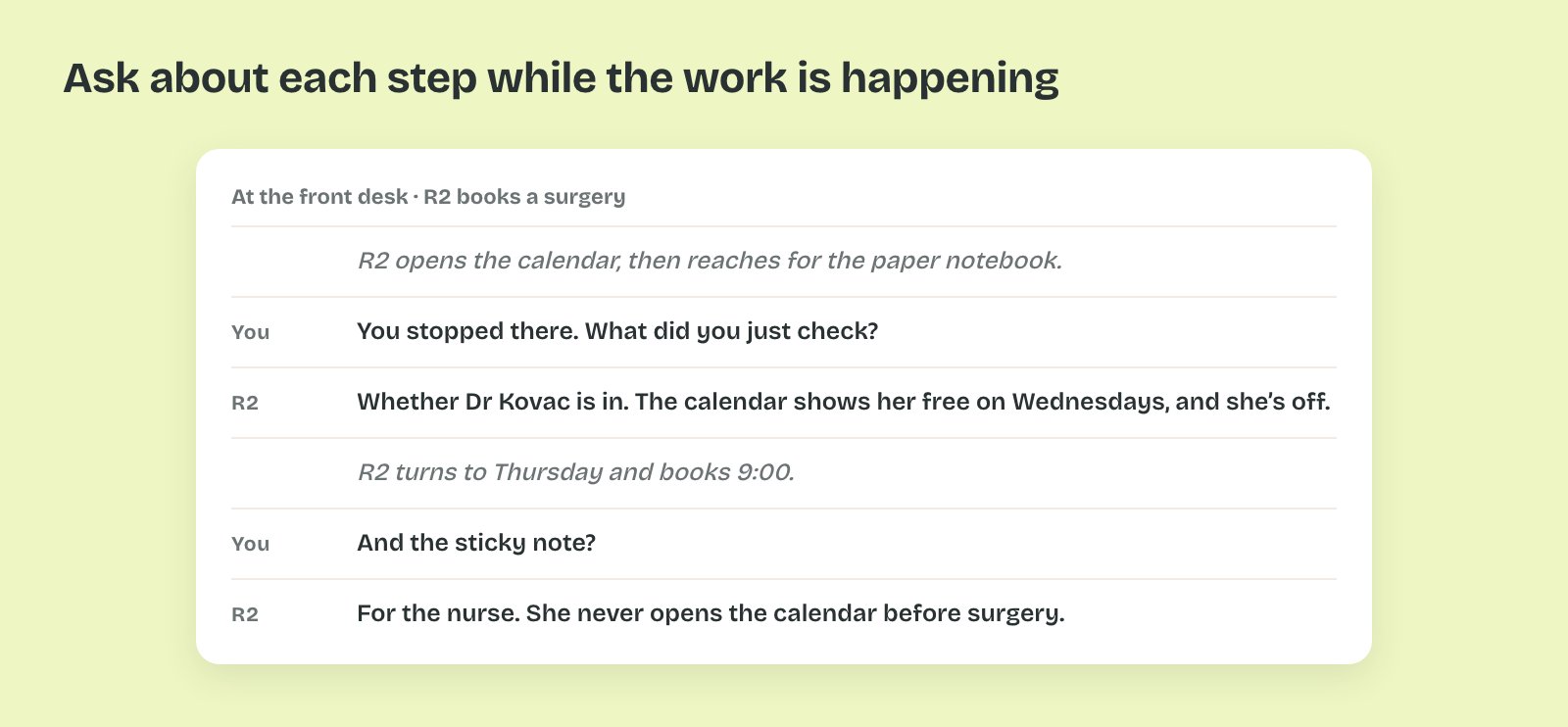
That's why a contextual inquiry takes the interview to the desk. You watch someone do their real work, and you ask about each step as it happens.
What Watching Adds
A contextual inquiry is a one-on-one session held where the work happens, such as a front desk, a warehouse or a kitchen. The participant does real tasks, and the researcher watches, asks and takes notes. The notebook, the sticky notes and the phone calls all become part of the data.
So the method suits work that people repeat so often they no longer notice the steps. A booking screen used all day at a front desk is a good fit. A signup form used once is easier to study in a usability test.
The Master-Apprentice Model
An interview about work gets a summary of the job, and the steps that matter fall out of it. Imagine asking a vet clinic receptionist how she books a surgery. She says, "I find a free slot and enter it," and the answer takes four seconds.
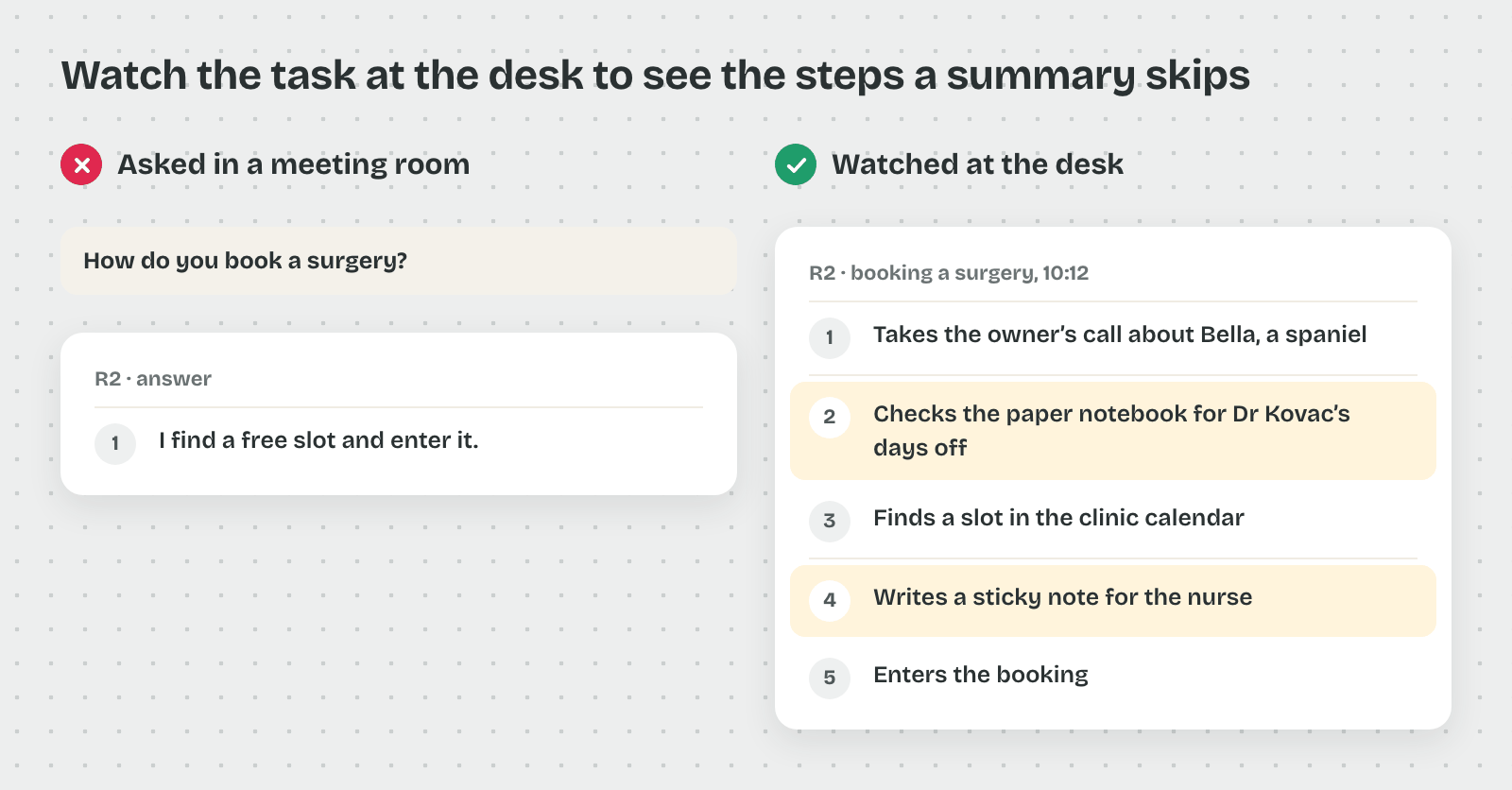
So contextual inquiry borrows a relationship built for learning work while it happens: a master craftsman and an apprentice.
Learn the Work by Watching It
Hugh Beyer and Karen Holtzblatt built contextual inquiry around the master-apprentice model in their 1998 book Contextual Design. A master doesn't lecture on the craft. The master does the work, and explains each step when the apprentice asks about it.
That's because the work itself reminds people of the details. At the desk, the receptionist books a real surgery and stops to check the notebook. Asked why, she explains that the software shows a free slot even when the surgeon is away.
Four Principles of the Session
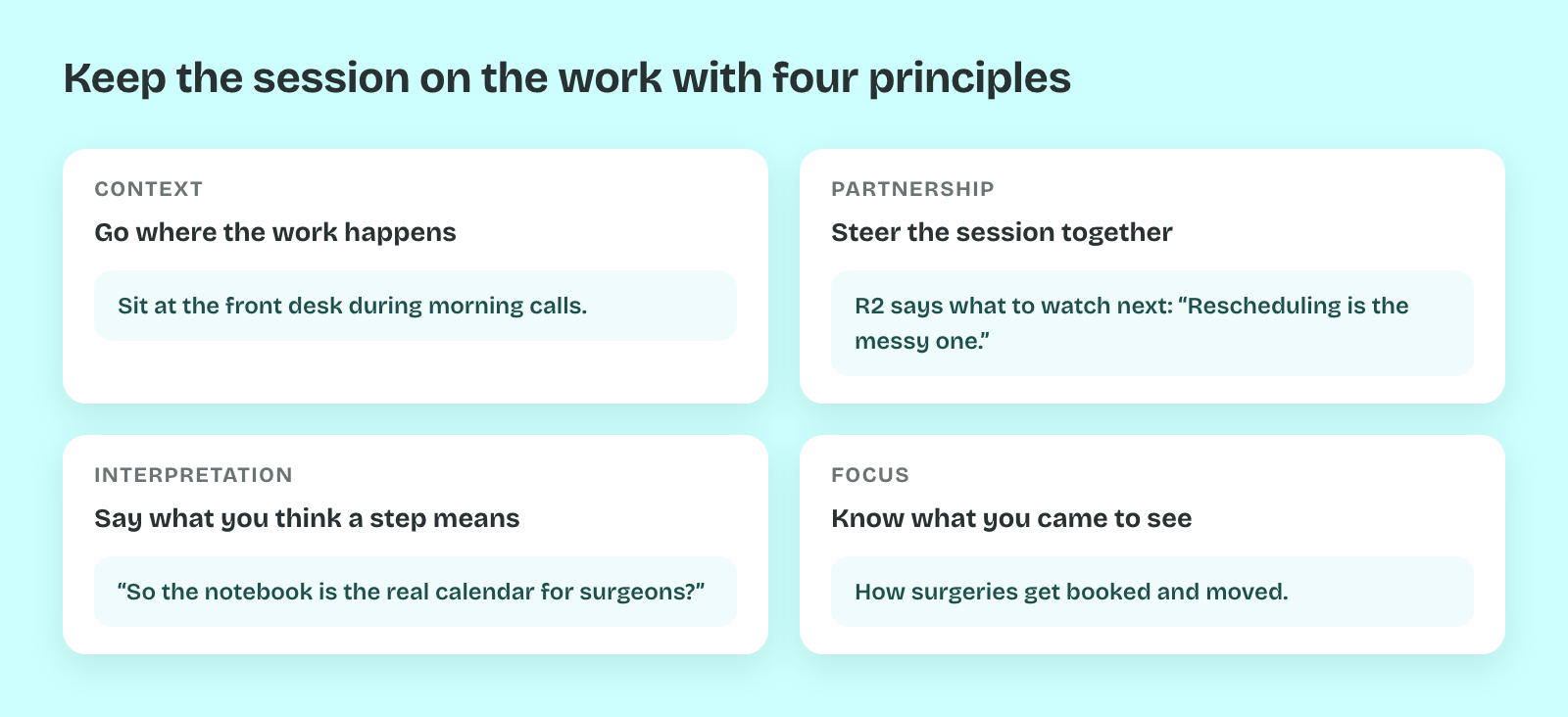
Beyer and Holtzblatt named four principles that keep a session on the work. Context means you go to where the work happens. Partnership means the participant steers the session with you. Interpretation means you share what you think a step means. Focus means you know which part of the work you came to see.
Thus each principle protects the session from one kind of drift. Without focus, two hours go to the printer and the coffee machine. Without interpretation, you leave with your own guesses and nobody to correct them.
Relationships to Avoid
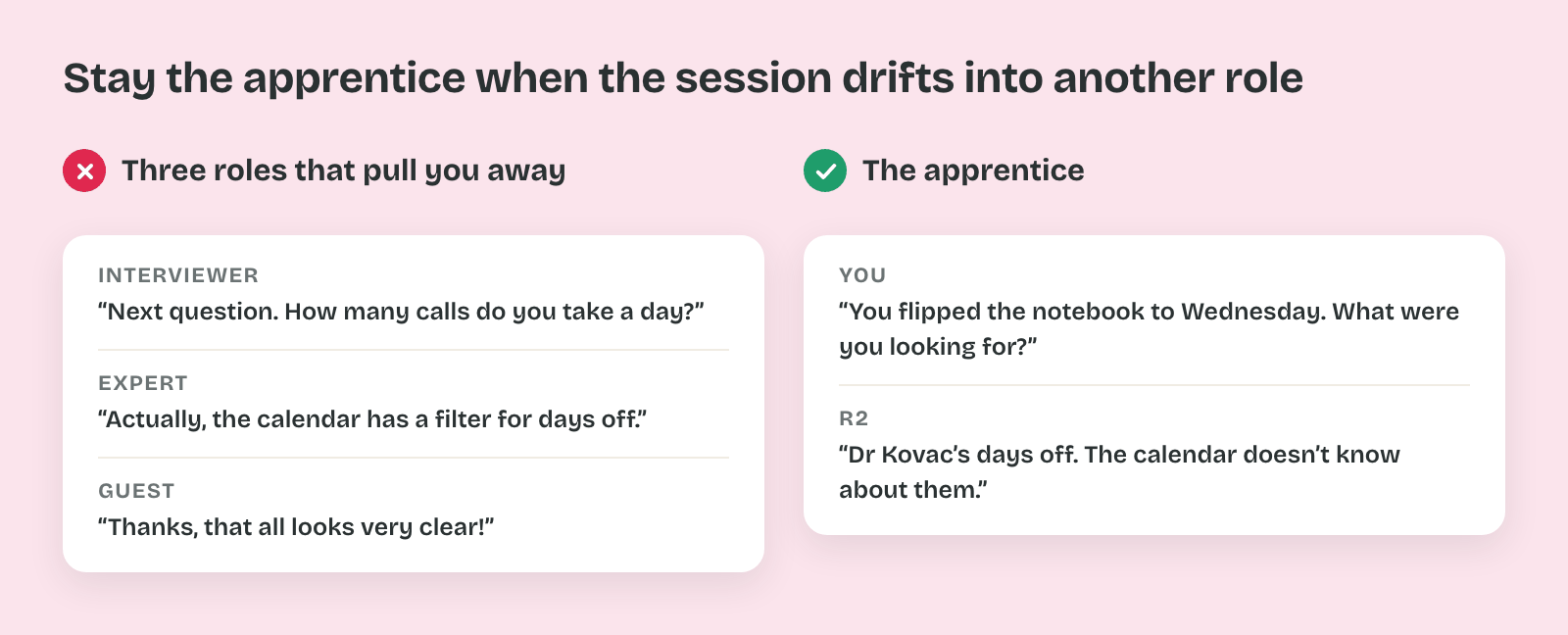
The book also names three relationships that pull a session away from the apprentice. An interviewer and an interviewee trade questions and answers, and the work stays untouched on the desk. An expert and a novice reverse the roles, once you start explaining the software. A guest and a host keep things polite, and nobody asks the awkward question.
So when the participant asks how the software is supposed to work, turn the question back. Ask what they do now, and why. Your explanation can wait until the session ends.
Ask About One Real Case
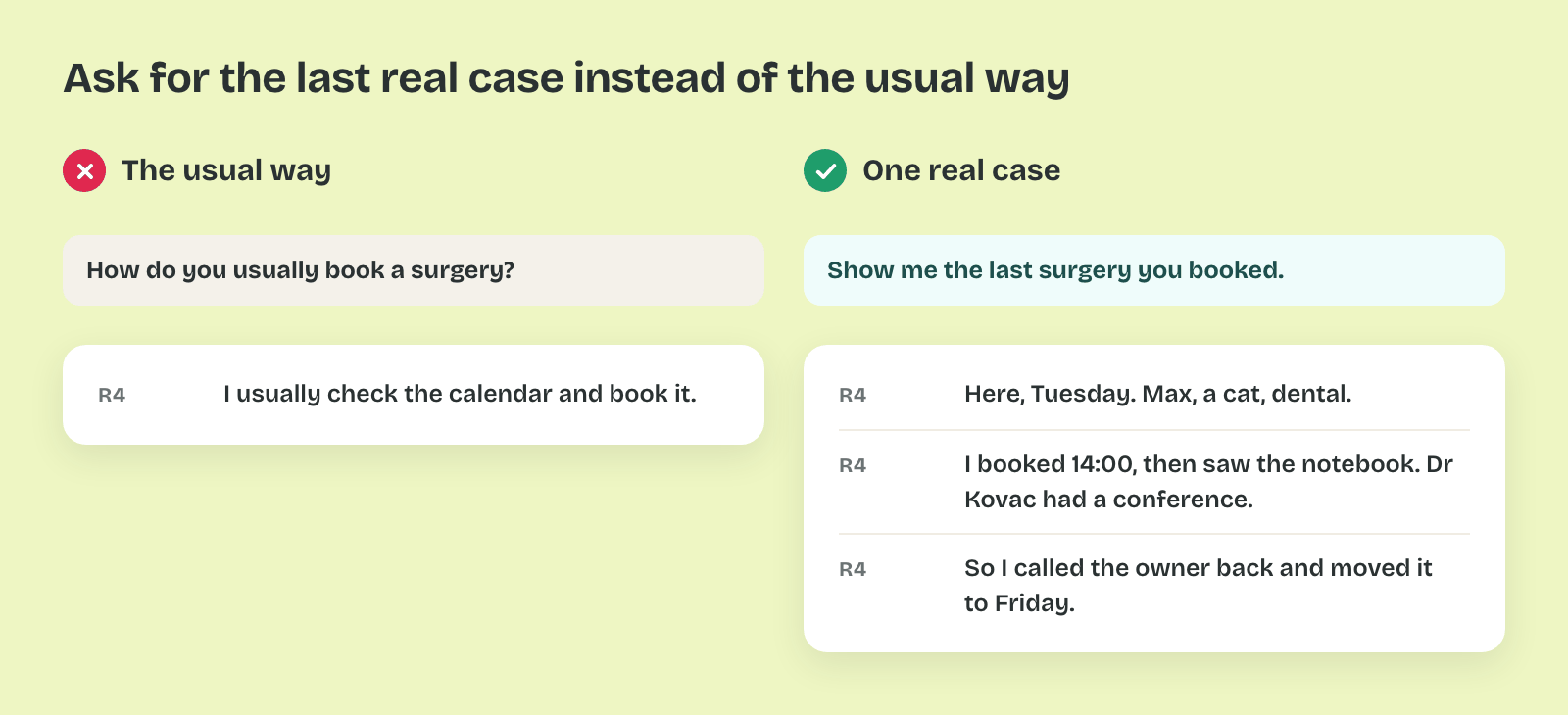
People describe their work in summaries, such as "I usually check the calendar." A summary hides the exceptions, and the exceptions are where the workarounds live. Ask the participant to show you a real case instead, such as the last surgery they booked.
That's why "Show me" works better than "Tell me." When no task comes up during the visit, ask the participant to walk through a recent one on screen, step by step.
Pro tip: Write your focus on one card and keep it next to your notes. "How surgeries get booked and moved" tells you which interruptions to follow and which to let go.