Planning Competitive Research
Competitive research shows how other products solve a problem before a team solves it again on its own. Imagine a cleaning-booking app that spends a quarter on a new reschedule flow, then hears at launch that people expected the slot list they know from other booking apps.
Learn on the move: press play and turn your commute, walk or drive into time that grows your design career.


That's why competitive research looks outward before the team draws a screen. Rival products show which patterns people already know, how fast the best ones finish a task and where every product does it badly.
What Competitive Research Studies
Competitive research studies products other than your own. Those include direct rivals, the tools people use instead and products from other fields that solve a similar problem. Jakob Nielsen wrote in 2000 that users spend most of their time on other sites, so those sites shape what people expect from yours.
So the evidence in this theme is the rival product itself: its screens, its flows and how people do on it. The other research themes study your own users and your own designs.
In This Theme
The Competitive Research theme moves from a broad look at many products to a close look at a few:
- Planning Competitive Research: the question, the method, the rivals and the flow, before any product is opened,
- Pattern Surveys: how many products handle the same feature,
- Competitive Benchmarking: the same task measured on your product and a few rivals,
- Feature Teardowns: one rival's flow walked screen by screen,
- Competitive Usability Testing: real people trying the same task on rival products.
Then each method module ends with how to present its results to the team.
Anatomy of a Competitive Study
A competitive study without a question tends to end as a folder of screenshots. Imagine a designer who captures 120 screens from five booking apps and can't say what any of them means for the reschedule flow.
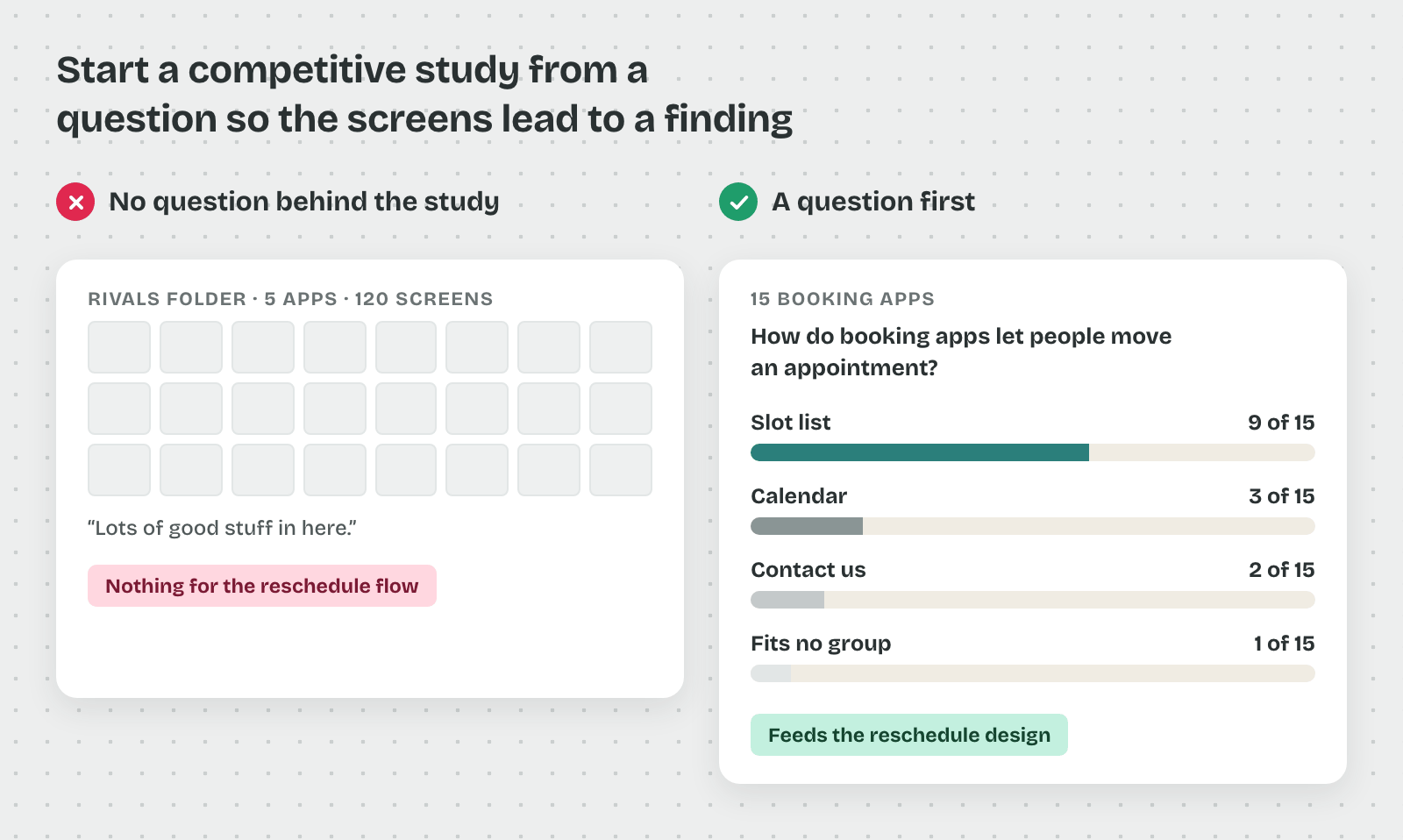
So every competitive study is planned from four named parts, whatever the method.
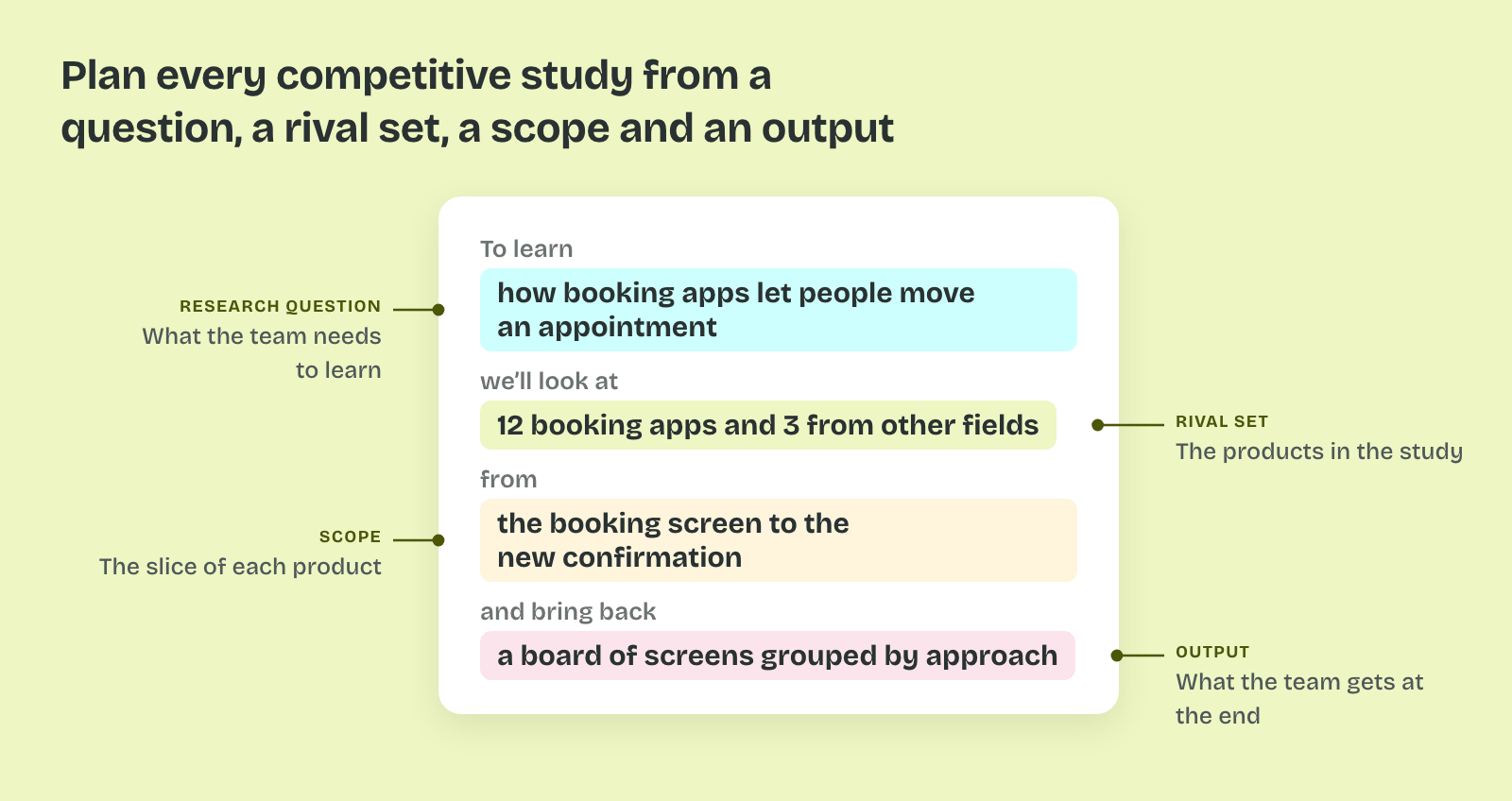
The Research Question
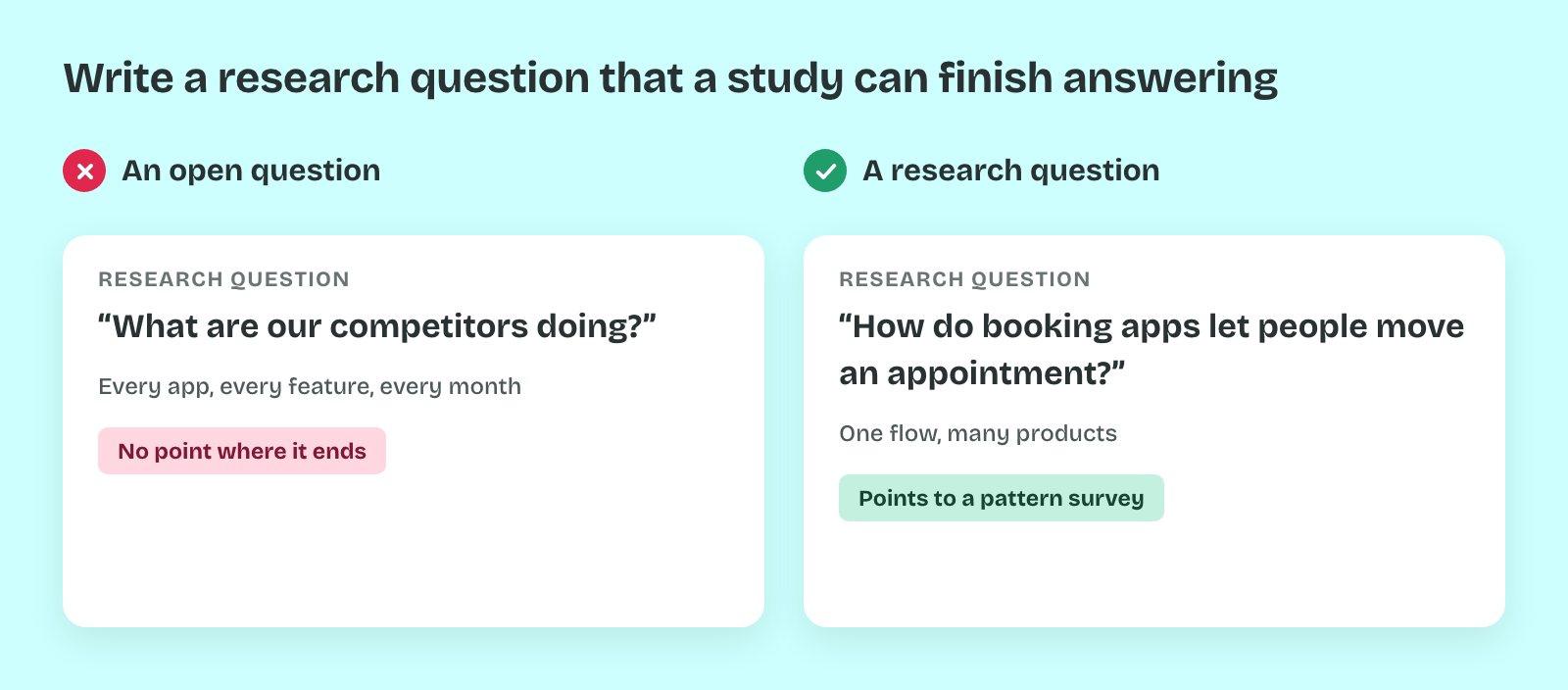
The research question names what the team needs to learn from other products. "How do booking apps let people move an appointment?" is a research question. "What are our competitors doing?" is too open, because no answer to it ever ends.
That's why the question is written before any rival is opened. A question about patterns needs many products, and a question about speed needs a few products measured the same way.
The Rival Set
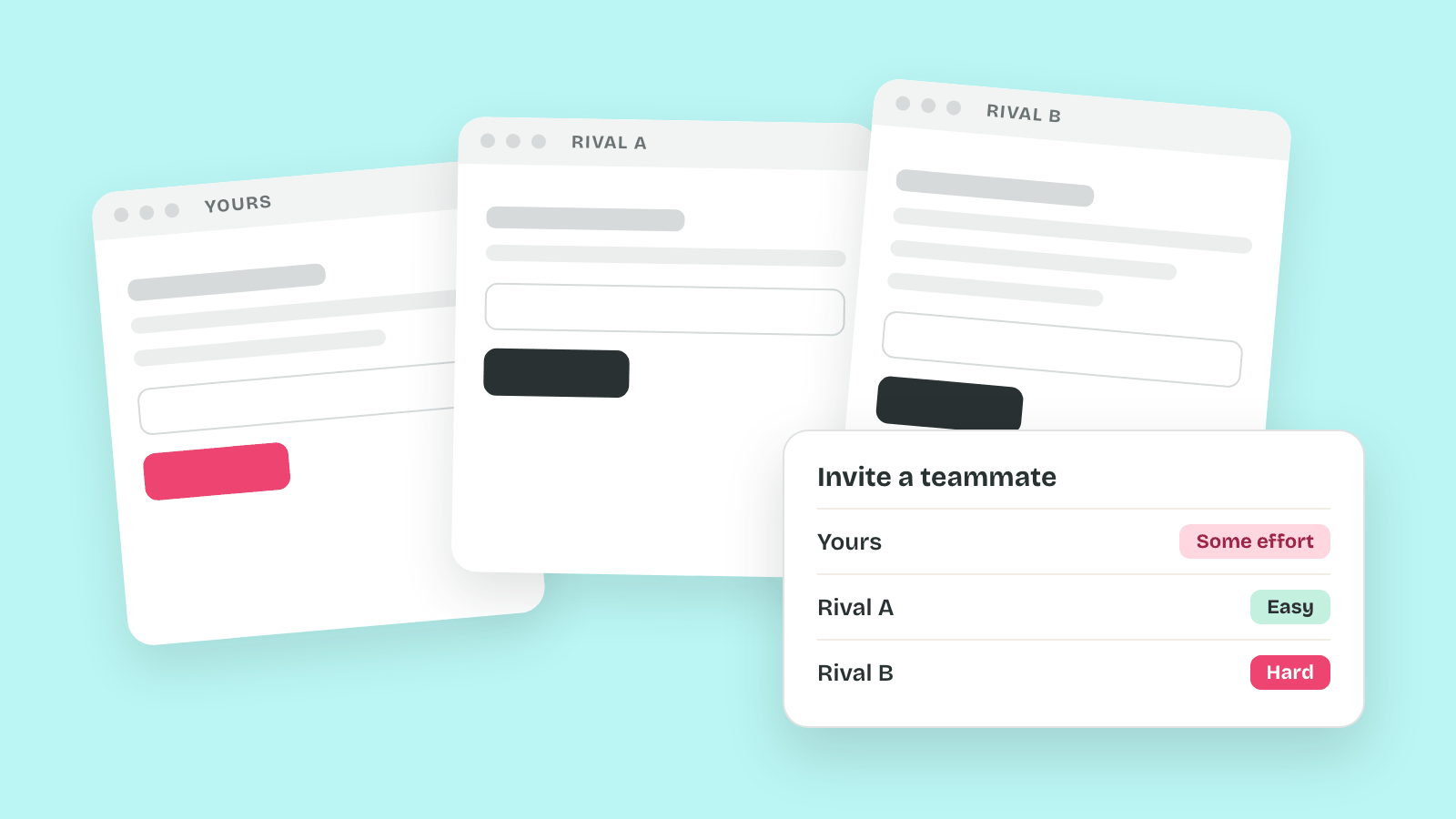
The rival set is the list of products the study looks at. It can hold direct rivals, the tools people use instead and products from other fields that solve a similar problem.
So the size of the set follows from the question. Tim Neusesser at Nielsen Norman Group puts a typical competitive evaluation at 2 to 4 competitors, in a 2024 article. A survey of one pattern can take many more, because each product gets only a quick look.
The Scope
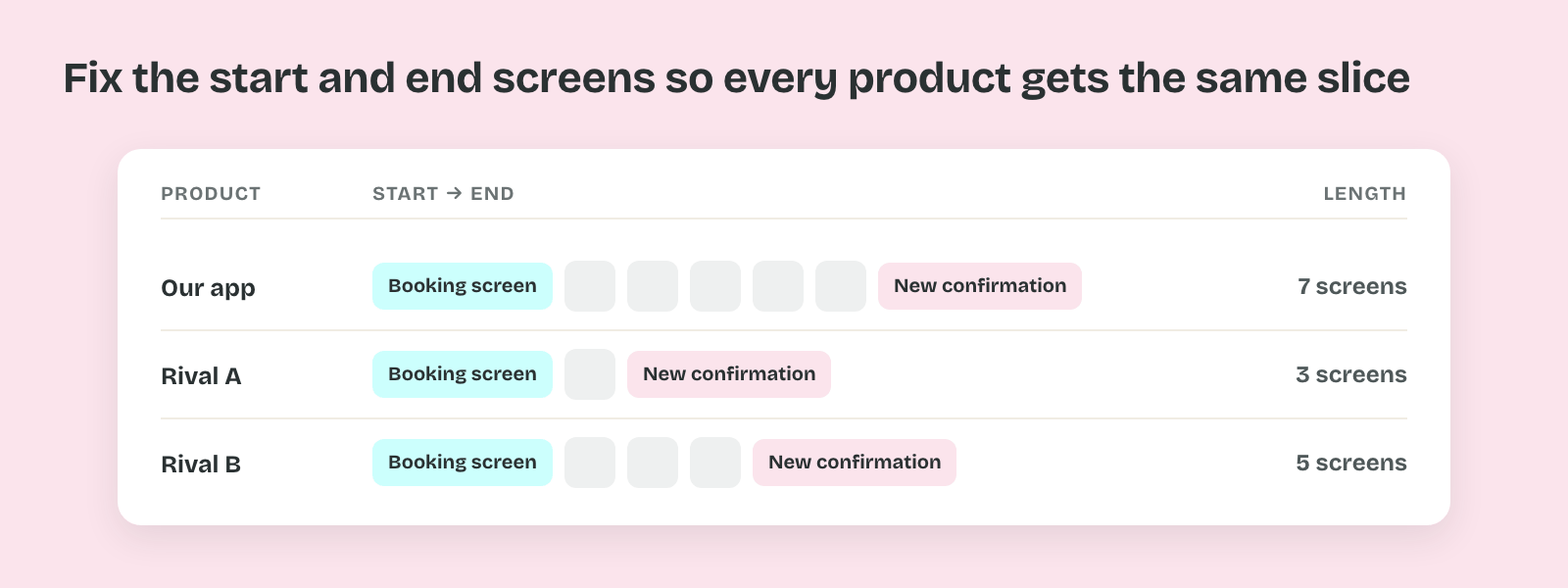
The scope is the slice of each product the study covers, usually one flow with a start screen and an end screen. "Moving a booked cleaning from the booking screen to the new confirmation" is a scope. "The whole app" is too wide, because every product would get studied differently.
That's because a fixed scope keeps the comparison fair. With the same start and end on every product, the differences come from the products.
The Output
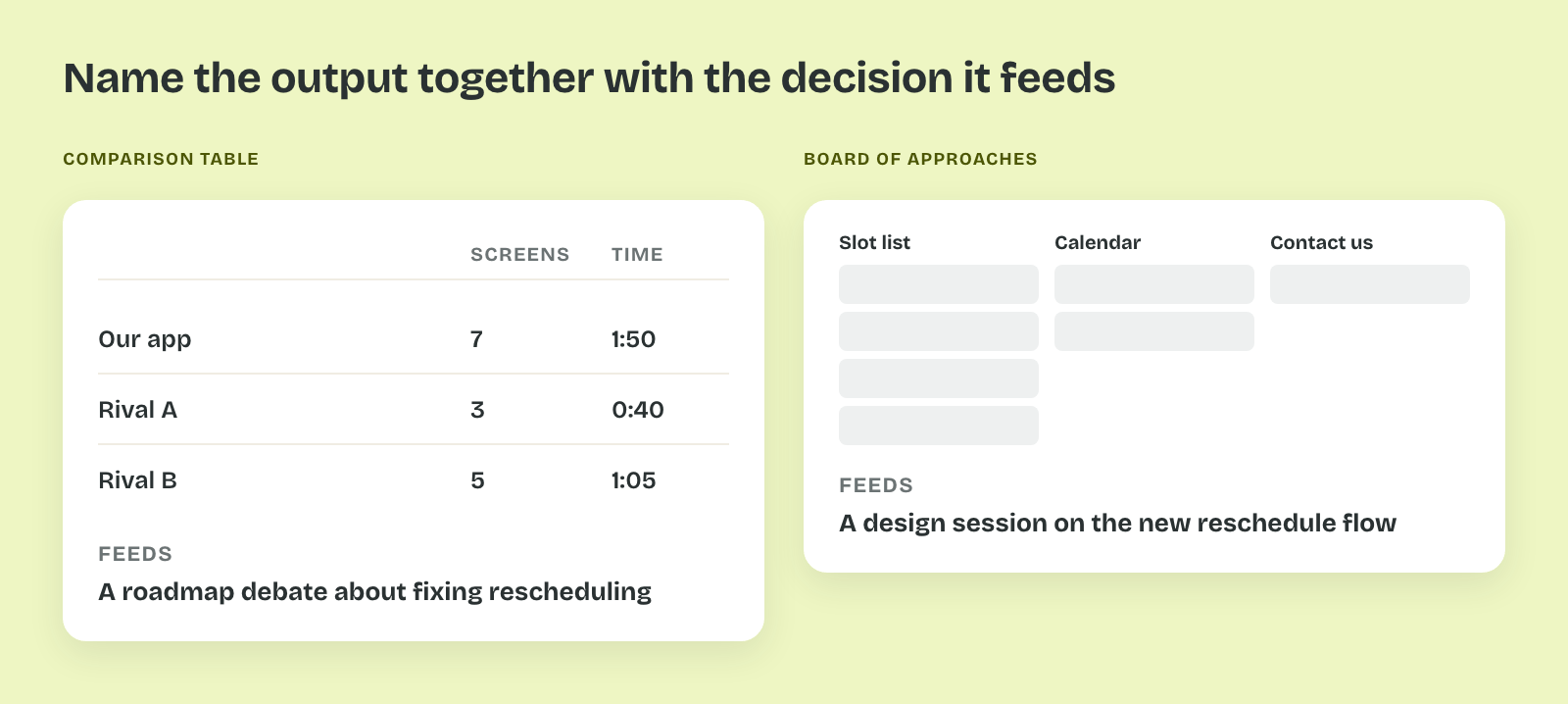
The output is what the team gets at the end. It can be a board of screens grouped by approach, a comparison table, an annotated walk through one flow or a set of session results.
So the output is named before the study starts, along with the decision it feeds. A table of steps and times suits a roadmap debate, and a board of patterns suits a design session.
Pro tip: Before opening a rival, write down which decision the study could change. If the team would build the same thing whatever the rivals do, skip the study and spend the time on your own users.