Competitive Usability Testing
An expert walk can rank rivals by screens and still miss where real people get stuck. Imagine a benchmark that crowns Rival A with three screens, while most people who try it tap Cancel when they meant to move a cleaning.
Learn on the move: press play and turn your commute, walk or drive into time that grows your design career.

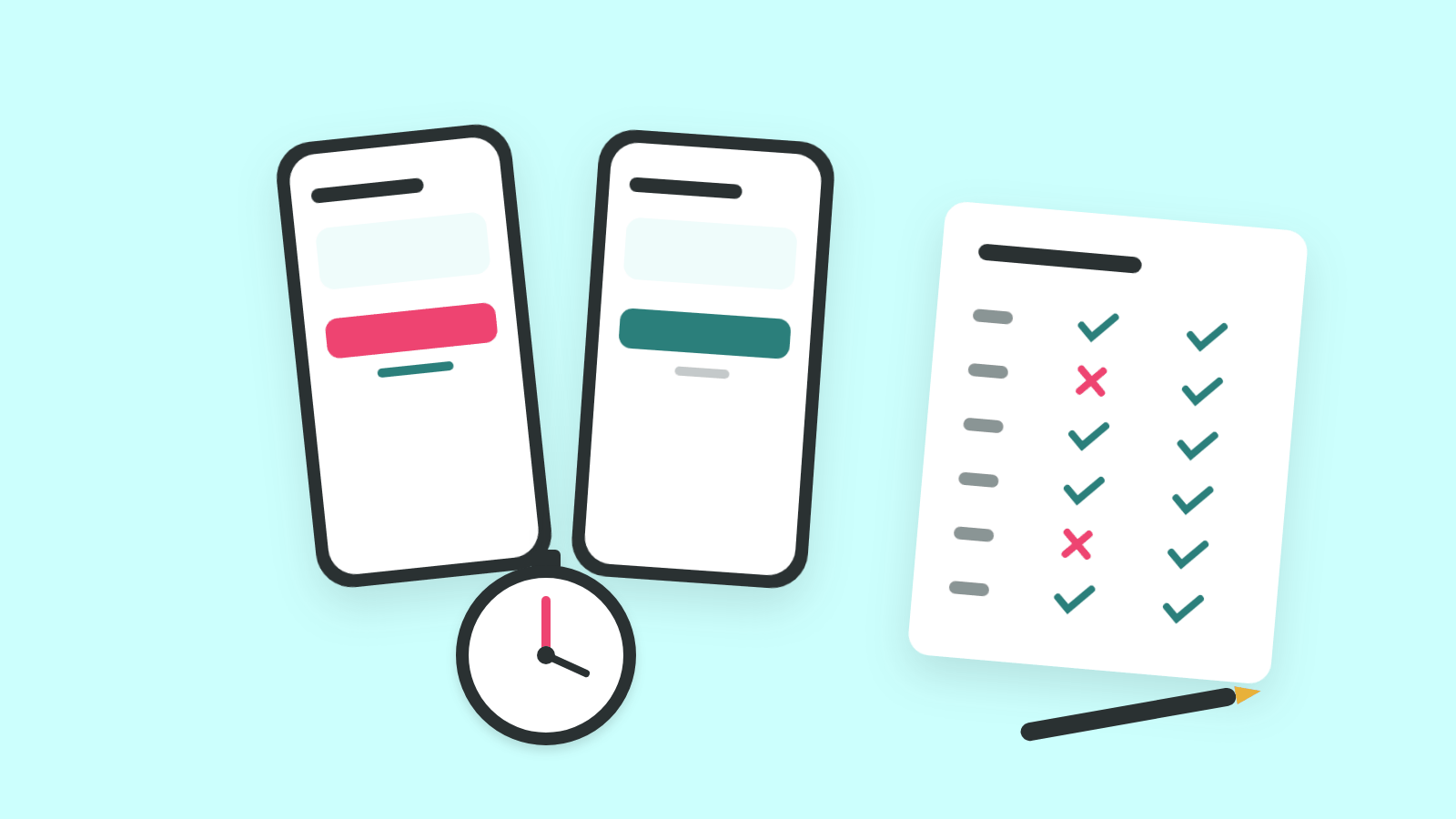
That's why a competitive usability test puts the same task in front of people on rival products. It shows how each rival's way of building a feature works for the people who use it.
What the Test Explores
A competitive usability test watches people try one task on two or three rival products. The team learns which approach people finish faster, where each one confuses them and why.
So the test studies the rivals' designs, before the team commits to its own. Testing the team's own prototype is a separate study with its own plan.
The Same Tasks on Every Product
A task written in one product's words gives that product an unfair head start. Imagine asking people to "tap Change time" on Rival A, when Rival B calls the same button "Reschedule."
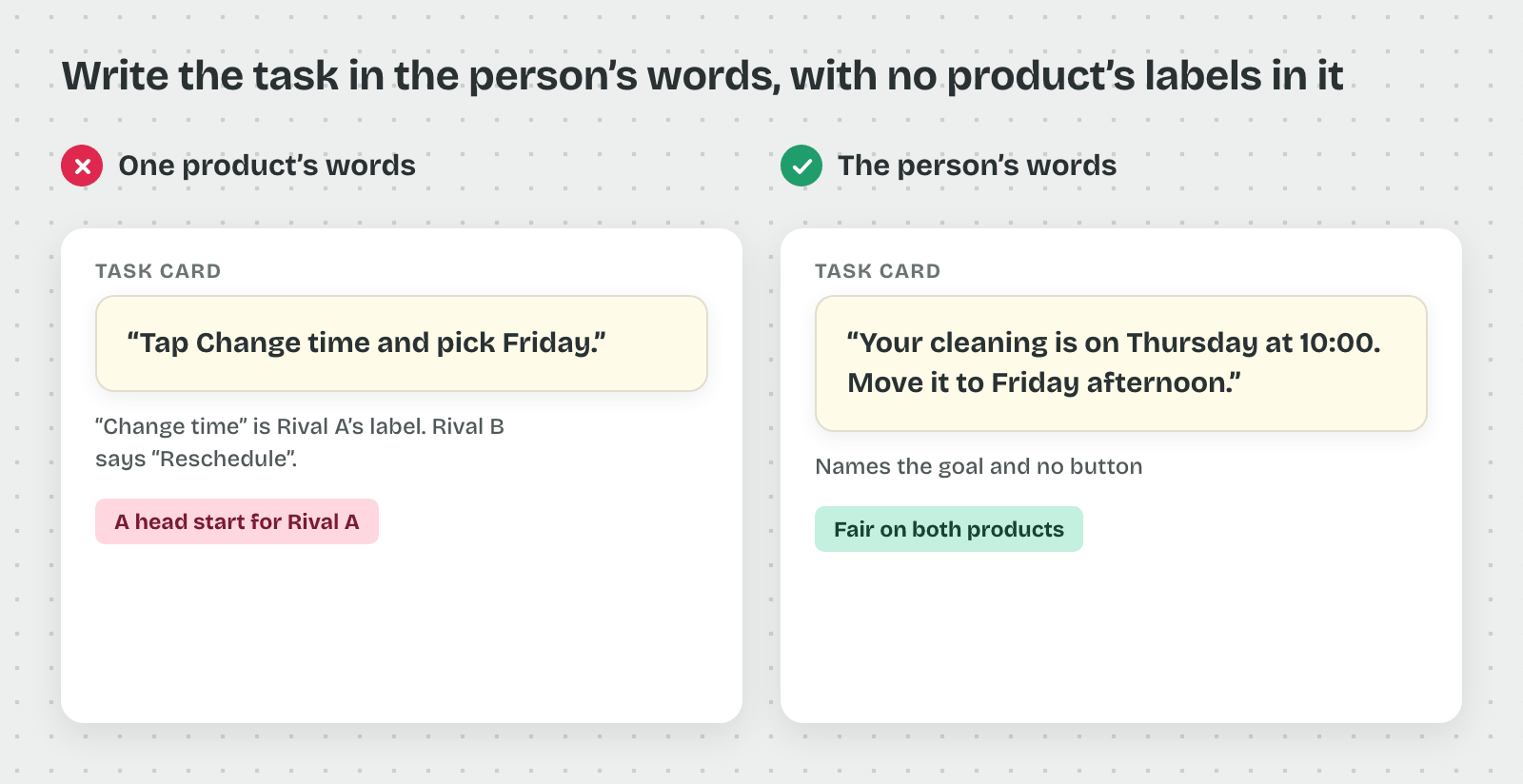
So a competitive test uses one task, one starting point and a planned order for every product.
Write the Task in the Person's Words
The task describes the goal, never the buttons. "Your cleaning is on Thursday at 10:00. Move it to Friday afternoon" works on every product, because it names no label from any of them.
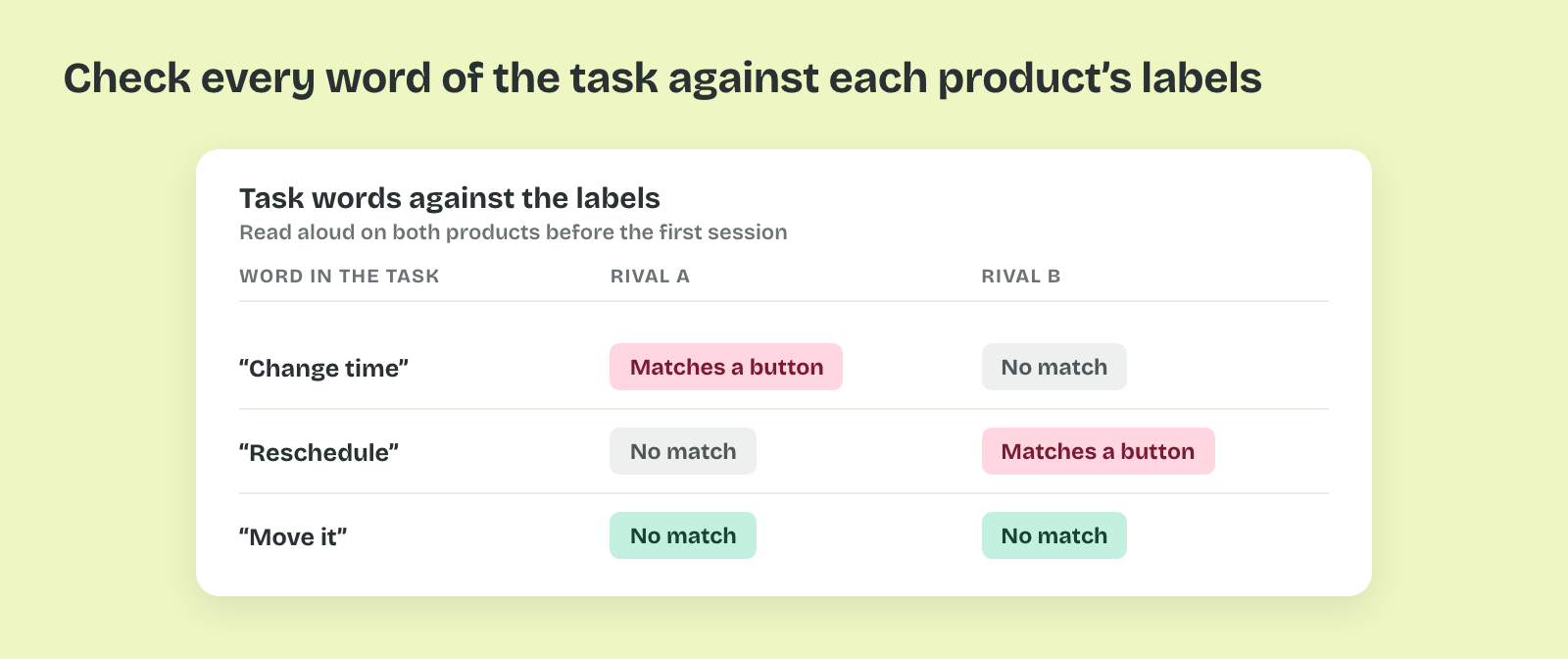
That's why each task is read aloud on each product before the study starts. A word that matches one product's menu will show up as an easy win for that product.
Set up the Same Starting State
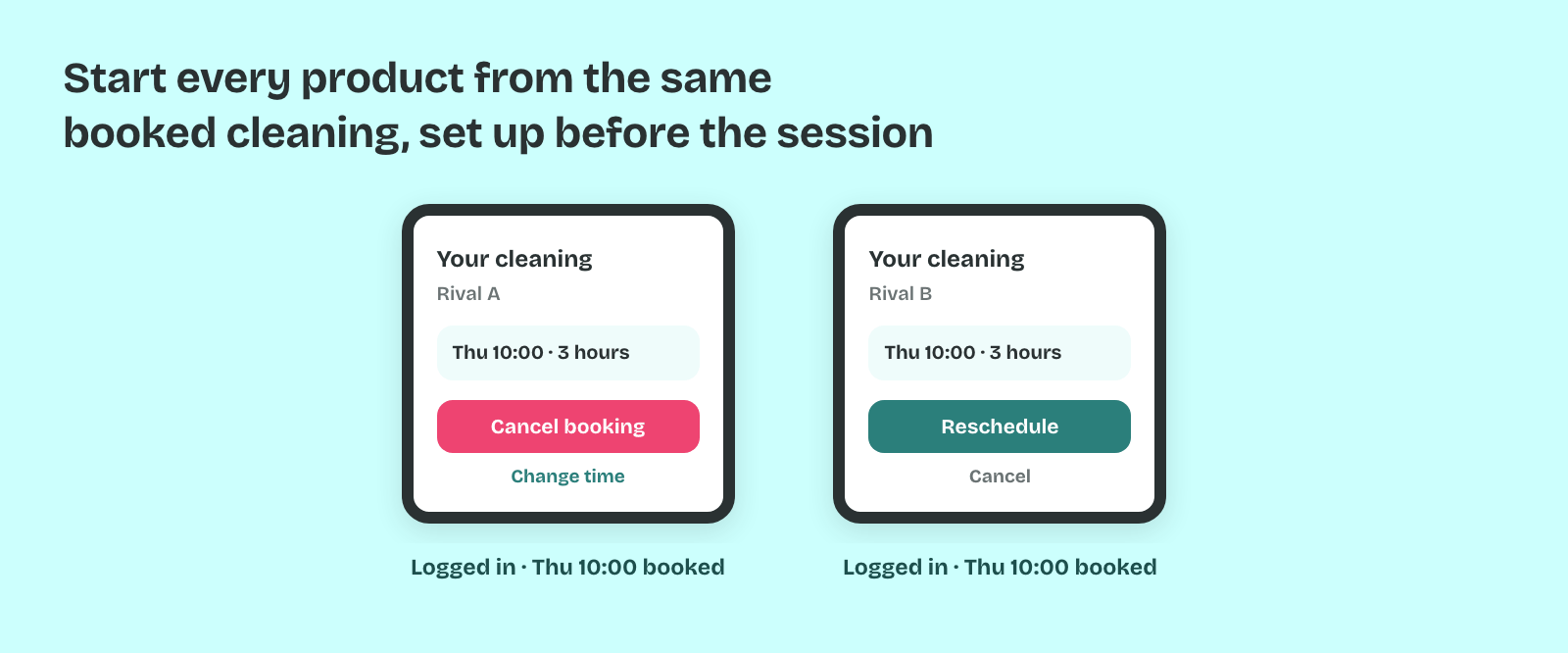
Every product starts from the same situation: a logged-in account with one booked cleaning on Thursday at 10:00. Setting up that state on each rival can take longer than writing the tasks.
So the accounts are prepared before the first session. A participant who has to sign up first is testing the signup flow along with the task.
Plan the Order
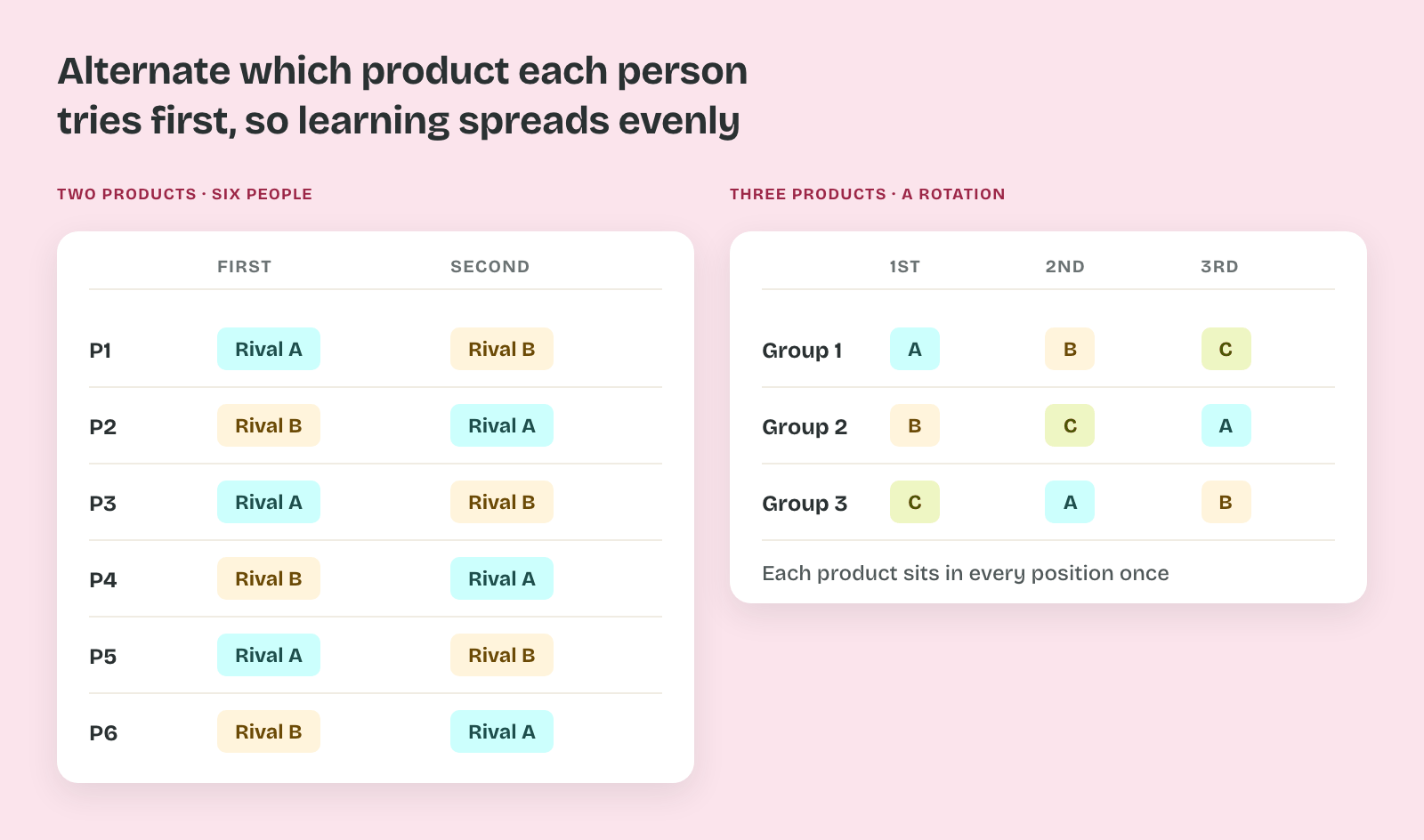
People learn a task on the first product and carry that knowledge to the second. So half the participants try Rival A first, and the other half start with Rival B.
That alternation spreads the learning across both products. With three products, a rotation such as A-B-C, B-C-A and C-A-B gives each product every position once.
Two or Three Products per Person
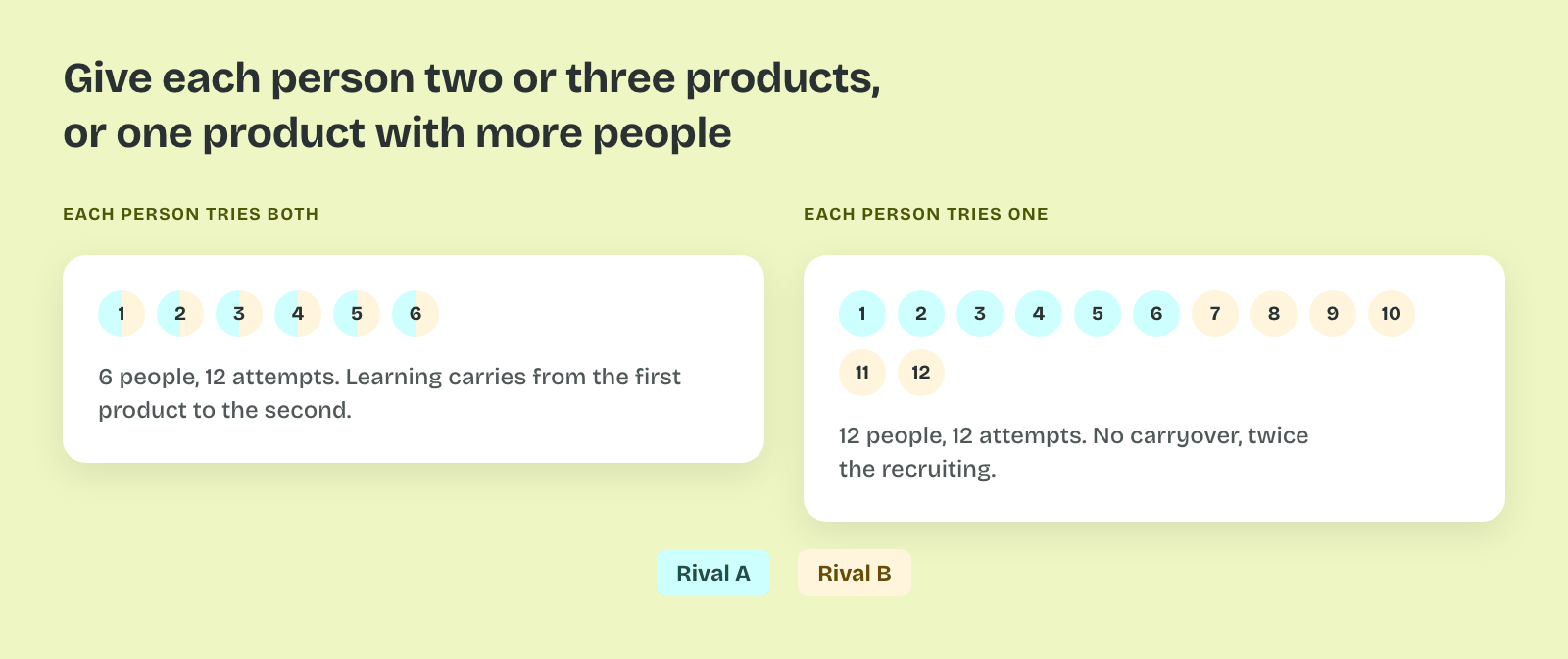
Each participant sees only a few products. Tim Neusesser at Nielsen Norman Group advises giving each participant 2 or 3, since more can overwhelm them.
Thus a wider comparison needs more people. Raluca Budiu at Nielsen Norman Group notes that giving each person a single product removes the carryover between products, at the cost of more participants.
Pro tip: Pilot the task on every product with a colleague before the first session. A task that one rival can't complete from your starting state is better found on a Tuesday than in front of a participant.