Who Makes a Product
A designer joins a new company and presents a redesign in the first week. The engineering lead asks why nobody consulted them, the product manager says the roadmap is already set, and product marketing has launch dates nobody mentioned. The design was good, and it landed in a team the designer hadn't mapped.
Learn on the move: press play and turn your commute, walk or drive into time that grows your design career.

Every product is made by a team, and each role on it owns different decisions. The way that team is set up decides how much a designer shapes, and the way decisions get made decides when to speak up.
So knowing who makes a product is part of thinking about it. It covers the roles, the kinds of teams and how decisions travel between them.
What Designers Do in a Product Team
Designers own the experience: how the product works and feels for the people who use it. In a well-run team they also share discovery with the product manager and engineers, so they help decide what to build, not only how it looks. That seat comes from understanding the team as well as the user.
Roles on a Product Team
A designer finishes a flow and sends it straight to engineering. A week later the product manager reopens the scope, the analyst asks how success will be measured and product marketing wants the feature renamed. None of them was difficult; each owned a decision the designer had made alone.
A product team is a set of roles, and each one owns certain decisions. Knowing them saves the designer from redoing work and from being left out of choices that matter.
The Core Roles
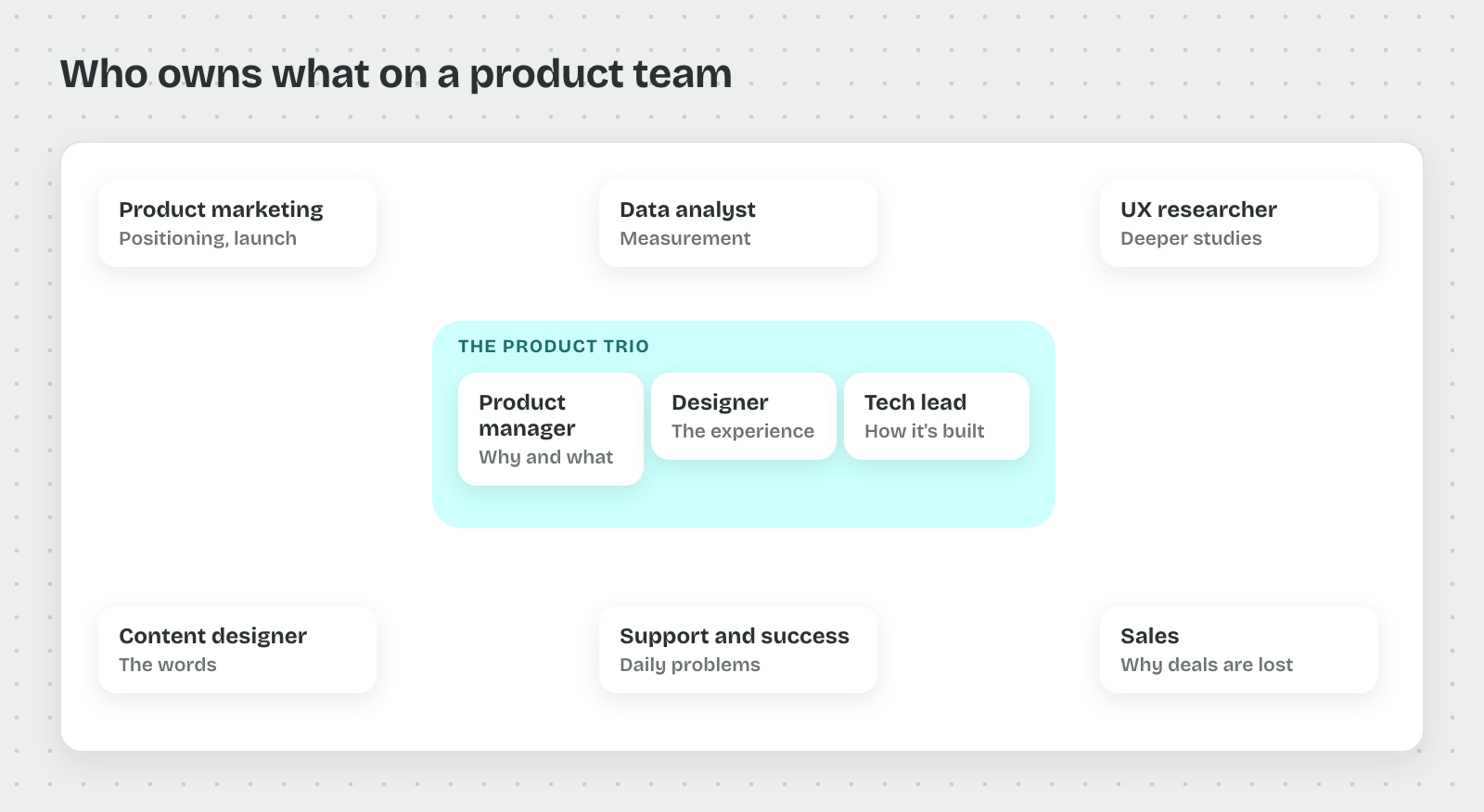
The product manager owns why and what: which problem to solve, for whom and in what order, and whether it works for the business. The designer owns the experience: how the product works and feels. The engineers, led by a tech lead, own how it's built and whether it can be.
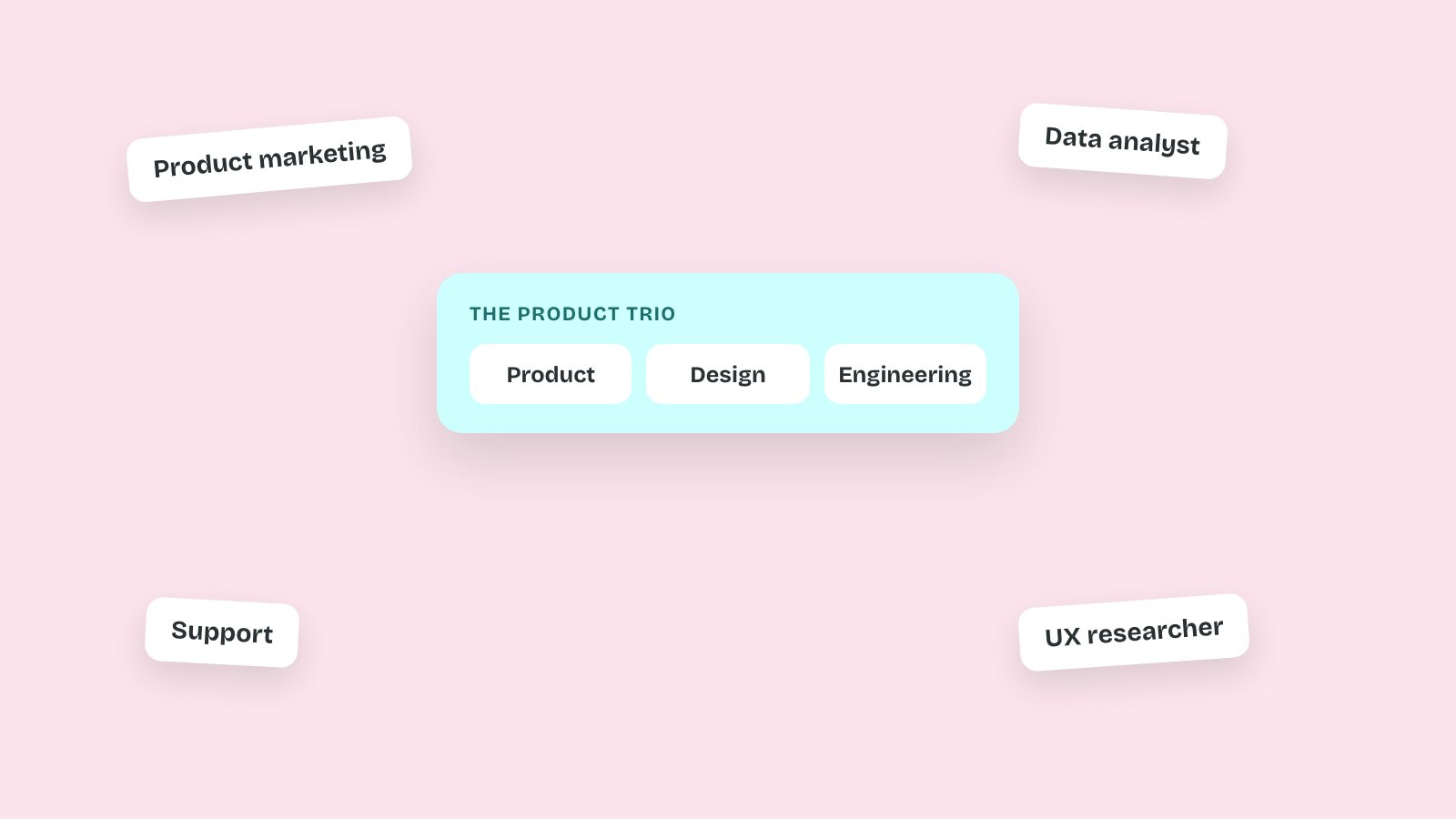
Those three are often called the product trio, and they decide together on most product questions. On a small team they may share a room; on a larger one they may span time zones. Henrik Kniberg and Anders Ivarsson described Spotify's version in 2012: small cross-functional squads, each owning one part of the product end to end.
The Roles Around the Trio
Several roles support the core team. Product marketing owns positioning, messaging and launches. Data analysts own measurement: what gets tracked and what the numbers mean. UX researchers run deeper studies, and content designers own the words in the product.
Customer-facing teams matter too. Support and customer success hear problems every day, and sales hears why deals are lost. A designer who talks to them regularly hears evidence the trio would otherwise miss. Some companies also add product operations, a role that keeps tools, data and processes running so the trio can focus.
Overlaps and Gaps
Roles overlap in practice, and that's where friction starts. The product manager and the designer both care about the user, and the designer and engineers both shape what's feasible. Agreeing who decides each question avoids two people deciding it differently.
Small teams have gaps instead. In a startup, one designer may also be the researcher, the content designer and half the product manager. Knowing the full set of roles shows which hats you're wearing and which work nobody is doing.
The Common Mistake
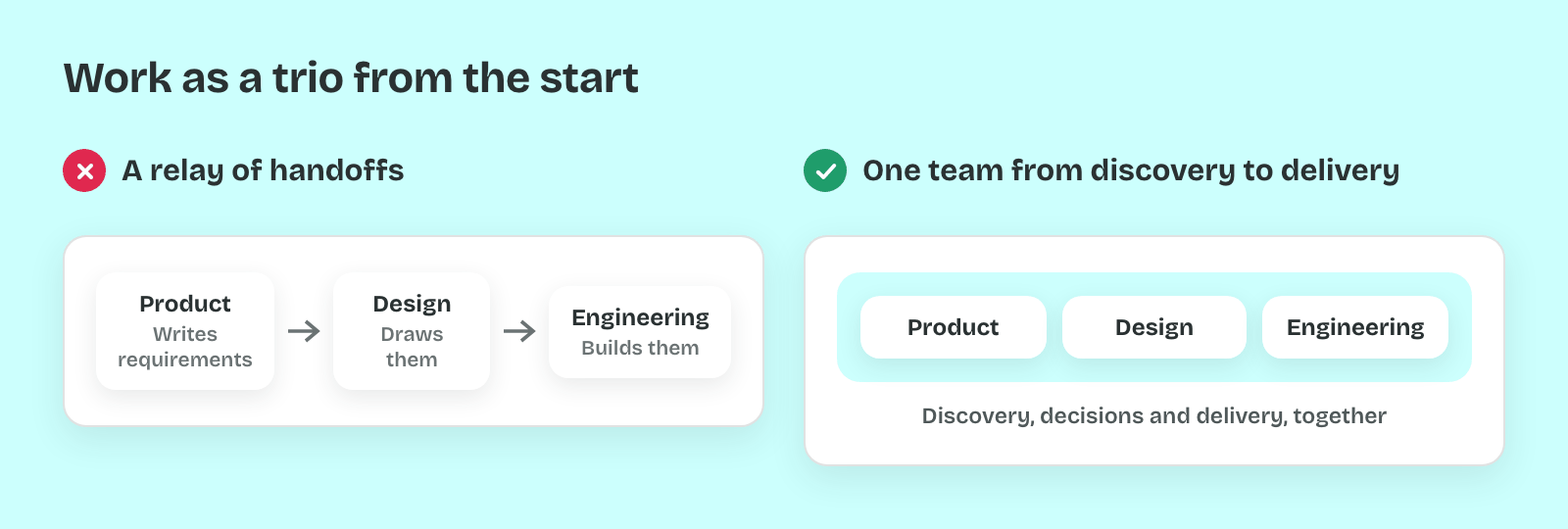
The common mistake is treating the team as a relay: product writes requirements, design draws them and engineering builds them. Each handoff loses context, and design ends up decorating decisions made upstream.
That's why strong teams work as a trio from the start. Sprint mechanics and Scrum roles belong to Working in Agile Teams; here the point is who owns which decision.
Pro tip: On a new team, ask each role one question: which decisions do you need to be part of? The answers draw the map faster than any org chart.