Testing the Bet
A team writes a strong bet, gets it approved and spends a quarter building it. Launch day shows that most customers never needed the core of it. A two-week test of the riskiest part would have shown the same thing for a fraction of the cost.
Learn on the move: press play and turn your commute, walk or drive into time that grows your design career.

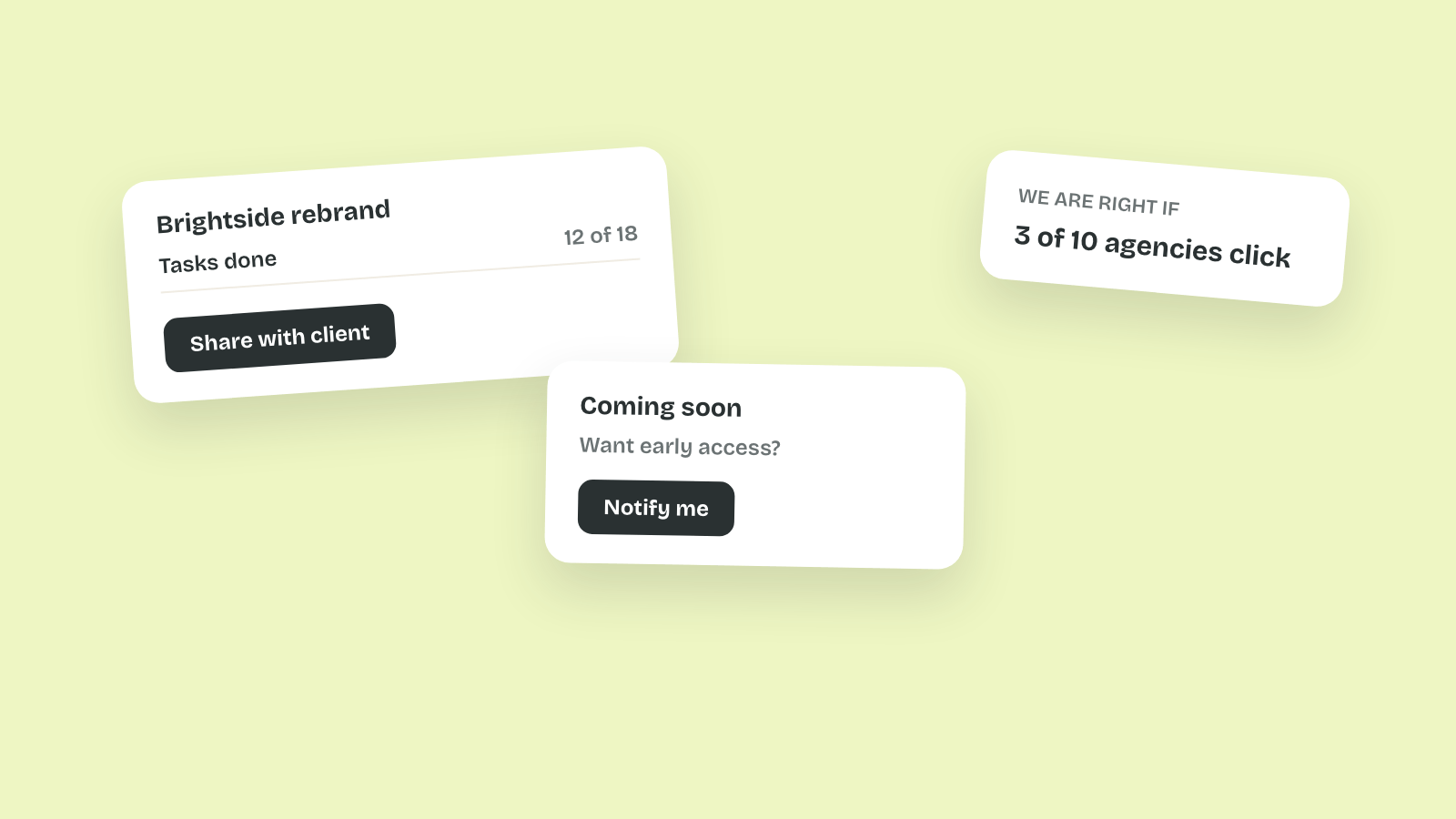
A bet is still a guess until something tests it. The cheapest test that could prove it wrong is worth running before anything gets built.
So this step picks the assumption to test, chooses the experiment that fits and reads the result clearly enough to change the plan.
What Designers Do Here
Testing is where the strategy meets real behavior. Designers usually build the test itself: the fake door, the landing page or the rough prototype people click through. They also watch the sessions and spot the moment people hesitate, which numbers alone often miss.
Choosing What to Test
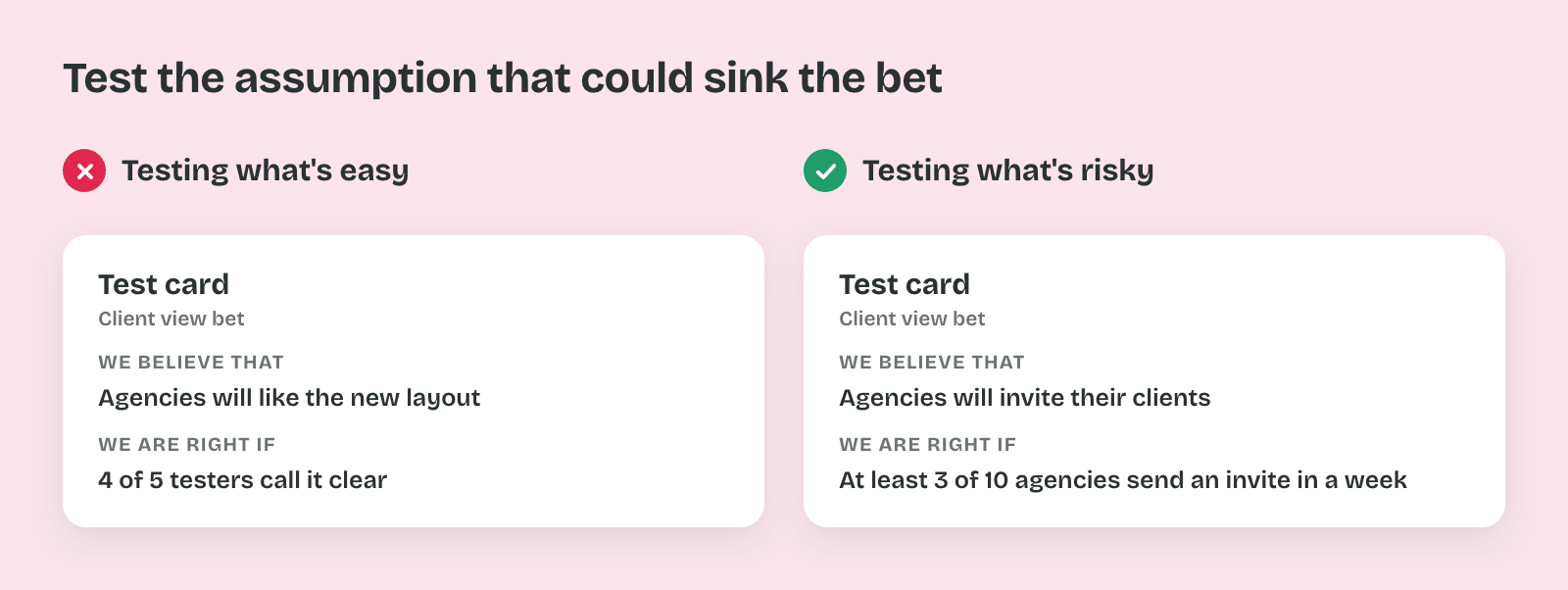
A team tests its new client view with five friendly customers, and everyone likes the layout. The team calls the bet validated. It tested the layout, while the risky part was whether agencies would invite their clients at all.
A test only helps when it targets the right assumption. Picking that assumption, and deciding in advance what result would change the plan, is most of the work.
Find the Riskiest Assumption
Every bet rests on several assumptions, usually across value, usability, feasibility and viability. The one to test first is the assumption that would sink the bet if it were wrong and that has the least evidence behind it. That's the top-right corner of the assumptions map from The Discovery Mindset.
So the riskiest assumption is rarely about the screens. “Agencies will invite their clients into the tool” carries the agency bet; a confusing button can be fixed later, while a missing need can't. Feasibility can carry the most risk too: if no engineer has confirmed the data can be pulled from agencies' tools, a short spike comes first.
The Test Card
David J. Bland and Alexander Osterwalder give a simple format in Testing Business Ideas (2019): the test card. It has four lines. We believe that [assumption]. To verify that, we will [experiment]. And measure [metric]. We are right if [criterion].
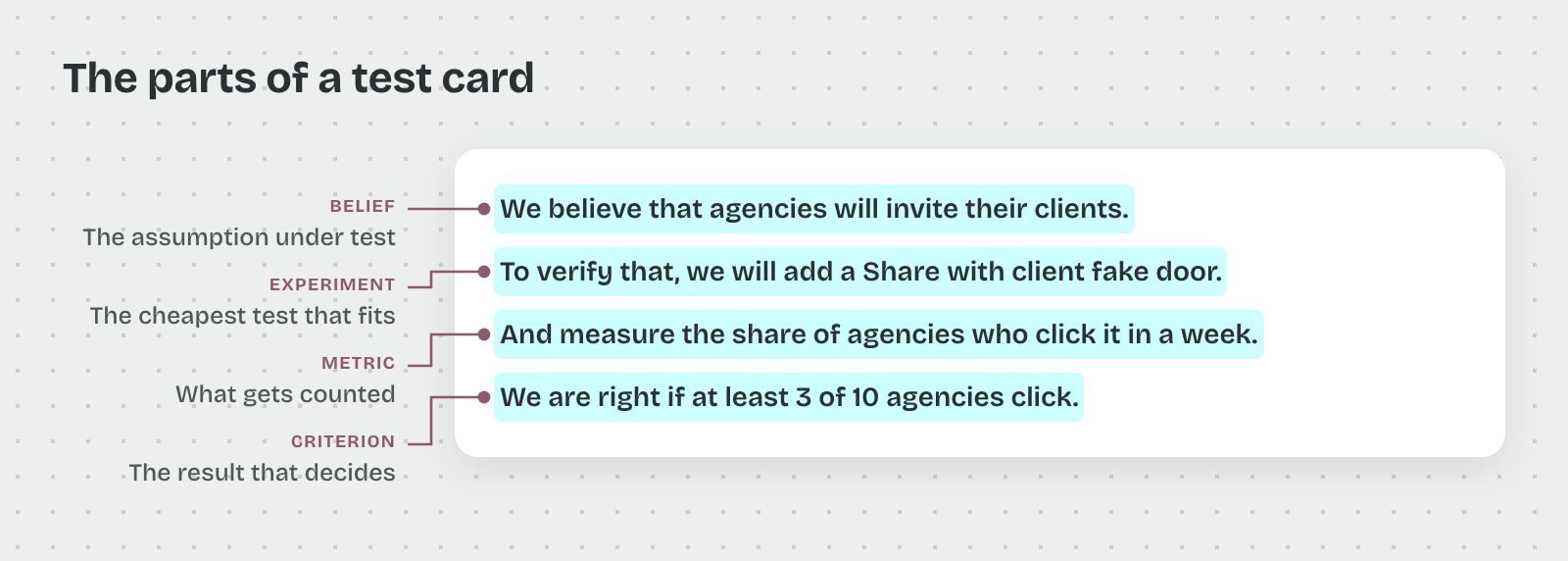
That last line is the one teams skip. Write it before the test, such as “we are right if at least 3 of 10 agencies send a client invite within a week”. A criterion written in advance stops anyone from reading a weak result as success afterward.
Setting the Criterion
A good criterion is specific, measurable and tied to a decision. Choose the number that would change your plan, which is often higher than the number you hope for. If 3 of 10 agencies inviting clients would still leave you unsure, the criterion is too low to decide anything.
That number also sets how big the test needs to be. Five sessions can show whether people understand a concept; a share of people taking an action needs dozens or hundreds of visitors before it means much.
The Common Mistake
The common mistake is testing what's easy instead of what's risky. Usability is the easiest thing to test, so teams test it first and leave value untouched. A beautifully usable feature for a need nobody has is the most expensive outcome.
That's why the test card goes into the bet's write-up. Mapping all assumptions belongs to The Discovery Mindset; here the team commits to one and to the result that would change its mind.
Pro tip: Show the test card to the most skeptical person on the team before running the test. If they wouldn't accept the criterion as proof, raise it now.