
Discovery Interviews
Show a person your idea and ask whether they'd use it, and you'll usually hear yes. They want to be kind, a hypothetical costs them nothing, and you look like the person who built it. A team that collects twenty of those yeses can launch to silence.
Learn on the move: press play and turn your commute, walk or drive into time that grows your design career.

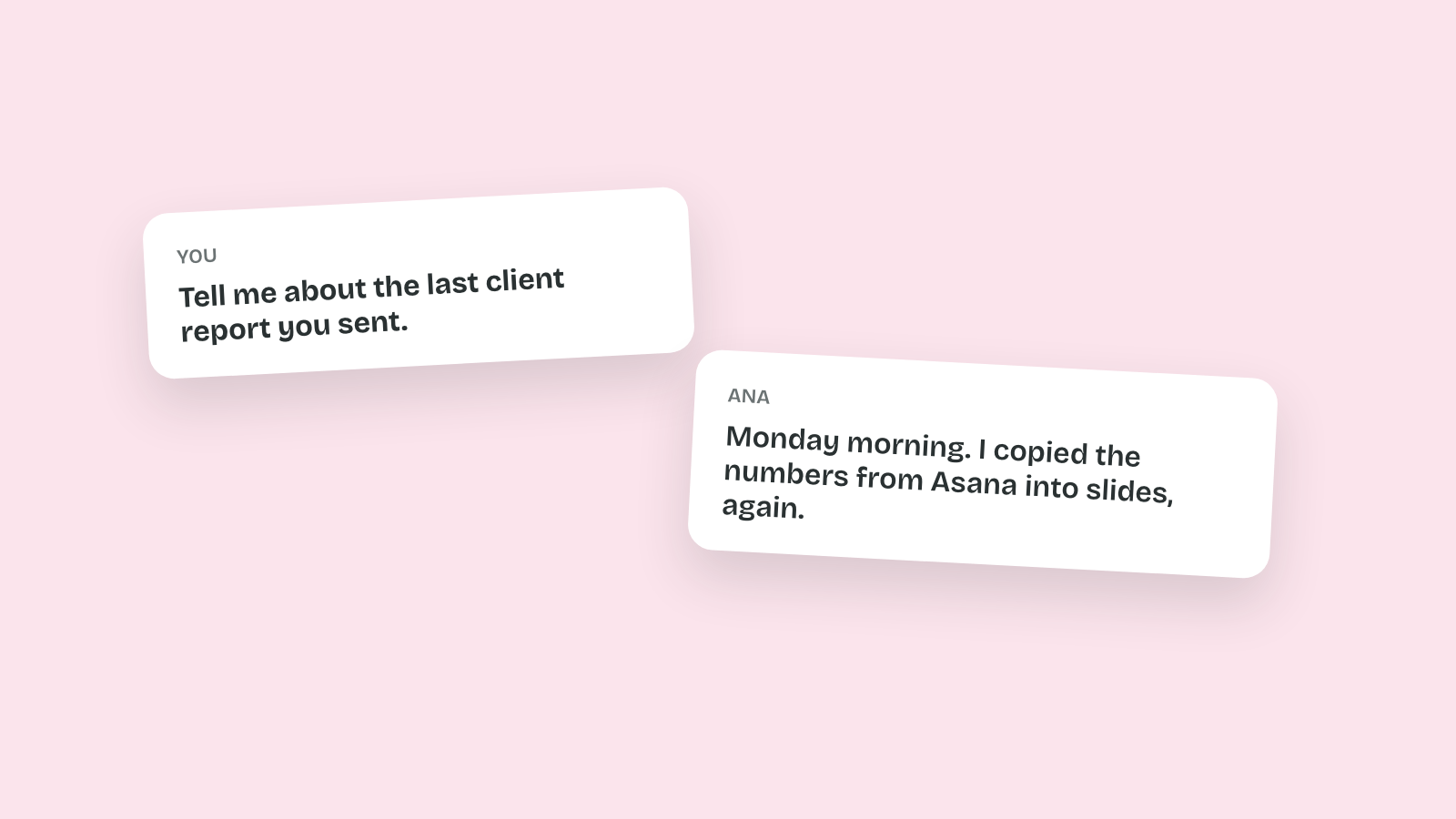
That pull toward the pleasing answer is called social desirability bias. It grows when the interviewer looks like an expert, asks about the future or talks to whoever was easiest to reach.
So a discovery interview has three jobs: find the right people, ask about their past and stay out of the way. Each one has a method built for it.
What Designers Do in Interviews
Discovery interviews feed the strategy with evidence about real problems. Designers often run them, because they listen for the workaround and the moment of confusion that later becomes a design. They also turn notes into the problem statements and opportunities the rest of the team works from.
Who to Talk To
A team needs interviews by Friday, so it talks to three colleagues, two friends who use the product and the customer who emails every week. The conversations go well and point the team firmly in one direction. None of those six people looks like the customers the product is losing.
Who you talk to decides what you can learn. The right interviewee lives the problem now, and the people easiest to reach rarely do.
The People Worth Finding
Three groups usually teach the most. Current customers who hit the problem recently can describe it in detail. Customers of a competitor show why people choose something else. People running a workaround show how much the problem costs them.
That last group is often the most valuable. Someone gluing three spreadsheets together every Monday has already proven the problem is real, and their workaround shows what they'd pay to replace. Former customers who left are worth a call too: they can name the moment the product stopped being worth it.
Recruit by Behavior
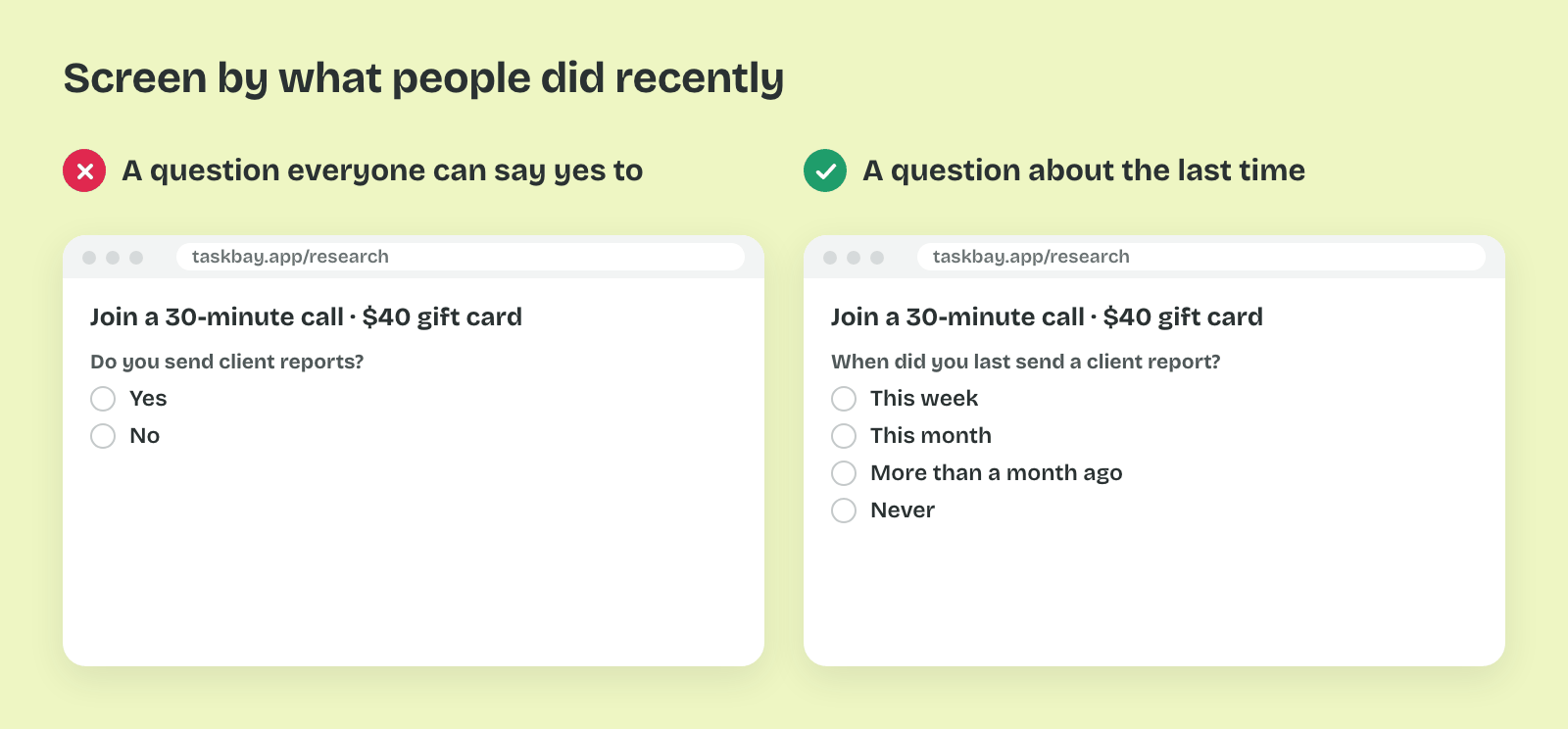
So recruiting starts from what people did, never from who they say they are. A screener question like “Do you send client reports?” invites everyone to say yes. “When did you last send a client report, and how?” finds the people who actually do it, and how often.
That shift also filters out polite volunteers. People who sent a report last week have a recent story to tell; people who sent one last year mostly have opinions. A good screener also includes one question that rules people out, such as company size, so the group matches the segment the team cares about.
Where to Find Them
Recruiting works best when it never stops. Teresa Torres recommends automating it, for example with a short in-app prompt that invites active users to a call. Customer lists, support tickets that mention the problem and the communities where people complain are good sources too.
For people outside your product, recruiting panels and communities in the field reach competitors' customers. A small thank-you, such as a gift card, raises the share of people who show up. Book one or two more people than you need, since some will miss their slot.
The Common Mistake
The common mistake is talking to whoever is closest. Colleagues know the product too well, friends are kind and the loudest customer speaks for one account. Their answers sound useful and rarely match the wider market.
That's why each round should include at least a few people the team has never met. Sample design for surveys belongs to Quantitative Research Methods; here the goal is a handful of people who live the problem.
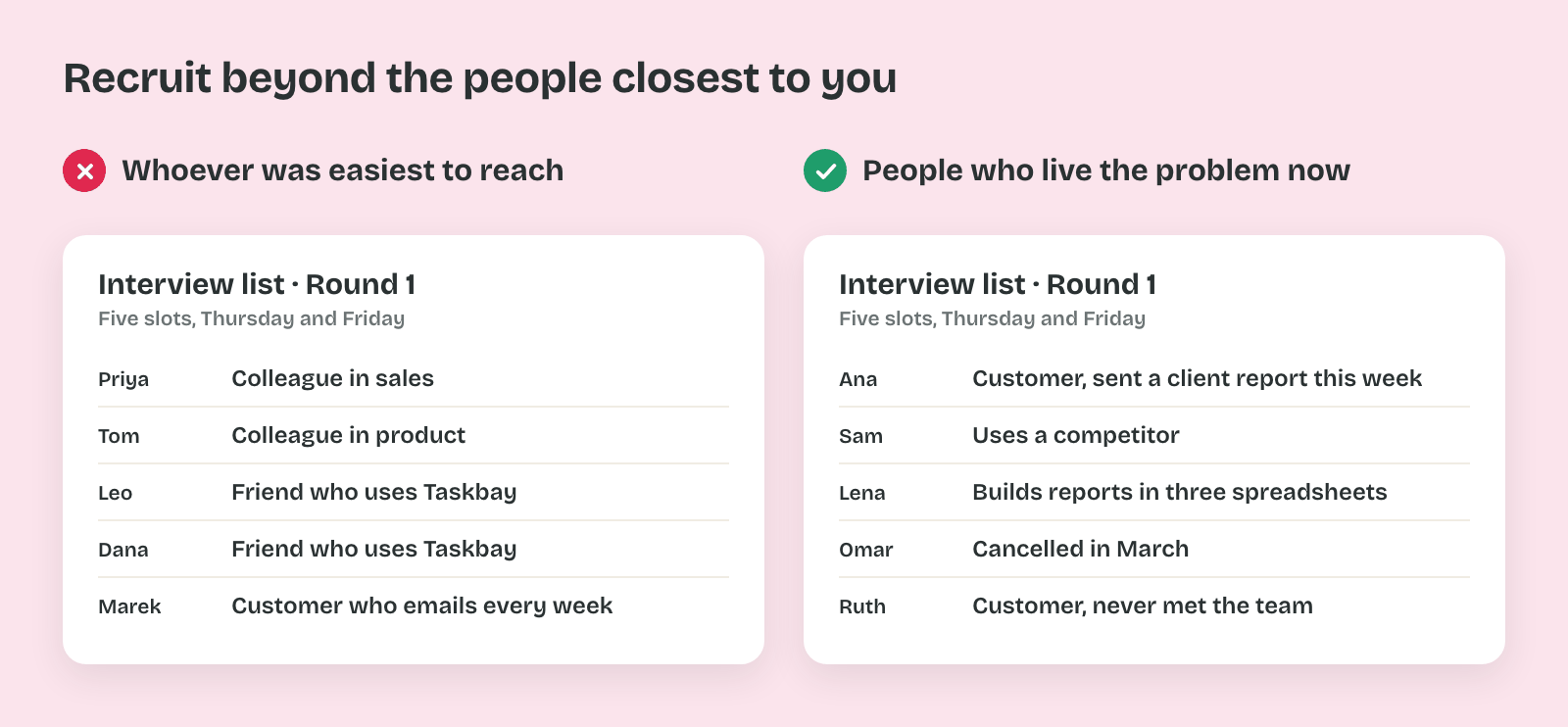
Pro tip: Keep a short list of everyone you've interviewed, with the date and what they do. Before each round, check that the newest names aren't all the same kind of customer.