Contributions & Releases
A design system without rules for change tends to drift one of two ways. Either anyone edits the library and its parts multiply, or every change waits so long that product teams build around it. Imagine the bookings app's library six months after launch, holding three versions of the slot card and a booking form somebody detached because a fix never came.
Learn on the move: press play and turn your commute, walk or drive into time that grows your design career.

So a system needs agreed rules for how work gets in and how changes get out. Governance names who decides. Contributions are how product teams add to the system, and releases are how a change reaches every file and codebase that uses it.
Anatomy of System Governance
Many design system arguments turn out to be about who decides. A product designer wants a new slot card variant, and an engineer wants the old one kept. With no named owner, the question can stay open for weeks.
So governance is the written answer to who decides what. It covers the team, the roles in a change, the owner of each library, the release flow and the roadmap.
The Parts of Governance
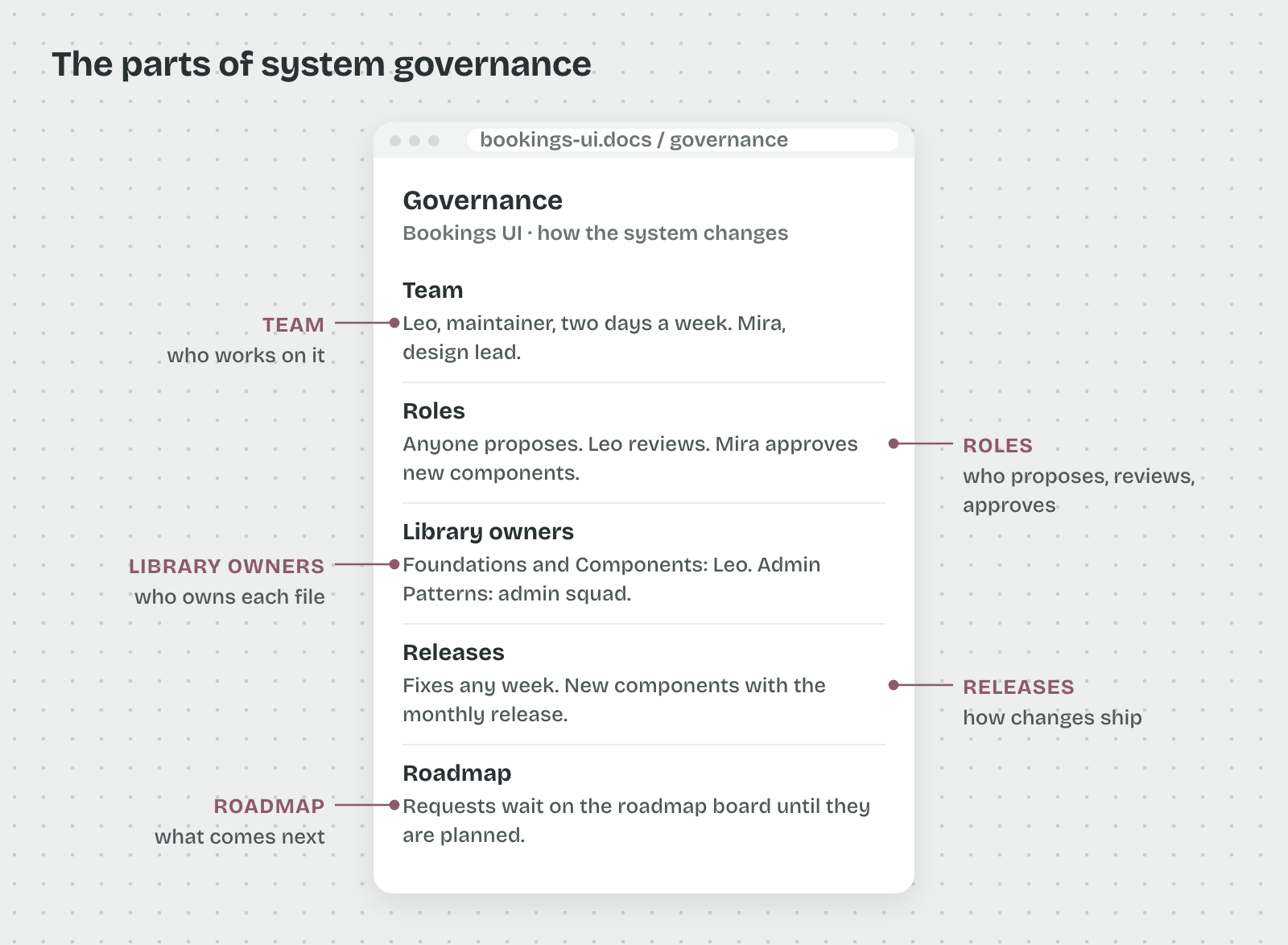
Governance is the set of agreements that decide how a system changes. Each part answers one question, and many teams keep all of them on one page of the system's docs:
- Team: who works on the system, and how much of their week it gets.
- Roles: who proposes a change, who reviews it and who has the final say.
- Library owners: which person or team owns each Figma library and its code package.
- Releases: how finished changes are grouped, numbered and announced.
- Roadmap: what gets built next, and where requests wait until then.
For example, the GOV.UK Design System publishes every one of these parts in the open. Its site names the team, lists its contribution criteria and keeps a public roadmap. Here is a governance page for the bookings app's system, with each part named:
Roles in a Change
Every change to a system passes through three roles, even when one person holds two of them:
- Contributor: anyone who proposes or builds a change, often a product designer who found a gap.
- Maintainer: a system team member who reviews the change against the rest of the library.
- Approver: the person who decides whether the change ships, usually the system lead.
That split matters because it separates the person with the need from the person who keeps the whole consistent. At GOV.UK, anyone can propose a component, and the Design System team reviews each proposal against the published criteria.
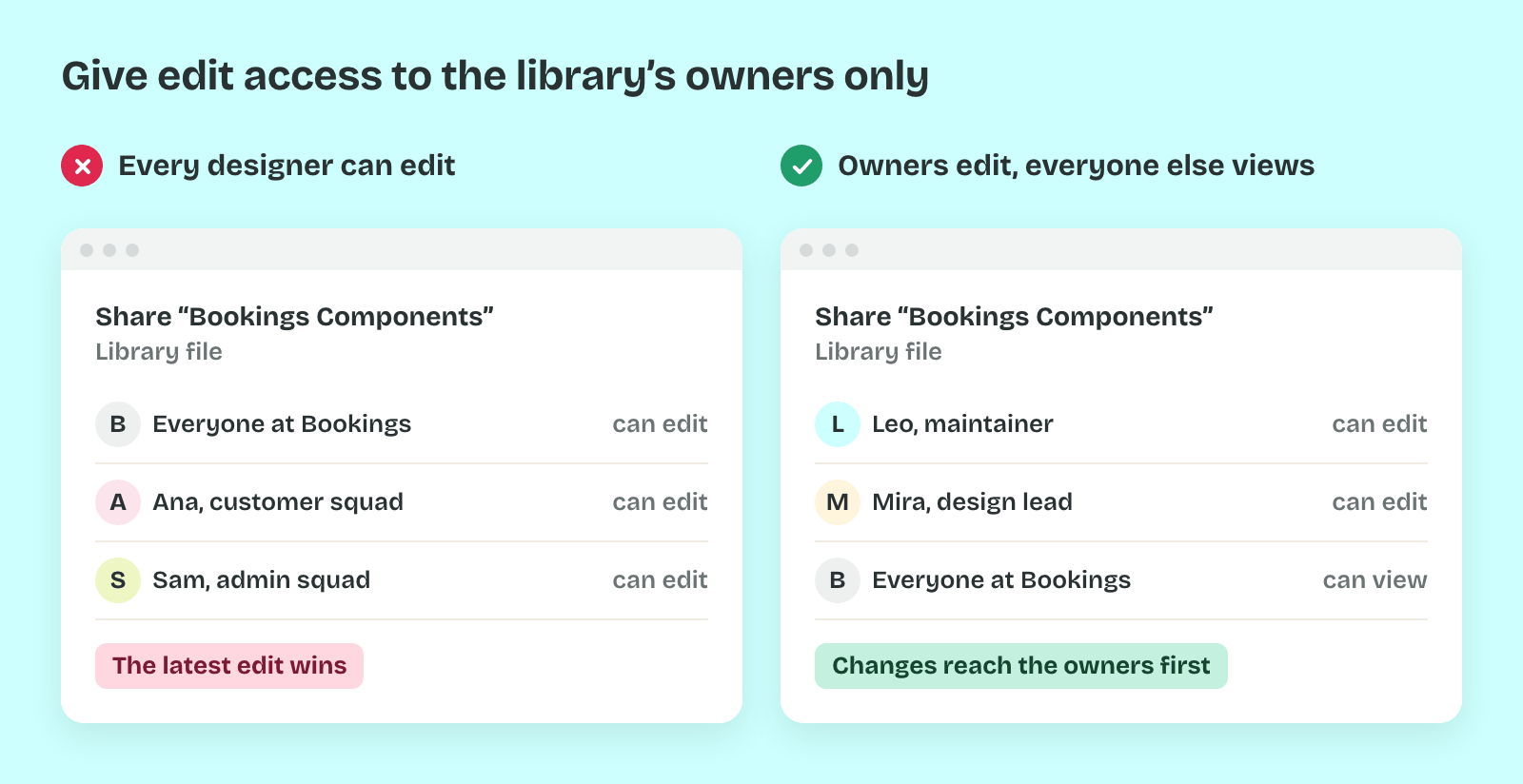
So the common mistake is handing out edit rights instead of roles. When every designer can edit the library file, the latest change wins, and nobody checks it against the others. Here is the bookings library's sharing setup done both ways:
Who Owns Which Library
Planning a Design System decides how many libraries a system has. Governance then names one owner for each, because a library that everyone owns tends to have no owner when something breaks.
In practice, the owner is the person who approves changes and presses Publish. Figma requires edit access to the library file to publish it, so the owner list and the edit list should match.
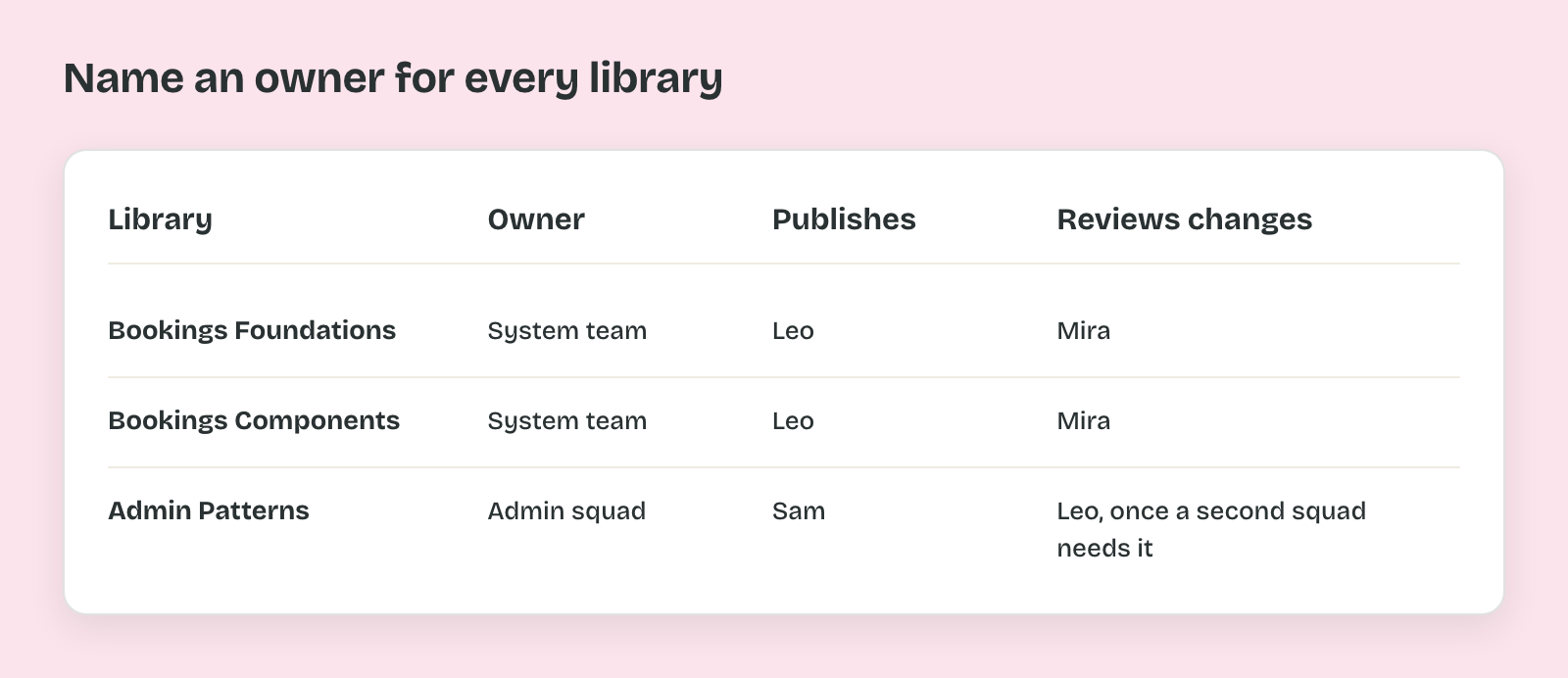
That also means a product squad can own a library. A pattern used only in the provider admin panel can live in the admin squad's own library. The system team reviews it only when a second squad wants it. Here is how the bookings app splits ownership across its libraries:
Releases and the Roadmap
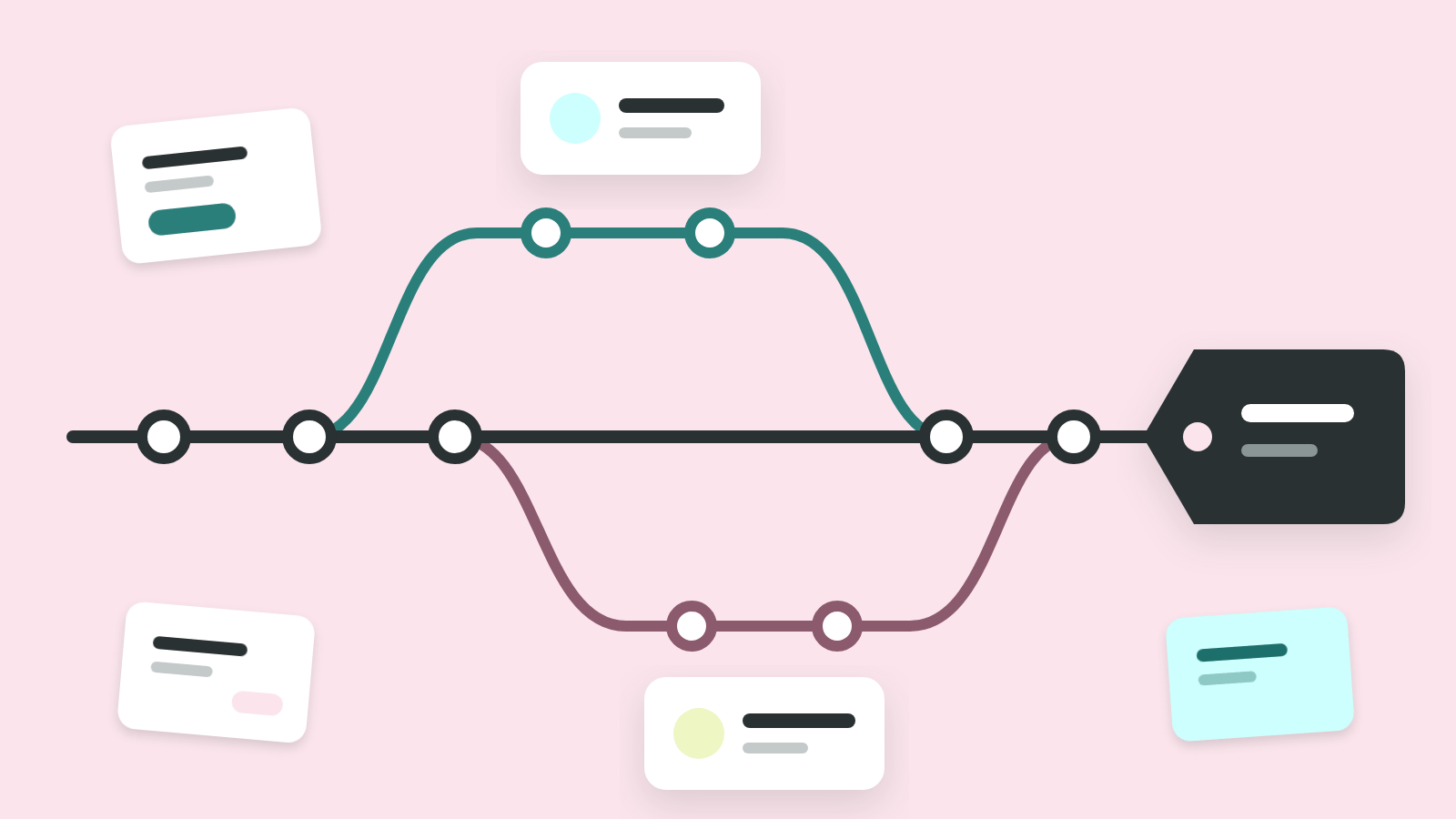
Releases group finished changes into versions people can plan around. Nathan Curtis recalls the Sun.com component library he used in 2006, which shipped a release every month on a predictable cadence. Brad Frost's 2019 governance process also ends on a release, numbered with semantic versioning and announced to every team.
That's why a release calendar belongs in governance. The bookings app could ship fixes any week and new components once a month, so squads know when to expect them.
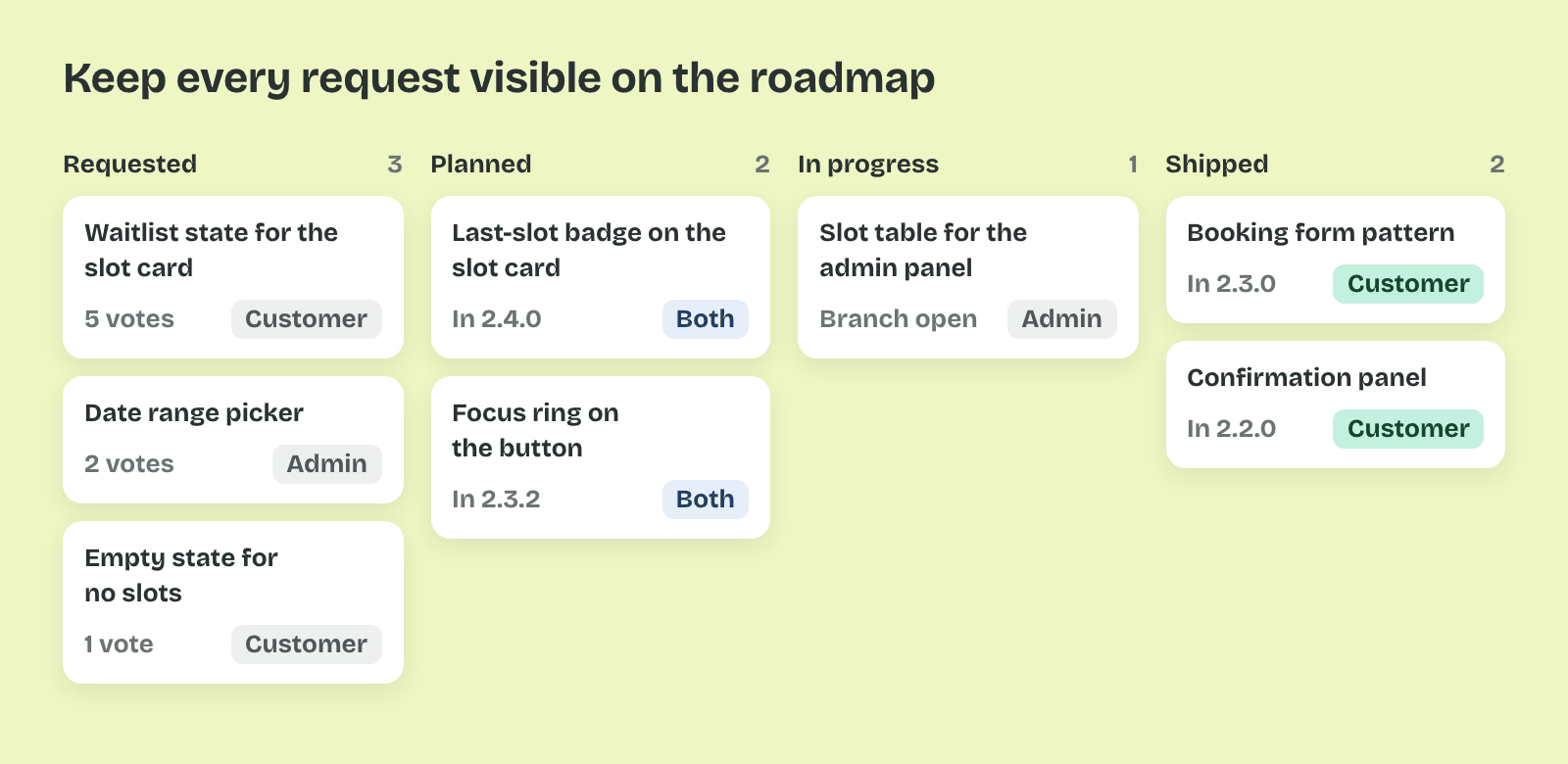
That leaves the roadmap, which covers what hasn't shipped yet. GOV.UK runs proposals as discussions on GitHub, where anyone can upvote an idea. Its community then prioritizes the work once a year. Here is the bookings app's roadmap, with requests waiting in their columns:
Pro tip: Write the governance page before the second squad starts using the library. Rules agreed in advance read as the way things work, while rules written after a clash read as a verdict on whoever lost.