Where to Play and How to Win
A product team at a typical project tool might say its strategy is to serve everyone who manages work. Freelancers, agencies, in-house teams and enterprises all appear in the sales deck. Each group asks for something different, so the roadmap splits four ways and no group gets a product built for it.
Learn on the move: press play and turn your commute, walk or drive into time that grows your design career.

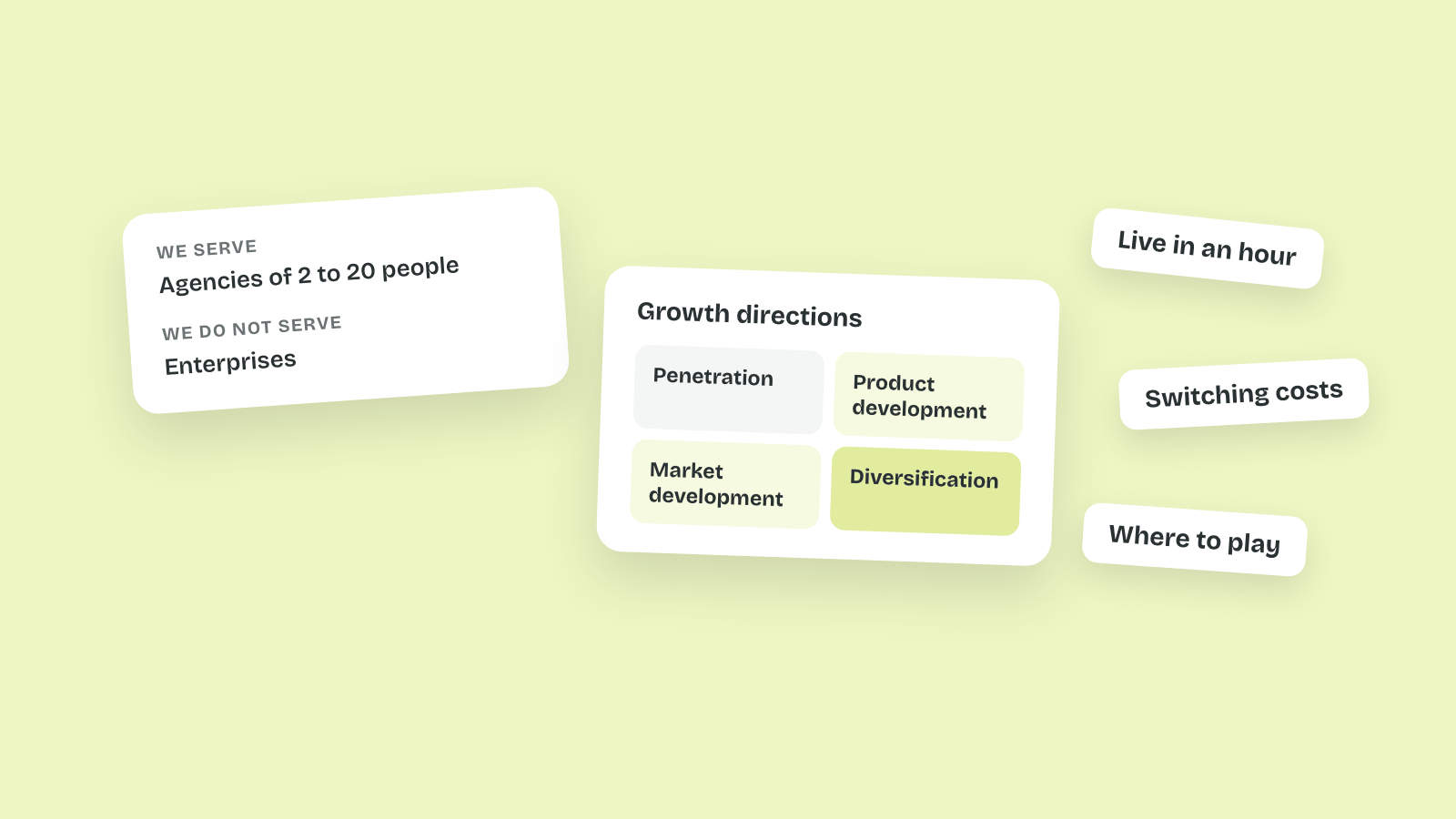
That team never chose where to compete, so it can't say how it will win there. A strategy only starts to guide work once it names a field and a way of winning on it.
So a working strategy answers four questions: where to play, how to win, which direction to grow in and what stops rivals from copying the result.
What Designers Do Here
These choices decide whose problems get design time. Designers bring evidence about which customers the product serves best. They show how the way of winning becomes a visible experience, and where design can build an advantage that lasts. A designer who knows where the product plays can explain why one group's request waits.
Where to Play and How to Win
Read the strategy deck of an early product and you'll often find a mission, a list of features and a revenue target. Ask which customers it's for and the answer is “anyone who needs it”. Ask why those customers would pick it over the alternatives, and nobody has a clear answer.
A.G. Lafley, twice CEO of Procter & Gamble, and Roger Martin describe a way to fix that in Playing to Win (2013). Strategy, they argue, is a set of five choices that answer each other.
The Five Choices
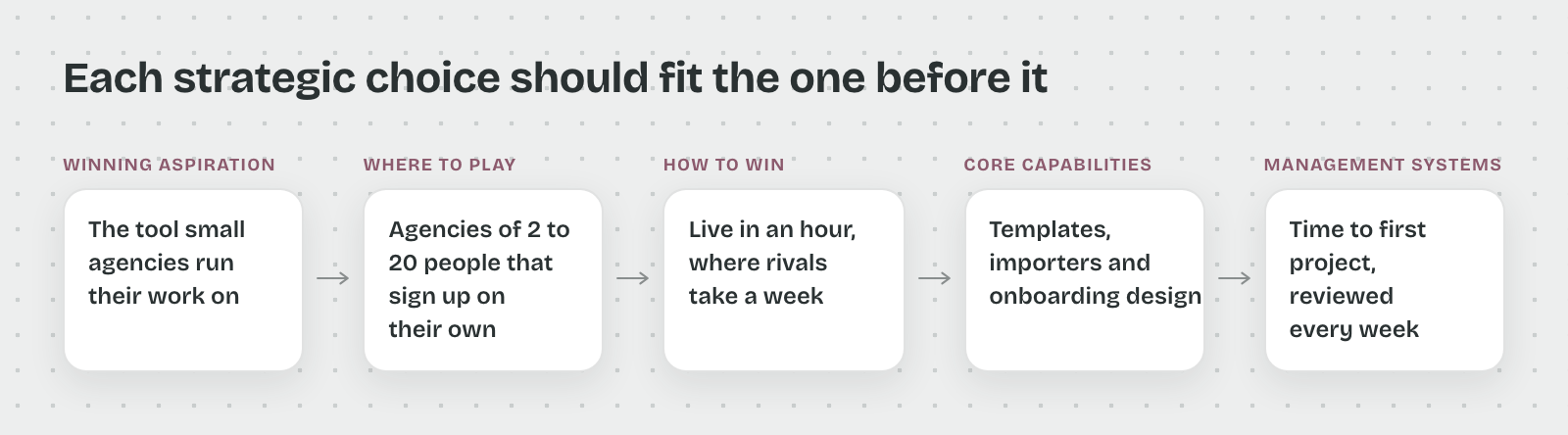
The winning aspiration states what winning would look like. Where to play picks the customers, markets, channels and product categories the company will compete in. How to win says why customers there will choose this product over every alternative.
The last two make the first three possible. Core capabilities are the things the company must be excellent at to win where it plays. Management systems are the measures, routines and structures that build and protect those capabilities. Lafley and Martin call the five a cascade, because each choice has to fit the ones above it.
Where to Play
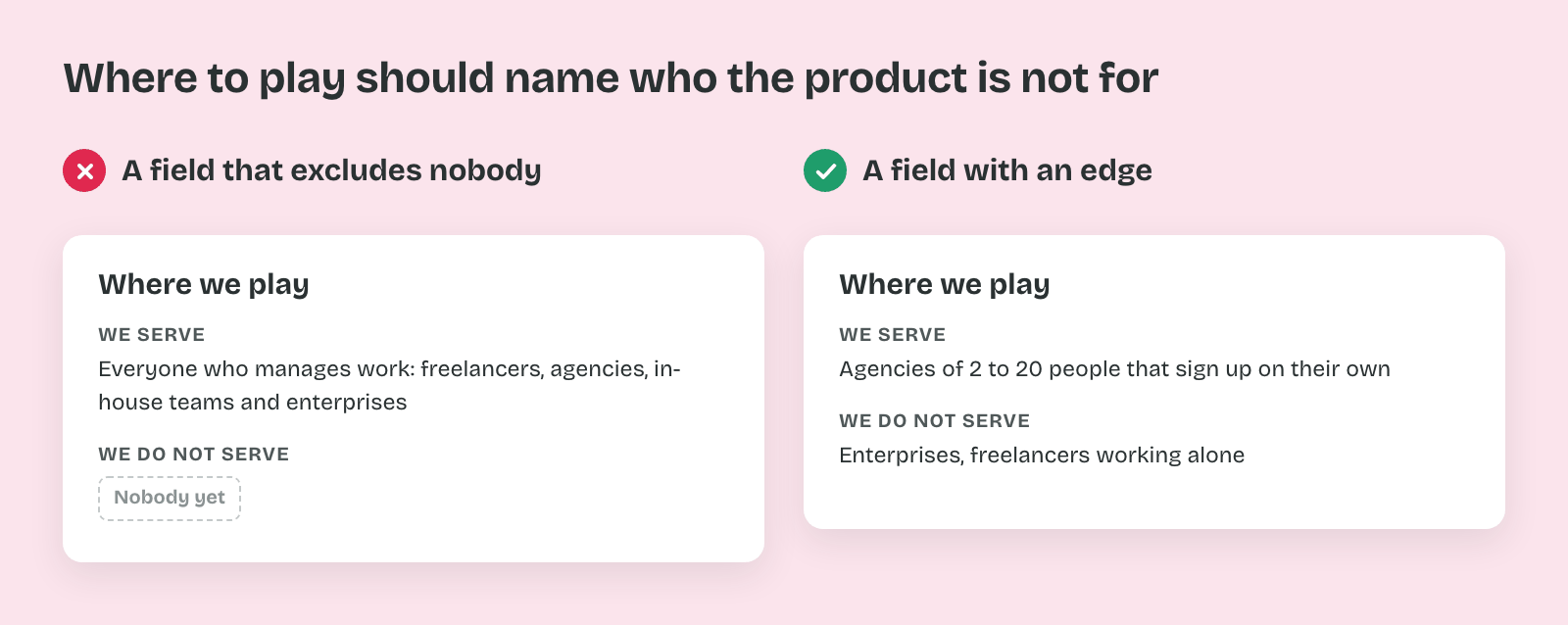
Where to play is a choice about who the product is for and who it isn't for. A project tool could play for five-person agencies, in-house marketing teams or enterprise programs. Each field has different buyers, needs and rivals, so a product built for all three is rarely the best choice for any of them.
That's why the choice has to exclude someone. Lafley and Martin's own example is Olay. P&G kept the brand in drugstores but aimed a new line at women worried about aging, priced well above other drugstore creams and below department store brands. The team chose a field the leaders had left open.
How to Win
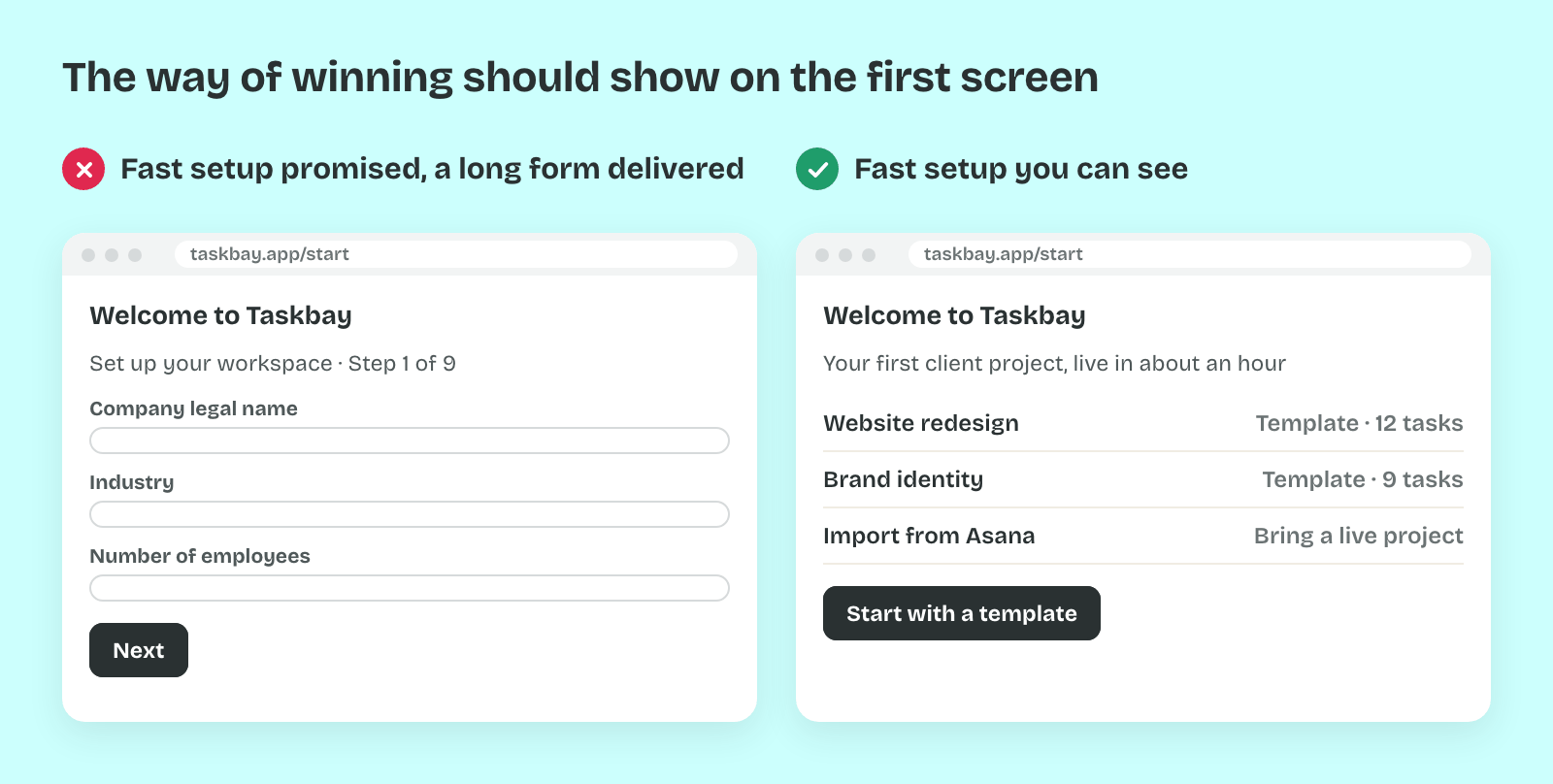
How to win names the reason customers in that field will choose this product. Lafley and Martin see two broad routes: win on lower cost, or win by offering something customers value enough to pay more for. For a project tool aimed at small agencies, how to win might be “live in an hour, where rivals take a week to set up”.
That sentence is where design comes in. A way of winning that customers can't see or feel in the product is only a claim. If the product is meant to win on fast setup, the first hour of the experience carries the whole strategy.
The Common Mistake
The common mistake is answering where to play with “everyone” and how to win with “better quality”. Neither choice excludes anything, so neither guides a single design decision. The test is whether a sensible rival could make the opposite choice.
That test also keeps this choice apart from positioning. Where to play and how to win are decisions about the business. Turning them into the words customers read belongs to Market & Positioning.
Pro tip: Write your product's where-to-play choice as one sentence that names who it is not for. If you can't name anyone, the choice hasn't been made yet.