
Structured Thinking
Imagine a week where the same handoff question comes back three times, a bug returns after its second fix, and a review ends with no decision. Nobody on the team is careless, yet the same work gets done twice.
Learn on the move: press play and turn your commute, walk or drive into time that grows your design career.

That waste usually starts before anyone opens a file. Work begins without a clear end, big tasks stay in one piece, and repeat trouble gets patched instead of traced. Structured thinking is the habit of giving work a shape before doing it.
Why Structure Saves the Team Time
Most teams already sense the gap. Thomas Wedell-Wedellsborg surveyed 106 executives from 91 companies in 17 countries for Harvard Business Review in 2017. Of them, 85% agreed that their organizations were bad at diagnosing problems, and 87% said the flaw carried significant costs.
That's why structure pays off in everyday work as much as in strategy. A ticket, a Figma file, a handoff and a disagreement all go better when someone knows what done looks like and why things go wrong. Structured thinking is a habit, so anyone can build it with practice.
Clear Before You Start
Imagine a Slack message that says “Can you update the onboarding?” Two days later the designer shows three new screens, and the product manager meant one line of copy in the welcome email.
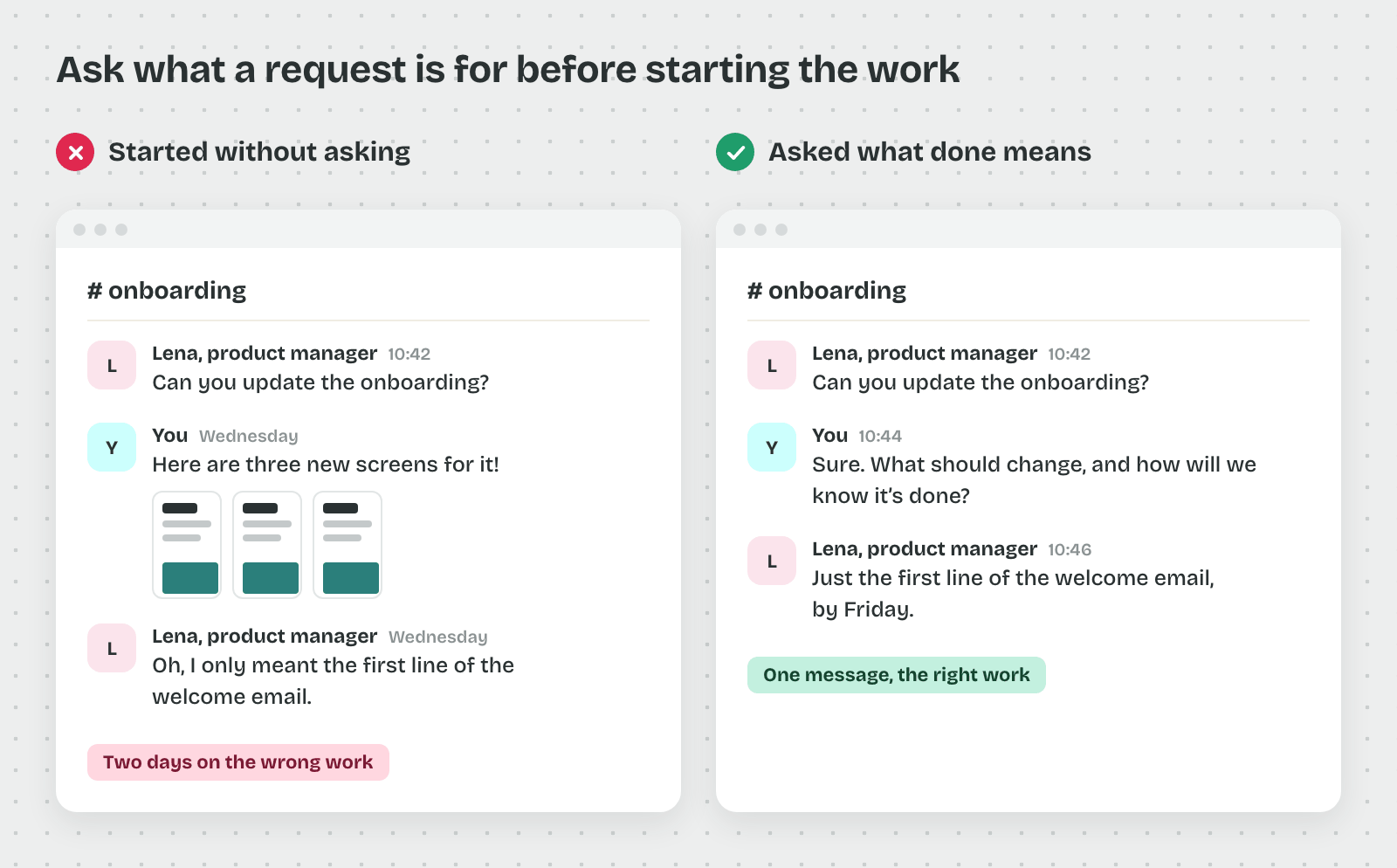
So the cheapest fix comes before any work starts. A few minutes on what the task is for can save the days spent building the wrong thing.
The Parts of a Clear Task
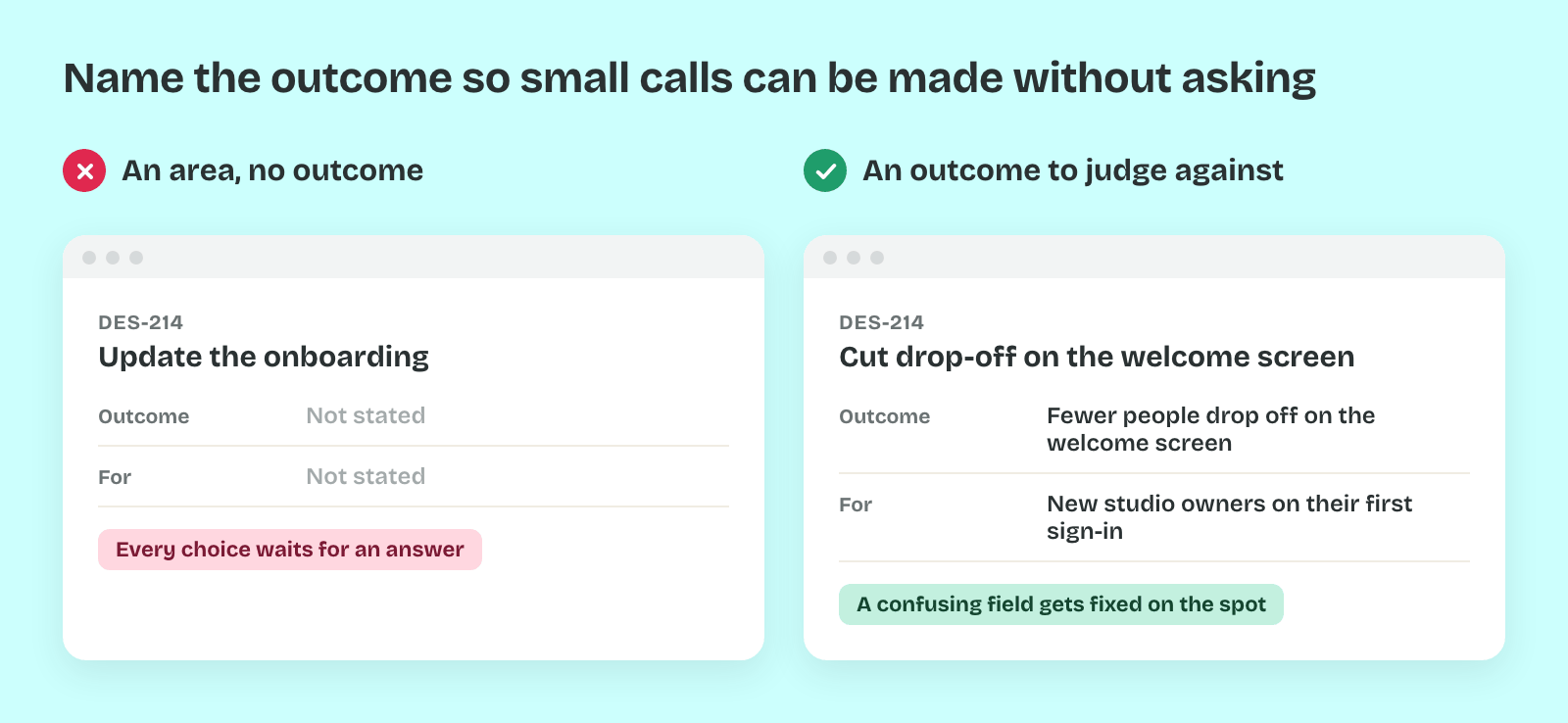
A clear task answers four questions: what outcome it serves, who it is for, what done looks like and when it is due. Each answer changes the work. “Update the onboarding” names an area, while “cut drop-off on the welcome screen” names an outcome a design can be judged against.
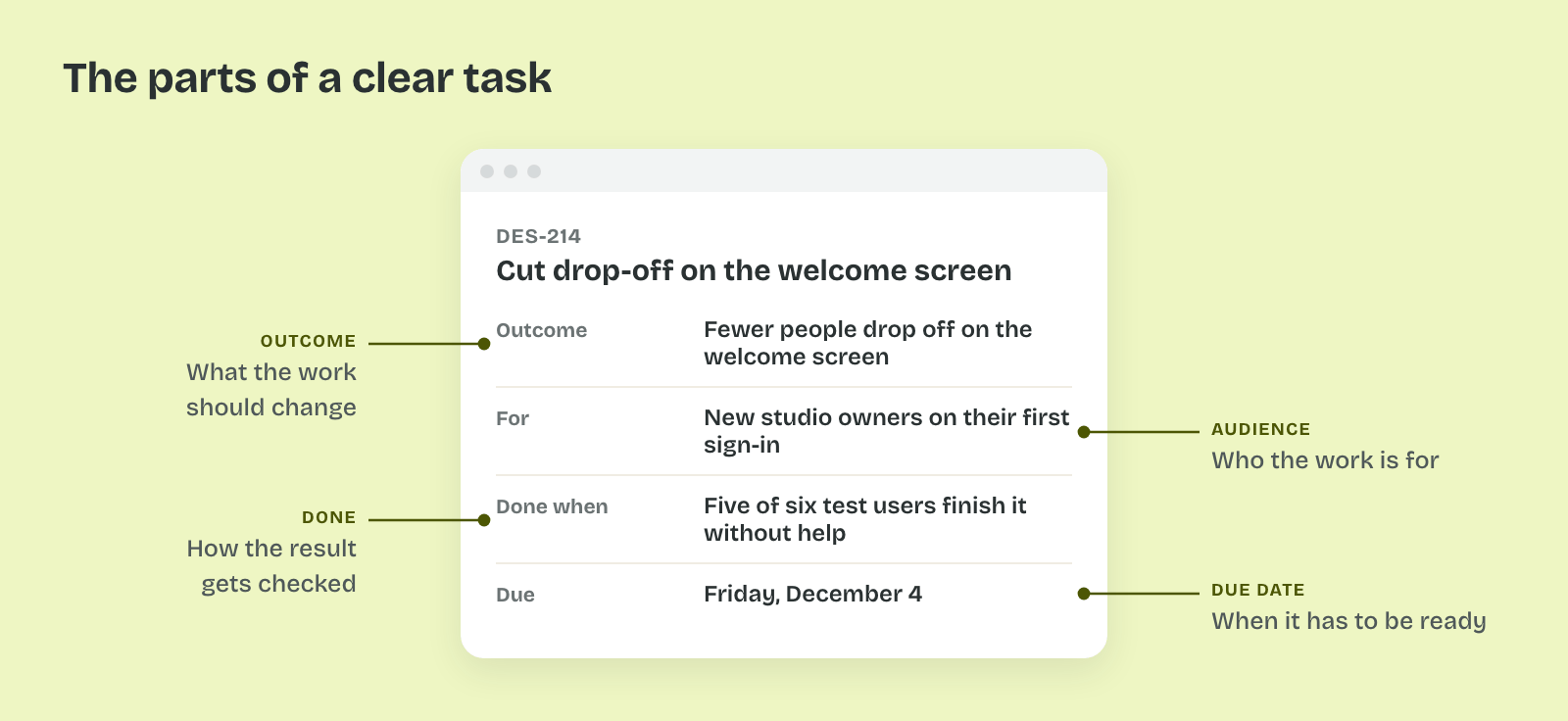
That's why the four answers belong in writing before the work starts. A ticket or a message that holds them lets anyone check the result, including the person who asked.
Why the Outcome Matters Most
The outcome is the part that lets people adapt when plans change. The US Army calls it commander's intent: an order states its purpose and the end state, so soldiers can still act when the plan breaks. Chip and Dan Heath carried the idea into business writing in Made to Stick (2007).
In practice, a known outcome lets a designer make small calls alone. If the goal is fewer drop-offs, a designer who finds a confusing field can fix it without asking. If they only know “update the onboarding”, every choice waits for an answer.
The Question That Saves a Rework Loop
The most useful single question is “How will we know this is done?” It turns a vague request into something checkable, and it often shows that two people meant different things. Asked in the first five minutes, it costs one message. Asked after a review, it can cost a redesign.
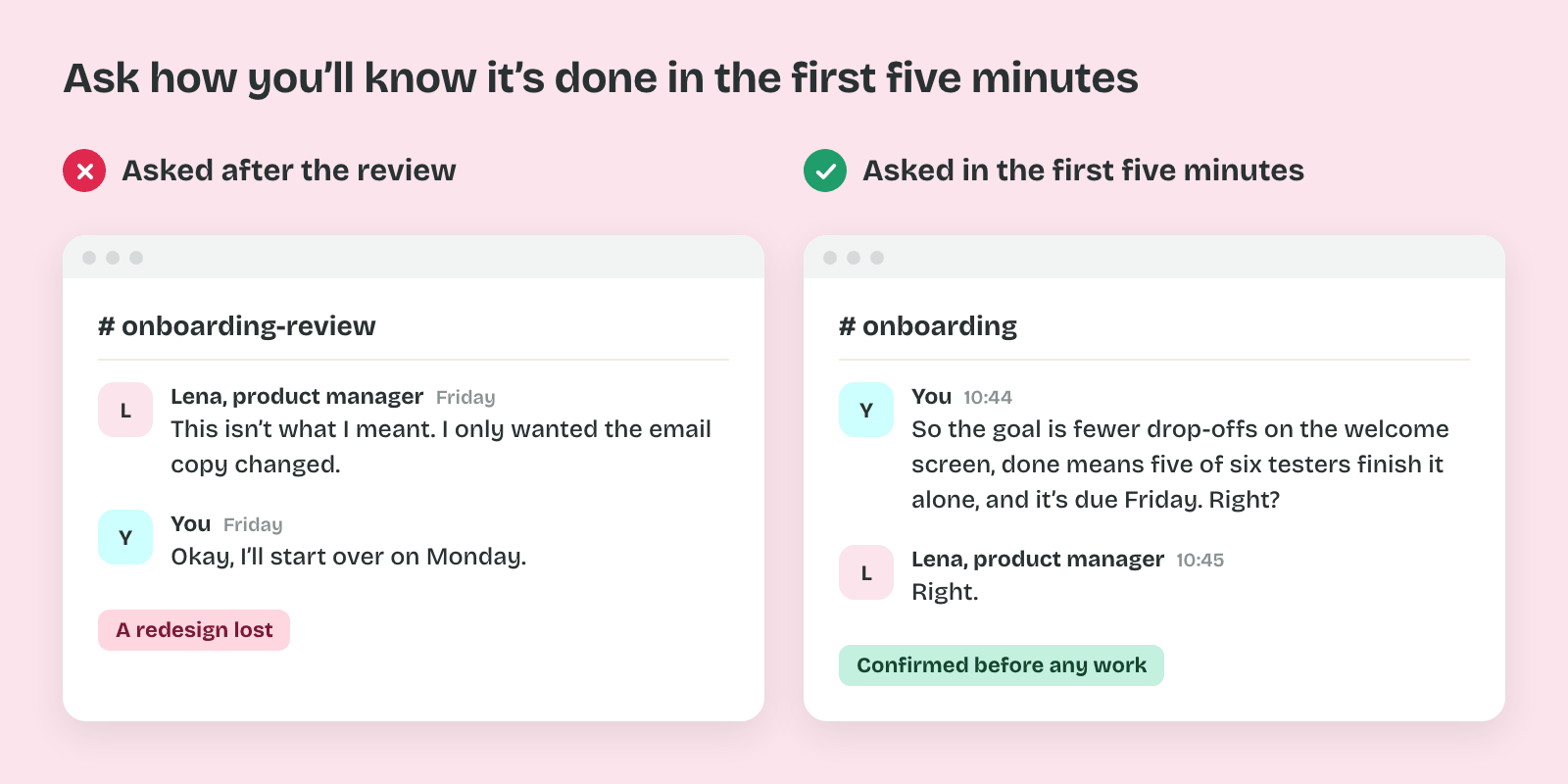
That question works on any request, from a ticket to a question in the hallway. A fuzzy answer is useful too. It means the request needs a short conversation before it needs a design.
Thus the habit has a limit worth knowing. When the request itself may be wrong, for example because users need something other than what was asked for, the work is framing the problem. Product Discovery covers that in The Discovery Mindset, and here the task is taken as given.
Checking a Task Before You Start
Run these checks before you open a file:
- You can state the outcome in one sentence, in the user's or the business's terms.
- You know who the work is for and who will review it.
- You and the person who asked describe done the same way.
- The due date is written down, along with what happens if it slips.
Pro tip: Write your understanding back in one message: “So the goal is X, done means Y, and it's due Z. Right?” A one-word reply confirms it, and a correction costs nothing yet.